  1. Home
  2. Wearables
  3. Mobile
  4. News

The Apple Watch Series 8’s crash detection already saved someone’s life

Add as a preferred source on Google

The crash detection feature in Apple Watch Series 8 has passed the test with flying colors — it saved a man’s life by automatically calling first responders his car crashed into a pole.

Nolan Abell of Indianapolis told ABC News that he crashed into a telephone pole when he lost control of his car at 3:30 a.m. on October 15. As he sat in his car seat fighting to stay alive, he said he felt haptic feedback on his wrist and heard a voice from the watch asking if he was there. When he didn’t respond in a timely manner, the watch alerted first responders, who arrived at his location quickly.
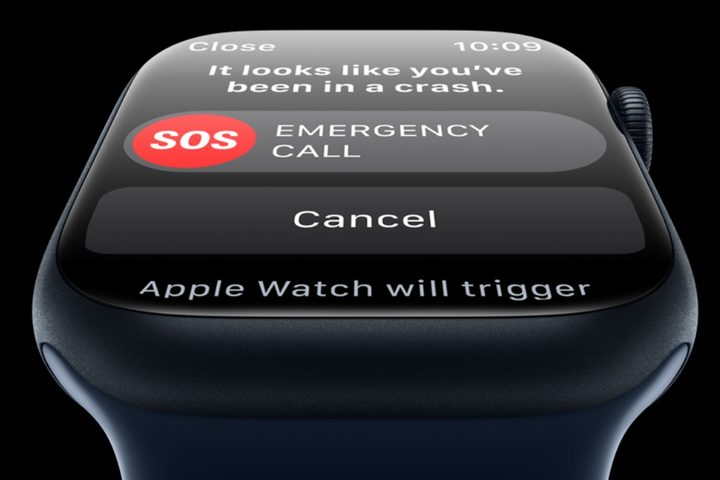
Apple Watch Series 8's emergency calling feature.
Apple

“If it weren’t for this watch, who knows how long it would’ve been for help to get to me,” Abell said. “Someone would’ve found me eventually, but this had EMS to me within five minutes.”

Recommended Videos

Abell said he bought the Apple Watch Series 8 at Best Buy on a whim a week before he had his accident. He didn’t have any rhyme or reason to buy the watch, but he said, “something just told me to get it.” That impulse purchase became a blessing in disguise.

APPLE WATCH SAVES LIFE: A man credited his Apple Watch with saving his life by automatically contacting first responders after he slammed his car into a pole. ABC’s Rhiannon Ally reports. pic.twitter.com/WRvfaU07LF

— ABC World News Now (@abcWNN) October 28, 2022

Apple introduced the car crash detection feature into the Apple Watch Series 8 as part of the watchOS 9 software update in September. The feature is also used in the iPhone 14 and iPhone 14 Pro models, as well as the Apple Watch Ultra. It detects all types of severe car crashes you may never want to find yourself in: rear-end collisions, side impacts, rollovers, and front-impact crashes like Abell’s, and gives users 20 seconds to respond to the SOS alert before calling EMS on their behalf.

The crash detection feature was a little faulty at first when some iPhone 14 owners reported that their phones triggered 911 calls while they were riding roller coasters.

Cristina Alexander
Gaming/Mobile Writer
Cristina Alexander is a gaming and mobile writer at Digital Trends. She blends fair coverage of games industry topics that…
Meta’s Ray-Ban Display now types messages from your finger movements
Neural Handwriting is a really cool feature, but Meta opening the Ray-Ban Display to developers is the quiet announcement that turns a clever wearable into a platform with immense possibilities.
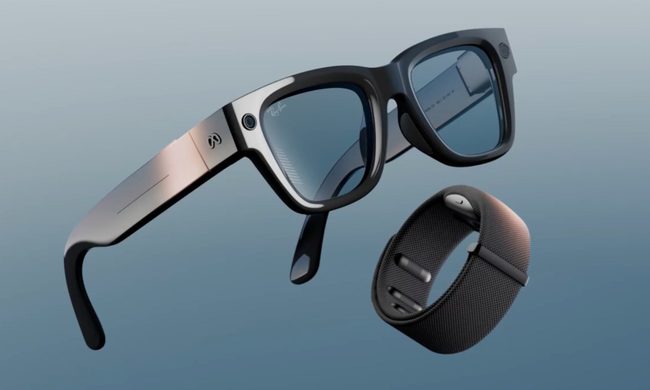
Meta Ray-Ban Display and EMG Band.

Six months into its life, the Meta Ray-Ban Display is starting to look less like an experiment, thanks to what is arguably the most significant update Meta has ever pushed for the device. 

The headline feature is Neural Handwriting, which is now available to every Ray-Ban Display owner, having spent its early months in limited access for Messenger and WhatsApp users. 

Read more
Forget smart glasses, these earbuds can see, hear, and remember everything for you
Electronics, Headphones

Smart glasses have always felt a little awkward to me. Sure, they can play music, take calls, snap photos, and even throw notifications in front of your eyes, but at the end of the day, they’re still just tiny screens sitting on your face. Now imagine removing the screen entirely.

That’s exactly what this new pair of AI-powered earbuds is trying to do. Instead of showing you information, these earbuds are designed to quietly hear, see, remember, and respond to the world around you. And honestly, this might be one of the more interesting directions wearable AI has taken so far.

Read more
Meta will allow third-party apps for Ray-Ban Display glasses. Your eyes must stay glued to digital reality.
Meta just handed developers the keys to the glasses display, and the possibilities are endless.
Meta Ray Bans Display close up shot

Meta announced its Meta Ray-Ban Display glasses with a built-in in-lens display that allows users to see what the smart glasses capture, see and respond to messages, and interact with its Meta AI.

While the built-in apps and features were good, the only way to unleash the potential was to allow third-party developers to build apps. And today, Meta is finally opening up the display on its Ray-Ban smart glasses to developers.

Read more