  1. Home
  2. Wearables
  3. Mobile
  4. News

Digital Trends may earn a commission when you buy through links on our site. Why trust us?

Blood oxygen measurement returns to the Apple Watch, sort of

Measure on the Apple Watch, but see the blood oxygen saturation numbers on your iPhone.

Add as a preferred source on Google
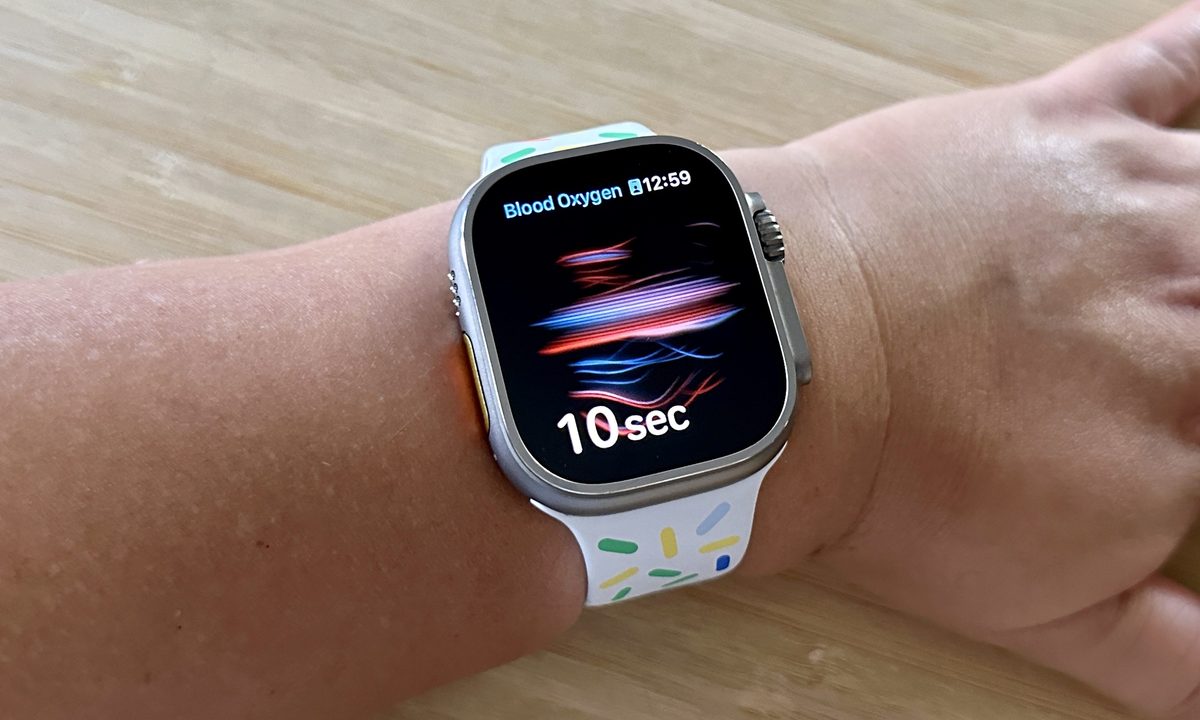
Apple Watch Ultra taking a measurement for blood oxygen levels.
Christine Romero-Chan / Digital Trends

Apple has just announced a software update that will enable the missing blood oxygen level measurement capability on the Apple Watch. The update will enable the biosensing feature on the Watch Series 9, Series 10, and the Apple Watch Ultra 2, once users update their iPhone and smartwatch to the latest build.

What does it mean for users?

In order to use the blood oxygen feature again on the Apple Watch Series 9, 10, and the Ultra 2, users will have to update their smartwatch to watchOS 11.6.1. The update is now rolling out to users in the United States. In addition to it, the feature will only work when users also update their iPhone to iOS 18.6.1, which has also been released simultaneously.

Recommended Videos

There’s a crucial difference this time around. Instead of seeing the blood oxygen measurement on the Apple Watch screen, users will now have to open the Health app on their iPhone. That’s because Apple is now doing the computation on the iPhone, instead of accomplishing it on the wearable and showing the results natively on the Apple Watch due to the patent dispute over alleged theft of the underlying pulse oximetry tech.

“Sensor data from the Blood Oxygen app on Apple Watch will be measured and calculated on the paired iPhone, and results can be viewed in the Respiratory section of the Health app,” instructs Apple. For all other Apple Watch models not affected by the patent dispute, they will continue to measure and show the measurements in the Blood Oxygen app on the smartwatch’s screen.

Why the hassle?

So far, Apple Watch users have been able to track their blood oxygen saturation levels on their Apple Watch and see the readings on their wrists. But owing to a patent dispute with a company named Masimo and an import ban on models that offer this feature, the Cupertino-based company had to pull this capability after lengthy legal battles and an import ban handed down by the International Trade Commission

The ban came into effect back in December of 2023, and despite a brief respite, Apple had to disable the blood oxygen features on the watches it sold following the trade restriction in the US. Apple has expressed disagreement with the charges leveled against it by Masimo, after the company filed two seprate lawsuits against the Apple Watch maker. Interestingly, Apple began working on a software-based workaround soon after the ITC ruling. It appears that the company was ready with an alternative route, but it’s surprising that Apple took over a year and a half to enable it.

Nadeem Sarwar
Nadeem is the Managing Editor at Digital Trends.
Apple wants you to verify your identity before you get Education discount on products
Apple moving the US Education Store off the honor system also seems about making a globally consistent verification infrastructure that could eventually support more aggressive Education Store expansion.
Computer, Electronics, Laptop

Getting an Apple Education discount in the United States used to be as simple as claiming you’re a student or a teacher; it didn’t need a formal verification. That era is officially over. 

Starting May 8, 2026, Apple now requires formal identity verification for all Education Store purchases in the US, ending the informal honor system that was in place for years (via MacRumors). 

Read more
You can finally avail an education discount on the Apple Watch
It's Apple broadening its ecosystem play into a segment that previously had no wearable entry point, and that could meaningfully accelerate Apple Watch adoption among younger first-time buyers.
Side view of Apple Watch Series 11.

Apple’s Education Store has always been a reliable shortcut to cheaper Macs and iPads for students and teachers. However, for years, Apple Watch wasn’t allowed into the story, making people wait for third-party sales or discounts to get their hands on the smartwatch. 

That’s changing, with effect from May 8, 2026. Apple has quietly added the Apple Watch to its Education Store for the first time. The Watch Series 11, SE 3, and the Ultra 3 are now available at discounted education pricing across 21 markets, including the US, UK, India, Canada, and Australia. 

Read more
Whoop’s response to Fitbit Air and Google Health is real doctors, not just an AI chatbot.
In the race to own your health data, Google chose an AI, and Whoop chose a doctor. That single decision may define which fitness tracker serious health users reach for in 2026 and beyond.
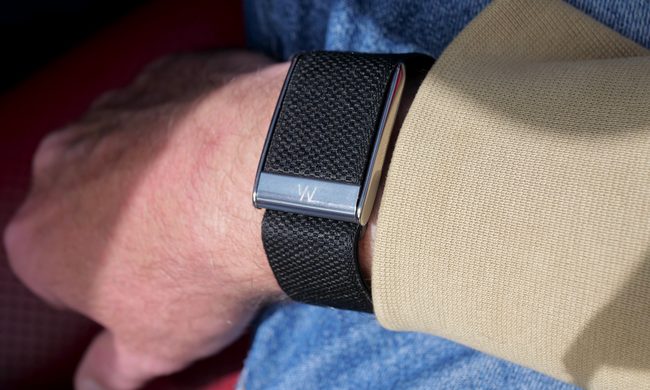
A person wearing the Whoop 5.0.

Recently, Google launched the Fitbit Air as a direct rival to the Whoop screenless fitness band, rebranded the Fitbit app to Google Health, and released a Gemini-powered AI coach. Exactly one day later, Whoop has responded with on-demand video consultations with licensed clinicians for US users. 

The contrast is hard to ignore. While Google is betting on AI as your general health advisor, Whoop is doubling down on real, licensed doctors, and making the case that they can serve its fitness-focused users considerably better (via CNBC).

Read more