1. Home
  2. Wearables
  3. Emerging Tech
  4. Health & Fitness
  5. Mobile
  6. News

HTC and Under Armour announce fitness system at CES 2016

Add as a preferred source on Google

HTC and Under Armour have announced a fitness system at the Consumer Electronics Show this week, which includes three new devices: a fitness band, heart-rate monitor, and a smart scale.

All three devices connect to Under Armour’s Record app, which offers detailed workout routines, health insights, and other information to help users who want to lose weight or live a healthier lifestyle.

Recommended Videos

“This system contains everything a consumer needs to better manage their health and fitness. Whether you are a high performance athlete or simply committed to improving your health,” said Wolfgang Muller, executive director of connected products at HTC.

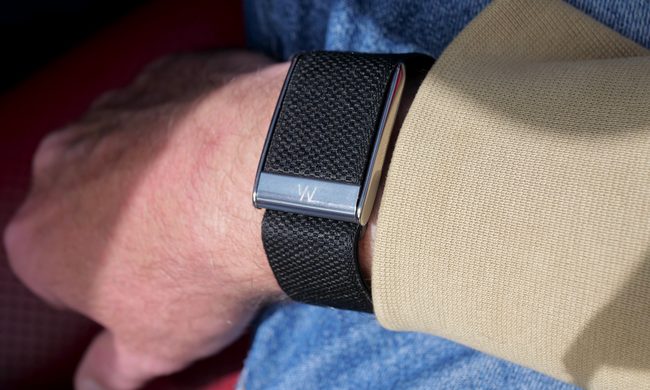
The fitness band, named the UA Band, is an all-day fitness device that tracks daily activity, workouts, and sleep. The band shows contextual information on the LED display, and will also show your heart rate when partnered with the heart-rate monitor. It comes in black with a red-textured side to avoid moisture wicking.

The UA Heart Rate is a chest strap wearable that helps you monitor your heart rate while training. It also helps track the amount of calories burnt during training sessions, which will show up on the Record app.

The connected scale can measure weight and body fat percentage, and send the information to the Record app through Wi-Fi. The scale shows weight and other measurements through an LED display, which is invisible when not in use. It can support up to eight users, enough for most families or health groups.

All three of the devices will be packaged inside the Under Armour Healthbox, which will be available on January 22 for $400. Pre-orders start today for the three devices at HTC or Under Armour’s online store.

The fitness band available in the Under Armour Healthbox does not look like the Re Grip, which HTC announced last year. The device was delayed in July last year, and HTC has not said if the wearable has been cancelled or is coming sometime in the future.

David Curry
Former Contributor
David has been writing about technology for several years, following the latest trends and covering the largest events. He is…
Apple wants you to verify your identity before you get Education discount on products
Apple moving the US Education Store off the honor system also seems about making a globally consistent verification infrastructure that could eventually support more aggressive Education Store expansion.
Computer, Electronics, Laptop

Getting an Apple Education discount in the United States used to be as simple as claiming you’re a student or a teacher; it didn’t need a formal verification. That era is officially over. 

Starting May 8, 2026, Apple now requires formal identity verification for all Education Store purchases in the US, ending the informal honor system that was in place for years (via MacRumors). 

Read more
You can finally avail an education discount on the Apple Watch
It's Apple broadening its ecosystem play into a segment that previously had no wearable entry point, and that could meaningfully accelerate Apple Watch adoption among younger first-time buyers.
Side view of Apple Watch Series 11.

Apple’s Education Store has always been a reliable shortcut to cheaper Macs and iPads for students and teachers. However, for years, Apple Watch wasn’t allowed into the story, making people wait for third-party sales or discounts to get their hands on the smartwatch. 

That’s changing, with effect from May 8, 2026. Apple has quietly added the Apple Watch to its Education Store for the first time. The Watch Series 11, SE 3, and the Ultra 3 are now available at discounted education pricing across 21 markets, including the US, UK, India, Canada, and Australia. 

Read more
Whoop’s response to Fitbit Air and Google Health is real doctors, not just an AI chatbot.
In the race to own your health data, Google chose an AI, and Whoop chose a doctor. That single decision may define which fitness tracker serious health users reach for in 2026 and beyond.
A person wearing the Whoop 5.0.

Recently, Google launched the Fitbit Air as a direct rival to the Whoop screenless fitness band, rebranded the Fitbit app to Google Health, and released a Gemini-powered AI coach. Exactly one day later, Whoop has responded with on-demand video consultations with licensed clinicians for US users. 

The contrast is hard to ignore. While Google is betting on AI as your general health advisor, Whoop is doubling down on real, licensed doctors, and making the case that they can serve its fitness-focused users considerably better (via CNBC).

Read more