1. Home
  2. Wearables
  3. Mobile
  4. News

The new Microsoft Band offers Cortana integration, VO2 monitoring and Golf cards

Add as a preferred source on Google

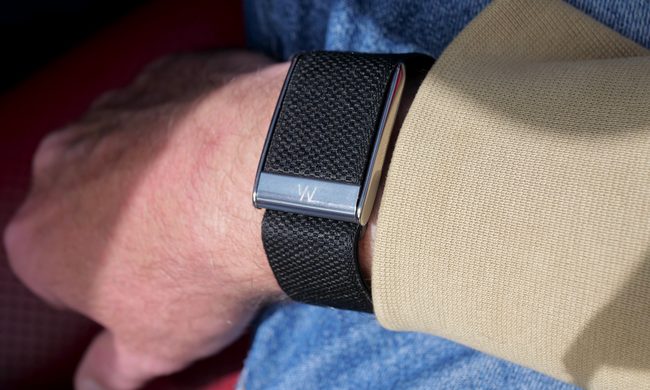
Microsoft announced the second generation of the Microsoft Band at its event earlier today, a small update adding a new, more functional design and two sensors to track elevation and VO2 monitoring.

The design of the new Microsoft Band has no rigid edges, and features a curved LED display made from durable Corning Gorilla Glass 3. The screen is scratch- and water-resistant and boasts related IP68 certifications, making it an excellent all-weather device.

Recommended Videos

Two new sensors have been fitted inside the Microsoft Band; a barometer to check elevation changes in real time for hiking and mountain climbing, and a VO2 monitor that lets users know their maximum rate of oxygen consumption. VO2 monitoring is usually only available on high-end watches and fitness devices, making its inclusion a rather impressive feat for the Microsoft Band.

All of the features available in the first version of the Band are back in the second, including GPS mapping, guided workouts, sleep counters and notifications for your favorites apps. It will work with iOS, Android, and Windows Phone devices, and Microsoft Health will be available on all three of the platforms.

The new Microsoft Band also has Cortana integration, enabling users to find health and other information without touching the display. If you miss a workout, Cortana will remind you and help you to reschedule. Apps like Uber, Facebook, and Lose It are all integrating with the new wearable and with Cortana, allowing users to order a cab, post a status, or even pay for a Subway meal.

For golf fans, the new Microsoft Band is capable of automatic shot detection and offers a scorecard, letting the user track their scores and swings. This functionality should be coming to more sports in the future, allowing hobbyists to train more effectively.

The Microsoft Band will be available for $249, with shipping slated to start on October 30.

David Curry
Former Contributor
David has been writing about technology for several years, following the latest trends and covering the largest events. He is…
Apple wants you to verify your identity before you get Education discount on products
Apple moving the US Education Store off the honor system also seems about making a globally consistent verification infrastructure that could eventually support more aggressive Education Store expansion.
Computer, Electronics, Laptop

Getting an Apple Education discount in the United States used to be as simple as claiming you’re a student or a teacher; it didn’t need a formal verification. That era is officially over. 

Starting May 8, 2026, Apple now requires formal identity verification for all Education Store purchases in the US, ending the informal honor system that was in place for years (via MacRumors). 

Read more
You can finally avail an education discount on the Apple Watch
It's Apple broadening its ecosystem play into a segment that previously had no wearable entry point, and that could meaningfully accelerate Apple Watch adoption among younger first-time buyers.
Side view of Apple Watch Series 11.

Apple’s Education Store has always been a reliable shortcut to cheaper Macs and iPads for students and teachers. However, for years, Apple Watch wasn’t allowed into the story, making people wait for third-party sales or discounts to get their hands on the smartwatch. 

That’s changing, with effect from May 8, 2026. Apple has quietly added the Apple Watch to its Education Store for the first time. The Watch Series 11, SE 3, and the Ultra 3 are now available at discounted education pricing across 21 markets, including the US, UK, India, Canada, and Australia. 

Read more
Whoop’s response to Fitbit Air and Google Health is real doctors, not just an AI chatbot.
In the race to own your health data, Google chose an AI, and Whoop chose a doctor. That single decision may define which fitness tracker serious health users reach for in 2026 and beyond.
A person wearing the Whoop 5.0.

Recently, Google launched the Fitbit Air as a direct rival to the Whoop screenless fitness band, rebranded the Fitbit app to Google Health, and released a Gemini-powered AI coach. Exactly one day later, Whoop has responded with on-demand video consultations with licensed clinicians for US users. 

The contrast is hard to ignore. While Google is betting on AI as your general health advisor, Whoop is doubling down on real, licensed doctors, and making the case that they can serve its fitness-focused users considerably better (via CNBC).

Read more