1. Home
  2. Wearables
  3. Mobile
  4. News

Moto Watch 100 goes official, skips Wear OS for an affordable price tag

Add as a preferred source on Google

After being rumored for months, the Moto Watch 100 has finally been officially announced. This new watch might bring back flashes of the Moto 360 smartwatch that launched in 2019, but there are few similarities between the two apart from the fact that its creator is still the same manufacturer, eBuyNow, that also made the Moto 360.

One of the key changes with the Moto Watch 100 is that it has completely replaced Wear OS with a brand new Moto OS made from scratch. A lot about this new software is unknown, but one of the key advantages, according to the product page, is prolonged battery life. So, while Wear OS would only last two to three days, Moto OS extends battery life to two weeks. By priorotizing fitness-centric features, Motorola has chosen a route similar to Chinese OEMs such as OnePlus and Realme while sacrificing third-party apps.

Recommended Videos

Most smartwatches also have a companion mobile app; however, the Moto Watch 100 doesn’t seem to have one as yet, the link to the Android app currently leads to nowhere and the iOS app is promised to come in December. As for features, it has 26 sports modes, smart notifications, an SPO2 tracker, and a heart rate monitor. Sleep tracking and weight tracking are included as well.
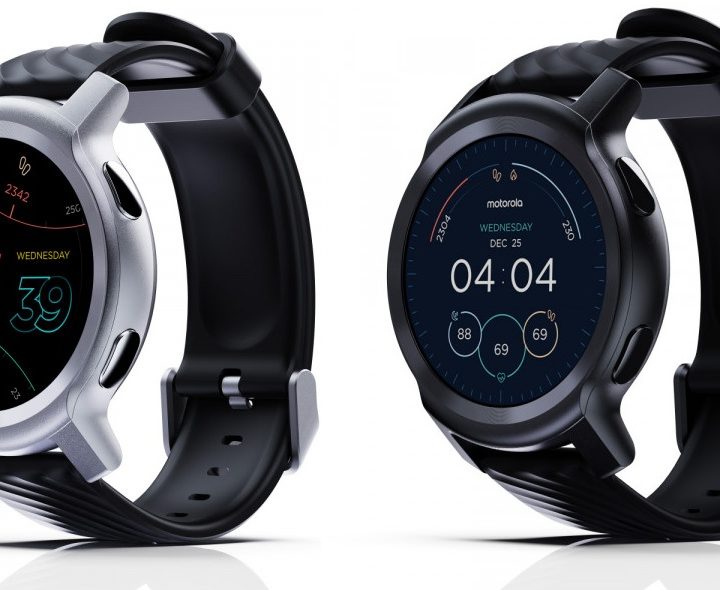
The Moto Watch 100 in black and silver options.
Image used with permission by copyright holder

As for the hardware, the Moto Watch 100 comes in a circular 42mm dial made of aluminum that houses a 1.3-inch LCD and is built with “durability in mind.” The watch is also 5ATM water-resistant and weighs 45.8g. The 20mm straps come in black only and are replaceable, although the watch itself can be bought in either Glacier Silver or Phantom Black options. However, the product page seems to hint that the watch might get other more attractive color straps in the future.

In terms of sensors, the Moto Watch 100 has an accelerometer, gyroscope, HRM, GPS, GLONASS, BeiDou, as well as Bluetooth 5.0 LE. The battery size is 355mAh that the company says can be charged completely in 1 hour. The watch is available for pre-order, priced at $100. 

Abdul Q
Former Digital Trends Contributor
Abdul can be tagged as a true blue smartphone enthusiast. As part of his professional career, he has contributed to a number…
Meta’s Ray-Ban Display now types messages from your finger movements
Neural Handwriting is a really cool feature, but Meta opening the Ray-Ban Display to developers is the quiet announcement that turns a clever wearable into a platform with immense possibilities.
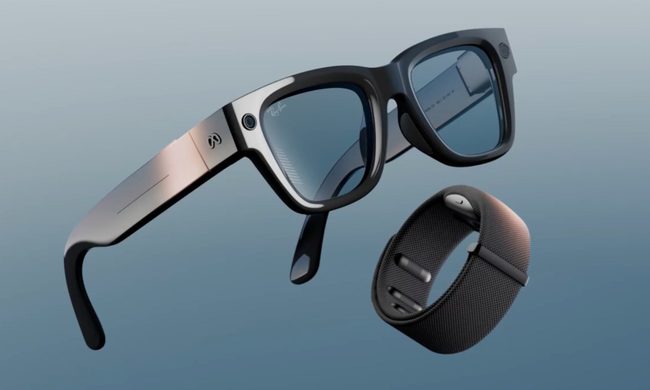
Meta Ray-Ban Display and EMG Band.

Six months into its life, the Meta Ray-Ban Display is starting to look less like an experiment, thanks to what is arguably the most significant update Meta has ever pushed for the device. 

The headline feature is Neural Handwriting, which is now available to every Ray-Ban Display owner, having spent its early months in limited access for Messenger and WhatsApp users. 

Read more
Forget smart glasses, these earbuds can see, hear, and remember everything for you
Electronics, Headphones

Smart glasses have always felt a little awkward to me. Sure, they can play music, take calls, snap photos, and even throw notifications in front of your eyes, but at the end of the day, they’re still just tiny screens sitting on your face. Now imagine removing the screen entirely.

That’s exactly what this new pair of AI-powered earbuds is trying to do. Instead of showing you information, these earbuds are designed to quietly hear, see, remember, and respond to the world around you. And honestly, this might be one of the more interesting directions wearable AI has taken so far.

Read more
Meta will allow third-party apps for Ray-Ban Display glasses. Your eyes must stay glued to digital reality.
Meta just handed developers the keys to the glasses display, and the possibilities are endless.
Meta Ray Bans Display close up shot

Meta announced its Meta Ray-Ban Display glasses with a built-in in-lens display that allows users to see what the smart glasses capture, see and respond to messages, and interact with its Meta AI.

While the built-in apps and features were good, the only way to unleash the potential was to allow third-party developers to build apps. And today, Meta is finally opening up the display on its Ray-Ban smart glasses to developers.

Read more