1. Home
  2. Wearables
  3. News

Here’s why OnePlus abandoned plans for its own wearable

Add as a preferred source on Google

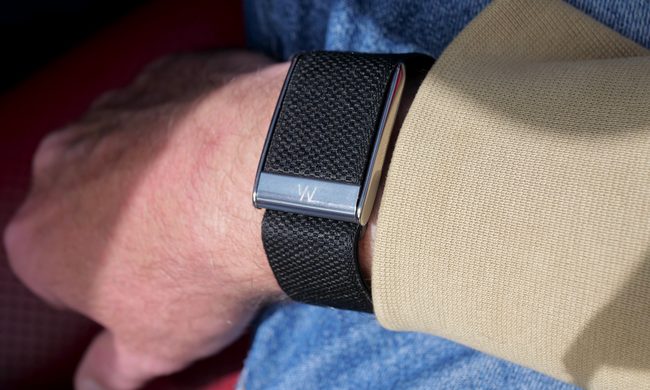
Wearables are finding their way to more and more wrists and ankles, and the trend is growing all the time — so it’s no surprise that hardware makers want to get in on the action as soon as possible. One firm that isn’t jumping on the bandwagon for the foreseeable future is OnePlus, which recently abandoned plans to launch a wearable device at the last minute.

Speaking to TechRadar, OnePlus co-founder Carl Pei said his company was interested in launching a fitness tracker — and a Bluetooth speaker — but pulled the plug a month before the devices were about to hit the market. Understandably, the engineers working on the projects weren’t best pleased that all their hard work counted for nothing.

Recommended Videos

As Pei explained to TechRadar: “We asked ourselves, what is the goal? We decided we needed to focus on smartphones, to ensure we’re launching quality products and leave the wearables and speakers to the people who know what they’re doing.”

So make of that what you will — Pei says the company is going to continue to focus on its flagship phone and the more stylish X range, with no plans to add more handsets at different price points at this stage. Customer service and the OxygenOS software developed by the firm are also going to be prioritized in the years ahead, according to Pei.

It makes sense for OnePlus to focus its efforts behind a couple of major products rather than spread itself too thinly — it doesn’t have the huge resources of a Samsung or an LG after all — but it would’ve been interesting to see what the innovative company would have done with the wearable fitness tracker format. Let’s hope it might revisit the idea again at some point in the not-too-distant future.

David Nield
Former Contributor
Dave is a freelance journalist from Manchester in the north-west of England. He's been writing about technology since the…
Apple wants you to verify your identity before you get Education discount on products
Apple moving the US Education Store off the honor system also seems about making a globally consistent verification infrastructure that could eventually support more aggressive Education Store expansion.
Computer, Electronics, Laptop

Getting an Apple Education discount in the United States used to be as simple as claiming you’re a student or a teacher; it didn’t need a formal verification. That era is officially over. 

Starting May 8, 2026, Apple now requires formal identity verification for all Education Store purchases in the US, ending the informal honor system that was in place for years (via MacRumors). 

Read more
You can finally avail an education discount on the Apple Watch
It's Apple broadening its ecosystem play into a segment that previously had no wearable entry point, and that could meaningfully accelerate Apple Watch adoption among younger first-time buyers.
Side view of Apple Watch Series 11.

Apple’s Education Store has always been a reliable shortcut to cheaper Macs and iPads for students and teachers. However, for years, Apple Watch wasn’t allowed into the story, making people wait for third-party sales or discounts to get their hands on the smartwatch. 

That’s changing, with effect from May 8, 2026. Apple has quietly added the Apple Watch to its Education Store for the first time. The Watch Series 11, SE 3, and the Ultra 3 are now available at discounted education pricing across 21 markets, including the US, UK, India, Canada, and Australia. 

Read more
Whoop’s response to Fitbit Air and Google Health is real doctors, not just an AI chatbot.
In the race to own your health data, Google chose an AI, and Whoop chose a doctor. That single decision may define which fitness tracker serious health users reach for in 2026 and beyond.
A person wearing the Whoop 5.0.

Recently, Google launched the Fitbit Air as a direct rival to the Whoop screenless fitness band, rebranded the Fitbit app to Google Health, and released a Gemini-powered AI coach. Exactly one day later, Whoop has responded with on-demand video consultations with licensed clinicians for US users. 

The contrast is hard to ignore. While Google is betting on AI as your general health advisor, Whoop is doubling down on real, licensed doctors, and making the case that they can serve its fitness-focused users considerably better (via CNBC).

Read more