1. Home
  2. Wearables
  3. Health & Fitness
  4. News

Omne Eternal safety-first cycling helmet uses the power of light to charge up

Add as a preferred source on Google
Promotional image for Tech For Change. Person standing on solar panel looking at sunset.
This story is part of Tech for Change: an ongoing series in which we shine a spotlight on positive uses of technology, and showcase how they're helping to make the world a better place.

Cycling helmets with an integrated light are nothing new, but like all battery-powered devices, they were only ever useful if you remembered to charge them up before heading out. Not so with the POC Sports Omne Eternal, a cycling helmet with a built-in LED light that never needs to be plugged in or have a battery replaced in order for it to work.

Image used with permission by copyright holder

The Omne Eternal is the result of a partnership between POC — a Swedish cycling accessory maker — and solar power experts Exeger, and is being billed as one of the world’s first “self-powered” cycling helmets. By integrating Exeger’s special Powerfoyle solar cells into the structure of the helmet, it constantly pulls in light from any source, indoor or outdoor, to power up the LED on the back of the helmet. Sensors inside the helmet recognize when you put the helmet on, and activate the light for you. Take the helmet off, and the light goes out.

Recommended Videos

That’s right, the helmet doesn’t need charging, and has no batteries to replace, no proprietary charging cables to lose, and no on/off switch. It’s simply always ready to go. POC’s experience with cycling safely equipment means that despite the integrated electronics, protection has not been compromised, the ventilation is effective, and it’s still light enough to wear for long periods. The wear sensors are designed to work even if you’re wearing a hat under the helmet.

Image used with permission by copyright holder

It’s recommended that the helmet is exposed to some kind of light source for an hour each day, and the sensors are weatherproof, so it can be worn in bright sunshine or the freezing cold. While they’re unaffected by rain, snow, and even scratches, they just need to be kept clean. That’s about all the general upkeep the Omne Eternal requires, making it easy to live with.

Image used with permission by copyright holder

Designed to increase rider visibility in difficult conditions, in traffic, or at night, the Omne Eternal has a single LED light on the back, which flashes to attract further attention. It’s quite small, though, and of course should not be considered a replacement for bike lights or reflective clothing. It’s not quite as smart as some of the alternatives out there either, such as the Lumos range of cycling helmets, but the convenience factor makes it stand out.

The Omne Eternal will arrive in Europe in May on POC Sports’s website and cost 250 euros, or about $300 U.S. It’ll go on to be available globally at the end of the year. The first versions will meet European Union safety and consumer electronic standards, and the global version will meet further local market standards as well.

Andy Boxall
Andy has written about mobile technology for almost a decade. From 2G to 5G and smartphone to smartwatch, Andy knows tech.
Apple wants you to verify your identity before you get Education discount on products
Apple moving the US Education Store off the honor system also seems about making a globally consistent verification infrastructure that could eventually support more aggressive Education Store expansion.
Computer, Electronics, Laptop

Getting an Apple Education discount in the United States used to be as simple as claiming you’re a student or a teacher; it didn’t need a formal verification. That era is officially over. 

Starting May 8, 2026, Apple now requires formal identity verification for all Education Store purchases in the US, ending the informal honor system that was in place for years (via MacRumors). 

Read more
You can finally avail an education discount on the Apple Watch
It's Apple broadening its ecosystem play into a segment that previously had no wearable entry point, and that could meaningfully accelerate Apple Watch adoption among younger first-time buyers.
Side view of Apple Watch Series 11.

Apple’s Education Store has always been a reliable shortcut to cheaper Macs and iPads for students and teachers. However, for years, Apple Watch wasn’t allowed into the story, making people wait for third-party sales or discounts to get their hands on the smartwatch. 

That’s changing, with effect from May 8, 2026. Apple has quietly added the Apple Watch to its Education Store for the first time. The Watch Series 11, SE 3, and the Ultra 3 are now available at discounted education pricing across 21 markets, including the US, UK, India, Canada, and Australia. 

Read more
Whoop’s response to Fitbit Air and Google Health is real doctors, not just an AI chatbot.
In the race to own your health data, Google chose an AI, and Whoop chose a doctor. That single decision may define which fitness tracker serious health users reach for in 2026 and beyond.
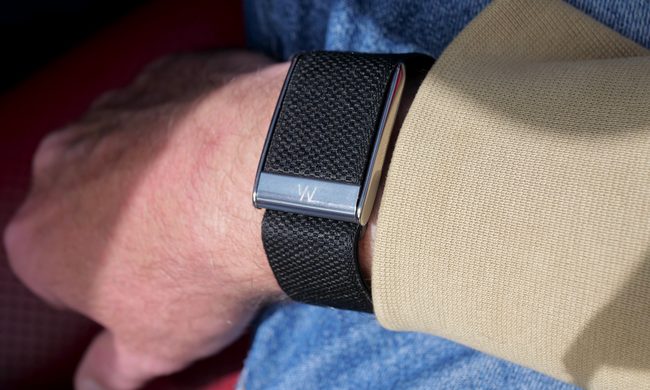
A person wearing the Whoop 5.0.

Recently, Google launched the Fitbit Air as a direct rival to the Whoop screenless fitness band, rebranded the Fitbit app to Google Health, and released a Gemini-powered AI coach. Exactly one day later, Whoop has responded with on-demand video consultations with licensed clinicians for US users. 

The contrast is hard to ignore. While Google is betting on AI as your general health advisor, Whoop is doubling down on real, licensed doctors, and making the case that they can serve its fitness-focused users considerably better (via CNBC).

Read more