1. Home
  2. Wearables
  3. Emerging Tech
  4. News

These insanely thin LEDs let you put a digital display on the surface of your skin

Add as a preferred source on Google

What if wearable technology was more like a temporary tattoo than a gadget around your wrist? An incredibly thin digital display developed at the University of Tokyo could make skin-level digital displays a wearable reality. Other than the film layer researchers are using to stick their sensors and LEDs to human skin, the technology looks a whole lot like a light-up tattoo that displays data about your body’s health.

In their study, researchers from the University of Tokyo are calling the technology optoelectronic skins, or OE-skins. The photodetectors and the polymer LEDs are so thin that, even with the film layers sandwiching the technology, the entire device is only three micrometers thick. That’s even thinner than the external layer of human skin we all wear, to take the tattoo comparison even further. Combinations of different colored LEDs and more complex sensors could lend the technology to some impressive health tracking functionality.

Recommended Videos

One of the current prototypes of the super thin digital system uses organic photodetectors and polymer LEDs to measure and display oxygen concentration in the blood. “The device unobtrusively measures the oxygen concentration of blood when laminated on a finger. On-skin seven-segment digital displays and color indicators can visualize data directly on the body,” researchers explained in the study. That capacity for immediate, surface-level display is quietly being heralded as a promising future path for wearables.

So as the world of wearable devices is quickly moving towards thinner, more adaptable technology that exists as part of our day-to-day lives, it’s possible our gadget collections may shrink. Applications of the optoelectronic skin technology have been simple so far, but researchers believe that future versions could display complex fitness data in the same way a smart watch or health tracker might — but directly on the surface of your skin.

Chloe Olewitz
Former Digital Trends Contributor
Chloe is a writer from New York with a passion for technology, travel, and playing devil's advocate. You can find out more…
The HIFIMAN Ananda hits $249 at Amazon, and nothing at this price competes with planar magnetic drivers
HIFIMAN Ananda drops to $249 (38% off): open-back planar magnetic, Stealth Magnet drivers
HIFIMAN Ananda deal

Planar magnetic headphones used to be the kind of thing you'd spend $500 or more to get into. The HIFIMAN Ananda changed that conversation when it launched, and at $249, it moves that conversation further still. That's $150 off its $399 list price for a full-size open-back planar magnetic headphone that competes with options costing considerably more, and it's the deal I'd point any serious listener toward right now.

get the deal

Read more
Meta Ray-Ban smart glasses might soon get new Scriber and Blazer models
Meta is doubling down on AI glasses with new Ray-Ban variants.
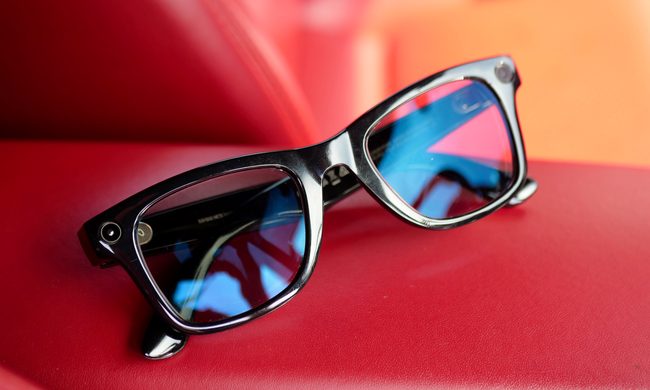
The front of the Ray-Ban Meta smartglasses.

Meta's push into AI wearables isn't slowing down anytime soon.

A new FCC filing has revealed that two upcoming Ray-Ban Meta smart glasses, namely "Scriber" and "Blazer". This listing hints at the launch being right around the corner.

Read more
Even Realities G2’s biggest software update yet brings an app store and a meeting prep tool that changes how you work
The G2 just got smarter, more personal, and a whole lot harder to put down.
Even G2 smart glasses and Even R1 smart ring

Even Realities rolled out its biggest software update since the G2 smart glasses launched, and it’s an update that makes the smart glasses useful and indispensable.

The big new feature is Prep Notes, a redesigned version of the company’s Conversate AI feature. Before any meeting, call, or job interview, you can now upload a PDF, a document, or type in notes directly from your phone. Once the conversation starts, it surfaces relevant information on the glasses’ HUD, giving you suggested responses and key facts.

Read more