1. Home
  2. Phones
  3. Android
  4. Emerging Tech
  5. Mobile
  6. News

LG unveils two patents for foldable smartphones

Add as a preferred source on Google

Foldable smartphones are slowly becoming a reality with the likes of the ZTE Axon M having arrived on the scene last year. However, ZTE is far from being the only company to work on a foldable display. Samsung, LG, and Huawei all reportedly working on foldable devices

The details surrounding most of these devices are still under wraps, but we’ve gotten the first look at the patents for two of LG’s foldable devices. The first design shows a device made out of two bodies which share a single large display. When the phone is open, you’ll get a tablet-sized display. When it is closed, you will have access to a smaller device similar to a traditional smartphone. The front of the devices houses a screen which can provide additional information such as notifications.

Recommended Videos

The second design is similar to the first, but features a sliding back panel which can be moved to reveal a portion of the main display used for notifications, messages, and other features.

Of course, the company is no stranger to the flexible display — we’ve seen plenty of flexible prototypes from the company over the past few years, and while certainly not ready for consumer devices, they have been getting better. Now, however, it seems as though the company is ready to take things to the next level.

In fact, the firm has reportedly started outfitting one of its factories with the tools needed to mass produce flexible displays, and has completed much of the research required to mass produce a flexible-display device. LG has also signed contracts with Ignis Innovation, a Canadian company that builds flexible circuits.

Ignis’ tech addresses a number of problems often associated with foldable displays. The technology uses both hardware and software charged with constantly monitoring the pixels, ensuring that they’re rendering the right images, no matter what position the flexible circuits are in. The company has filed hundreds of patents for its related tech, and is apparently the only firm to have come up with a solution — which would make sense considering how eager LG seems to be to work with the company. Even more interesting is the fact that Ignis’ contract is non-exclusive, meaning that if the tech proves itself, it could end up with plenty more customers.

As mentioned, LG isn’t the only one developing foldable devices. Samsung is also reported to be working on a foldable phone, to be released sometime in the future. It looks liked 2018 will be a very interesting one for new technology.

Update: Added information about LG’s patents for foldable phones. 

Christian de Looper
Christian de Looper is a long-time freelance writer who has covered every facet of the consumer tech and electric vehicle…
I can’t live without iPhone shortcuts. These 7 are my favorites that you must try, too.
I've been using these 7 iPhone shortcuts for years, and they've completely changed how I use my phone.
iPhone showing shortcuts app

The iPhone Shortcuts app reminds me of Minecraft. It might be relatively easy to jump into, but it offers nearly limitless potential, allowing you to build anything you want. The same holds true for the Shortcuts app, and that endless possibilities are what many iPhone users might find intimidating. But you don't have to.

If you are new to iPhone shortcuts, think of them as little automated helpers. You can build them yourself or find ones that others have built and use them. And that’s the beauty of shortcuts. If you don’t want to get your hands dirty, you can find shortcuts others have created and tailor them to your needs. 

Read more
Gemini Intelligence has strict requirements, and your phone may not qualify
Gemini Intelligence

Google’s new Gemini Intelligence platform is quickly becoming one of the biggest talking points in the Android world right now. After being highlighted during this week’s Android Show, the feature is already being tied to several upcoming premium foldables and flagship phones. But there’s a catch: not every high-end Android device will be able to run it. And surprisingly, even some of Google and Samsung’s latest foldables may miss out.

According to Google’s requirements, Gemini Intelligence isn’t just another software update you can casually push to older devices. The company appears to be building this around a much stricter hardware and long-term software support system. To qualify, a phone needs a flagship-grade chipset, at least 12GB RAM, support for AI Core, and Gemini Nano v3 or newer. That immediately creates a problem for several current-generation phones.

Read more
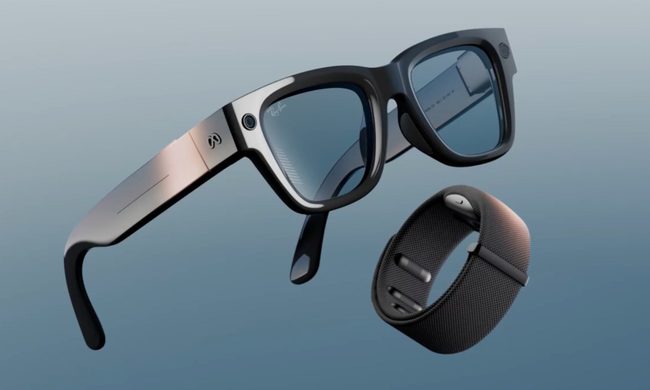
Meta’s Ray-Ban Display now types messages from your finger movements
Neural Handwriting is a really cool feature, but Meta opening the Ray-Ban Display to developers is the quiet announcement that turns a clever wearable into a platform with immense possibilities.
Meta Ray-Ban Display and EMG Band.

Six months into its life, the Meta Ray-Ban Display is starting to look less like an experiment, thanks to what is arguably the most significant update Meta has ever pushed for the device. 

The headline feature is Neural Handwriting, which is now available to every Ray-Ban Display owner, having spent its early months in limited access for Messenger and WhatsApp users. 

Read more