Tens of millions of Americans suffer from chronic pain, and if left untreated, the effects can be devastating. It saps sufferers of energy and motivation. Those living in pain are more prone to psychological distress like anxiety and depression compared to those who aren’t in pain. And some studies suggest it could even affect memory.
Traditionally, relieving pain has been predicated on a doctor’s visit. But new startups are trying to change paradigm with technological alternatives. There are wearables that fight nausea; goggles that massage sore muscles; smart pill boxes; and electrode packs that promote rest and relaxation.
Pain relief tech is a burgeoning field, and not all of it’s been proven as effective as a prescription drug. But at the Consumer Electronics Show in Las Vegas, we spotted five groundbreaking products that promise to change the way chronic sufferers manage their pain.
**Warning: We’re reporting on what these companies tell us and what we saw at CES, but please be careful before you order or support these products. We have not thoroughly tested them. Pain relief tech has a long, painful history of just not working. We think these projects hold promise, but it’s impossible to say precisely how good they are, yet.**
RELIEFBAND NEUROWAVE
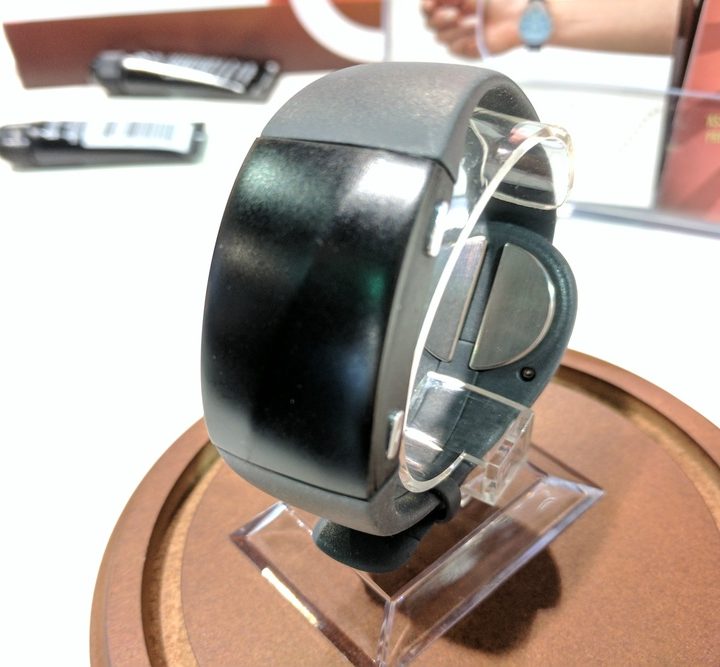
The Reliefband Neurowave isn’t new, per say — the startup’s first wearable debuted last year — but the new version packs dozens of improvements that are worth mentioning.
The Neurowave, a pudgy fitness band worn around the wrist, uses patented technology to manipulate the neural pathways responsible for nausea. It does so by applying applies electrical pulses at “highly specific waveforms, frequency, and intensity” to the median nerve via hypoallergenic surgical steel contacts on the underside of the wrist, which travel to the brain as part of a process known as neuromodulation. They stimulate the body’s central nervous system — the electrical signals modulate the neural pathways between the brain and stomach.
Neurowave says it provides relief to the roughly 10 percent of the population who are genetically predisposed to be susceptible to motion sickness motion sickness, seasickness, airsickness, and the motion sickness associated with virtual reality games. A company representative told Digital Trends that it’s especially effective against morning sickness, a condition many women are reluctant to treat because of the potentially damaging effects of drugs on the development of the fetus.
The Reliefband Neurowave will launch in retail for $150 in the second quarter of this year.
QUELL

Ice and heating packs alone aren’t always enough to alleviate soreness. NeuroMetrix’s Quell, a wearable device that attaches to the calf, aims to do better with the help of electricity.
Quell stimulates the body’s opiate production via highly targeted, sequential shocks. Electrodes perform transcutaneous electrical wave stimulation (TENS), or the transfer of electricity from electrodes on Quell’s underside to specific nerves on the skin’s surface.
NeuroMetrix has clinical studies and white papers to back up its effectiveness, and Quell has been approved for the treatment of certain ailments by the Food and Drug Administration. It’s been deemed safe for long-term use — as many as 24 hours on-body and over 40 hours on a single charge.
But Quell’s form of pain relief doesn’t come cheap. Quell costs $250, and an additional $30 per month for replacement electrode strips. The company is hoping insurance companies will pick up the cost, but it didn’t have any news to announce on that front at CES.
VISIONCARE EYE MASSAGER
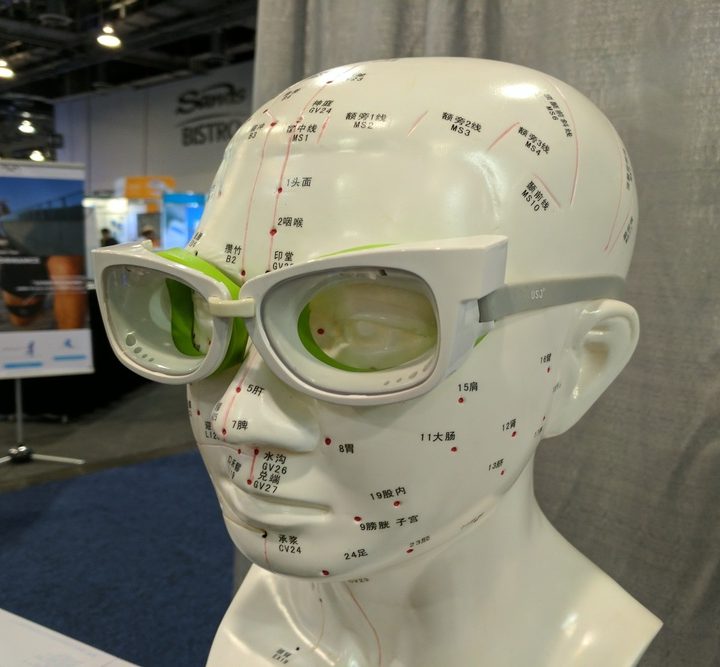
For most folks, it’s a very short road to eye fatigue. Whether you’re staring at a computer screen all day, binge-watching the newest season of The Man in the High Castle, or playing video games in your pajamas until the sun comes up, it’s inevitable. Your eye muscles are running a marathon. Luckily, there’s relief from discomfort in the form of the Visioncare Eye Massager by Acumened Source, a wearable pair of glasses that use a combination of heat and acupressure treatment to leave your eyes relaxed, rejuvenated, and ready to gaze pain-free once more.
The goggles employ infrared heat compression to gently warm the area around your eyes, including the eyelids and the soft tissue around the eye sockets, in order to expand the capillaries around the eyes and enhance blood circulation. They simultaneous apply a precise pressure point massage of acupressure points, which relax the eyes from tension and fatigue by rhythmically vibrating and massaging facial muscles.
The Vision Care Eye Massager reduces certain symptoms of dry eye syndrome, Acumend Source claims. And they can even ease insomnia by creating a “hypnotizing effect,” especially after a meal.
They’re available from Amazon for $160.
TRICELLA PILL BOX

For ailments of a certain severity, prescription painkillers and supplements are a necessity. But it’s not always easy to remember to take them consistently. That’s where the Tricella Pill Box comes in; it’s a Bluetooth pillbox that can sense and notify you when you’ve forgotten to take a day’s dosage.
The smart pillbox isn’t just meant for personal use. It has an “elevated” notification that alerts a close family member or friend if you haven’t taken the daily dosage, making it especially useful for older patients. It’s also able to determine when you take the wrong dose, too. And a built-in group messenger provides a convenient way to send reminders and coordinate health plans.
The Tricella Pillbox syncs with your smartphone and gives you a progress report, showing you a calendar view of the days you’ve taken pills and the days you’ve forgotten them. And it draws power from a replaceable coin battery that the company estimates last about half a year.
It’s available at Target for $75.
BLUETENS SKIN ELECTRODES
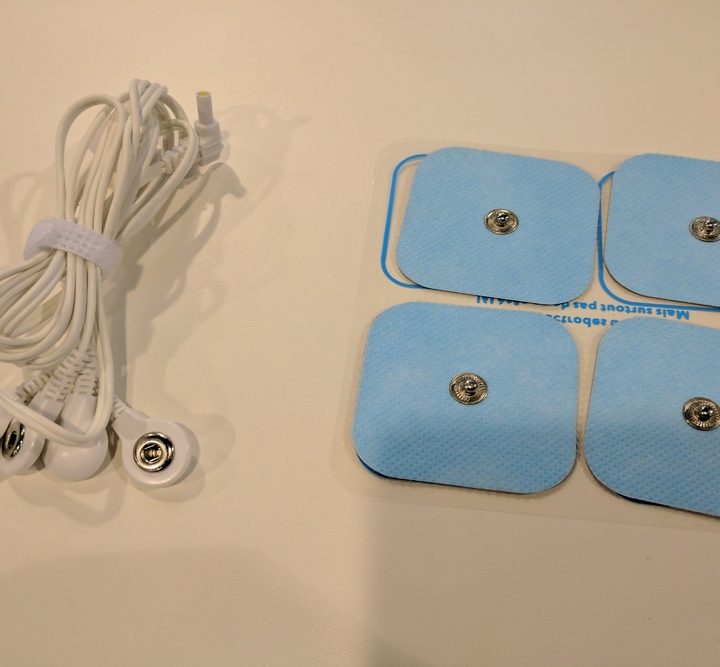
Sometimes, an acute source of pain originates from an area larger than your wrist or hand. Bluetens, a French startup, has a solution: A set of 12 electrodes that cause targeted muscle contractions.
Traditionally, direct-skin electrodes have been relegated to doctor’s offices and the emergency. Bluetens has developed an instructive app that guides users through the configuration process. The app, which pairs to an iOS and Android app, boasts more than 150 different treatment routines and instructions for each, and helpfully divides them into intuitive categories like “relaxation,” “stress relief,” and “pain relief.”
Once the electrodes are affixed to the troublesome shoulder, thigh, or other limb in question, they deliver a low-voltage dose of electricity. The dosages vary in intensity and length — some sessions last up to 20 minutes — and deliver relief to the affected areas.
The Bluetens system isn’t for everyone, of course. Blutens recommends against the electrode’s usage for people with pacemakers, epilepsy, existing pains, and particular injuries. But it’s far cheaper than commercial systems that cost hundreds — or even thousands — of dollars.
The Bluetens system retails for $160.