  1. Home
  2. Emerging Tech
  3. Gaming
  4. Virtual Reality
  5. News

Put down the controllers! Players navigate this VR game using only their minds

Add as a preferred source on Google

From allowing people to pilot drones using only their mind to medical applications involving the control of smart prostheses, the ability to use brain activity to directly control technology is a field that’s advanced significantly in recent years. At the recent 2017 SIGGRAPH conference, tech company Neurable and VR graphics company Estudiofuture teamed up to show off something new: brain-controlled virtual reality.

In a tech demo, the companies demonstrated how a VR game created by Estudiofuture could be intuitively controlled by swapping out the regular hand controls from an HTC Vive headset for technology developed by Neurable that monitors a user’s brain activity to determine their intent.
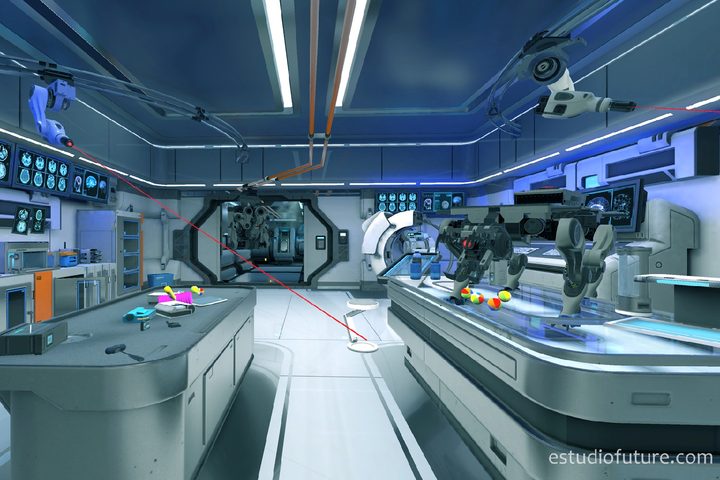
Image used with permission by copyright holder

“[In] The Awakening, you are a child held prisoner in a government science laboratory,” Dr. Ramses Alcaide, CEO of Neurable, told Digital Trends. “You discover that experiments have endowed you with telekinetic powers. You must use those powers to escape your cell, defeat the robotic prison guards, and free yourself from the lab. The game allows you to manipulate objects and battle foes with your mind, and is played entirely without handheld controllers.”

Recommended Videos

Neurable’s technology uses head-mounted electrodes to noninvasively read brain waves. It then employs machine learning to turn these inputs into instructions. There are some things it’s not ideal for — such as allowing users to type or navigate menus. However, when it comes to creating more immersive virtual environments for fields like gaming, it is an extremely promising technology.
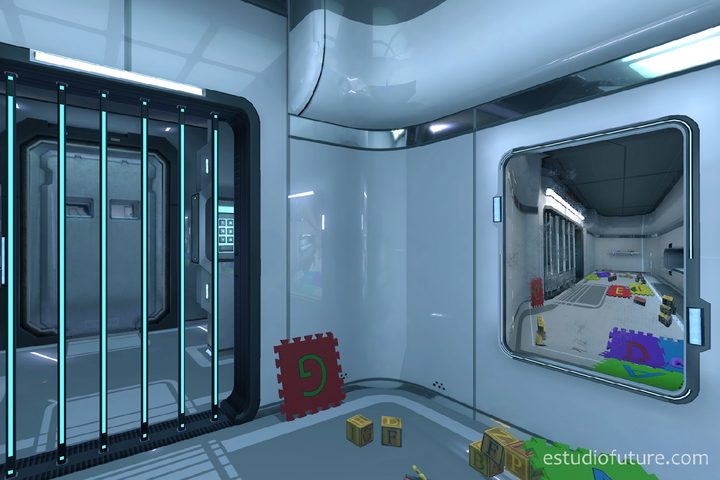
Image used with permission by copyright holder

“The demo showed that you can make decisions in VR with the sole use of your brain; you don’t need gamepads or a controller, or even to move your head,” Joaquín Ruipérez, CEO of Estudiofuture, told DT. “You can select and pick up objects, and throw them to a selected target, only by thinking on them. The most amazing thing is that it really works!”

According to Neurable, the next step is a brain-controlled VR arcade game, scheduled for 2018. This will reportedly offer an expanded version of The Awakening. A Stranger Things-esque game, in which we play a character similar to the telekinetic Eleven, using our brain powers to escape a high-tech facility? Yep, we’re on board for that!

Luke Dormehl
I'm a UK-based tech writer covering Cool Tech at Digital Trends. I've also written for Fast Company, Wired, the Guardian…
Google’s Gemini might be testing weekly limits, and free users won’t love it
Logo, Disk, Symbol

Right now, almost every major AI chatbot follows the same playbook: hook people with a surprisingly capable free tier, then gently nudge them toward a subscription once they start relying on it too much. And honestly, for most users, the free versions are already good enough. You can ask questions, generate images, summarize documents, and even brainstorm ideas without constantly hitting a paywall. That is why a newly spotted change inside Google’s Gemini app feels particularly interesting.

A user on X has shared a screenshot suggesting Google may be testing stricter usage tracking and possible weekly limits inside Gemini. The screenshot shows a new section that explains, “Plan limits determine how much you can use Gemini over time.” This means Google could be preparing a more aggressive system that measures how frequently free users interact with Gemini, especially when using heavier AI models.

Read more
Scientists just broke a wireless speed record that could shape the future of 6G
Researchers hit 112Gbps over a 560GHz wireless connection, pointing to faster backhaul before 6G reaches phones
Light, Laser, Lighting

Scientists have pushed wireless speed into territory that current mobile networks can’t touch. A Tokushima University team demonstrated a 112Gbps wireless connection in the 560GHz band, using soliton microcombs to generate a more stable terahertz signal for future 6G systems.

The near-term prize isn’t a faster handset. It’s the hidden infrastructure that carries traffic between network sites, where backhaul capacity can decide whether future 6G speeds feel real or get trapped behind crowded network pipes. That makes this a useful 6G speed breakthrough to watch, even if consumers won’t see it on a spec sheet anytime soon.

Read more
Google Gemini’s new thinking level lets you dial up the brainpower
Gemini Intelligence

With Google I/O 2026 almost here, Google seems unable to stop Gemini leaks from slipping out early. Every other day, something new appears inside the app, and this time it looks like Google is experimenting with giving users more control over how much “thinking” Gemini actually does before responding.

According to a report from 9to5Google, some users are now spotting a new “Thinking Level” option inside the Gemini app. The feature reportedly appears within Gemini’s existing model picker, where users already choose between options like Fast, Thinking, Pro, or Google AI Plus.

Read more