1. Home
  2. Computing
  3. News

Leaked Nvidia GTX 1050 Max-Q cards could target Intel AMD combo chips

Add as a preferred source on Google

When it was announced that Intel and AMD had collaborated on a processor design that bundled together an Intel CPU core and an AMD graphics chip on the same die, it seemed as if dogs and cats were about to start living together. But as the days rolled on, other market participants absorbed the news, which is why it’s no surprise that a leaked Nvidia specification appears to be going after the new combo-chip with a design termed GTX 1050 Max-Q.

Spotted by NotebookCheck in the latest Nvidia driver release for Linux platforms, the GTX 1050 and 1050 Ti Max-Q chips are expected to sit somewhere just beneath the standard GTX 1050 and 1050 Ti cards in terms of performance, offering improved efficiency and thermal controls. If the speculation is correct, the idea would be to integrate such chips into lightweight laptops.

Recommended Videos

Although that kind of talk is all conjecture, the educated guesses at clock speeds by the likes of VideoCardz suggest that these new 10-series graphics processors (GPU) could have a purpose beyond expanding the existing range of Nvidia chips. Their speculated performance would put them around about the power of the recently announced Kaby Lake G series with AMD graphics on board. These new Max-Q GPUs could be Nvidia’s attempt to counter the new strategy from the chip giants.

How effective a strategy that will be, though, remains to be seen. We still don’t know what the real-world performance of the new Kaby Lake G chips will be like, as the close proximity of the CPU and GPU and the pairing with second-generation high bandwidth memory (HBM2) could give it a unique performance profile. Nvidia’s more typical graphics chip design could end up more powerful in some scenarios and less so in others.

Nvidia has yet to make any sort of official announcement of the GTX 1050 and 1050 Ti Max-Q cards, so we have no idea when we can expect them to see the light of day. However, with them starting to receive official, certified driver support, we would be surprised if they didn’t appear, at least in a reference design, some time in the next few months.

Jon Martindale
Jon Martindale covers how to guides, best-of lists, and explainers to help everyone understand the hottest new hardware and…
Asus has a sleek gaming mini PC to offer, but the price will make you pinch yourself
This tiny gaming powerhouse costs more than many full desktop setups
mini PC

Asus has launched the 2026 ROG NUC 16, a compact gaming PC built for people who want a powerful setup without making room for a full desktop tower. It can sit vertically or horizontally on a desk, and there is also a Moonlight White version for buyers who want something a little cleaner-looking. The problem is the price.

In China, the refreshed ROG NUC 16 is listed at a starting price of CNY 29,999, which is around $4,405. The white version costs CNY 31,999, or about $4,699. Asus has not confirmed global pricing or availability yet, but international prices are likely to be in the same range, or possibly go even higher.

Read more
This is the coolest laptop power bank I have ever seen, and I’d wait to see if it actually ships
Krafted Edge solves the most annoying thing about laptop power banks, the fact that they never fit anywhere, and then oversells itself with battery life claims that don't quite add up.
Computer, Electronics, Laptop

I’ve seen a lot of power banks, from the chunky rectangular bricks, round puck-shaped ones, and the flat ones that sit awkwardly next to a laptop in a bag, but none of them has ever looked like this.

The Krafted Edge is a 20,000 mAh power bank built into an aluminum slab measuring 27 x 19 x 1.28 cm, which is almost exactly the footprint of a closed laptop, and that’s intentional.

Read more
Meta’s Ray-Ban Display now types messages from your finger movements
Neural Handwriting is a really cool feature, but Meta opening the Ray-Ban Display to developers is the quiet announcement that turns a clever wearable into a platform with immense possibilities.
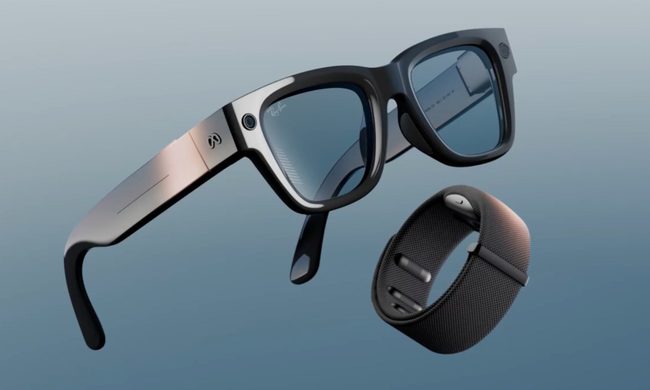
Meta Ray-Ban Display and EMG Band.

Six months into its life, the Meta Ray-Ban Display is starting to look less like an experiment, thanks to what is arguably the most significant update Meta has ever pushed for the device. 

The headline feature is Neural Handwriting, which is now available to every Ray-Ban Display owner, having spent its early months in limited access for Messenger and WhatsApp users. 

Read more