
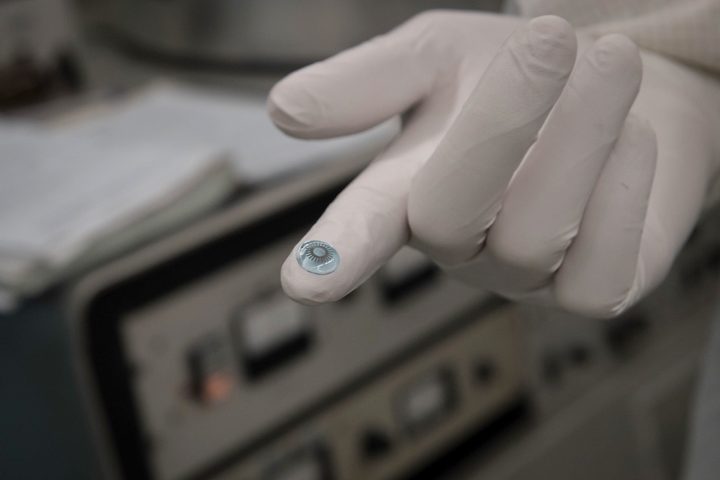
Remember the early millennium trend for luminous contact lenses which almost appeared to be glowing in the eyes of whoever wore them? Whether it was Marilyn Manson or the WWE wrestler Rey Mysterio, these uncanny valley lenses were a hallmark of popular culture for a few years, before going the same way as downloadable ringtones, Von Dutch hats, and other bits of early 2000s-era ephemera. But researchers from the California Institute of Technology hope to bring them back — with the added twist that they could now be used to help battle blindness in the hundreds of millions of people around the world who suffer from diabetes.
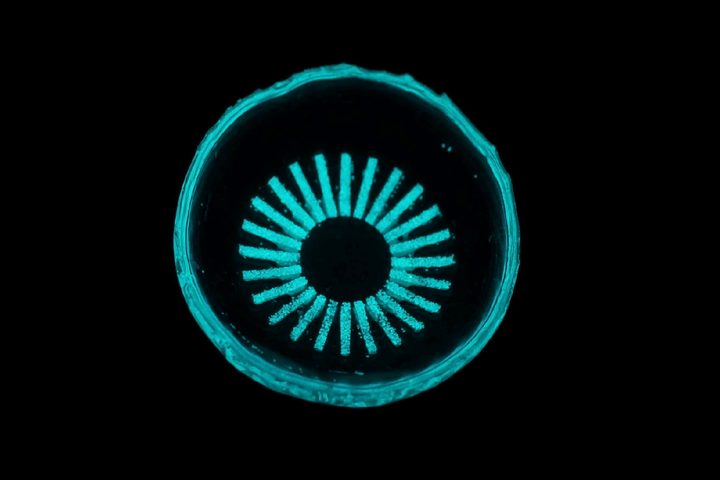
“We’ve developed a ‘phototherapeutic’ contact lens that may be useful in treating leading eye diseases driven by retinal oxygen starvation, such as diabetic retinopathy,” Caltech graduate student Colin Cook told Digital Trends. “The lenses are worn overnight and contain an embedded light source that shines an imperceptible light onto the retina that can help reduce its metabolic needs.”
Cook explained that the rod cells in our eyes — aka the photoreceptors which allow us to see at night — burn a lot of oxygen in the dark to boost their sensitivity so as to capture the limited number of photons. Unfortunately, the same thing happens while we sleep. For diabetics with compromised retinal vasculature, this means that the limited oxygen supply gets wastefully consumed, thereby leaving the rest of the retina to starve. The team’s smart contact lenses use light to trick the rods into reducing their oxygen consumption so that more is available for the rest of the retina. Pretty smart, right?
“We know that within 10 to 15 years of diabetes onset, virtually all patients will develop some form of retinopathy,” Cook said. “Unfortunately, the current treatment options are rather invasive, including monthly eye injections of drug or sacrificing the peripheral retina with laser burns. Consequently, many patients avoid treatment altogether. Our lenses are being developed as a non-invasive, preventative therapy option for patients to slow progression of the disease and delay the need for invasive treatments.”
To take the project to the next stage, the Caltech researchers have partnered with Dr. Mark Humayun’s lab at the University of Southern California in order to evaluate efficacy. Working with the lab, they have demonstrated that the lenses can reduce rod photoreceptor activity by up to 90 percent. They have also shown that the lenses are imperceptible to the wearer, meaning that they don’t affect sleep.
“My mission is to get this technology into the hands of patients and so commercialization is a necessary step, and one I’ll pursue after graduation,” Cook said.


