
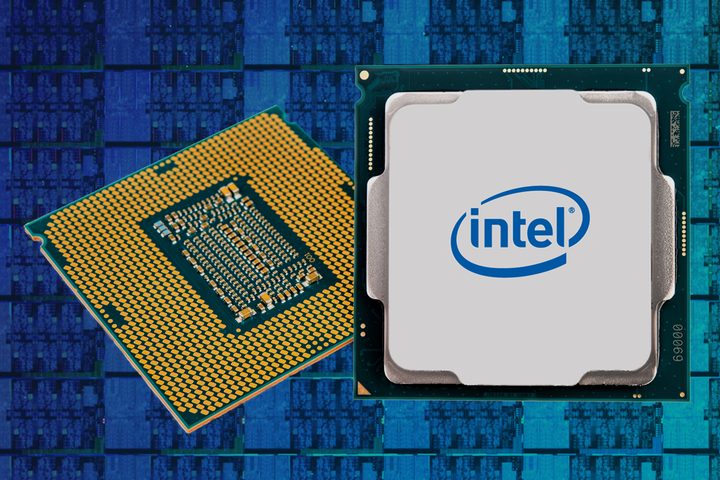
A supposed leak listed on an unsecure Chinese forum (now removed) suggests that Intel will not provide hyper-threading technology on its ninth-generation Core i7-9700K processor. This news is notable because it would be Intel’s first Core i7 part in recent history served up without hyper-threading. Does the company plan on dropping this technology on all future ninth-generation chips without the Core i9 label?
If you’re not sure what hyper-threading is all about, here’s a watered-down explanation. A thread is simply an ordered sequence, or stream, of instructions delivered to the processor. By default, a single physical CPU core can handle one stream, thus if you have a four-core processor, it can handle four lanes of instructions simultaneously. Hyper-threading means the operating system sees twice the core count, sending eight streams of instruction to a four-core chip (two streams per physical core).
Intel first introduced hyper-threading in early 2002 in its Xeon processors for servers followed by Pentium 4 desktop processors later that year. According to Intel, hyper-threading increases processor throughput thus improving its overall performance. You can essentially do more without bogging down the CPU.
Of course, the Core i7-9700K processor leak may be completely bogus. Before it was pulled from the Chinese forum, the chip listed as an eight-core, eight-thread chip, with a base speed of 3.6GHz and a maximum speed of 4.9GHz. It was originally presumed to be Intel’s successor to the current Core i7-8700K six-core, twelve-thread desktop CPU.
That said, here’s what we’ve seen regarding Intel’s upcoming ninth-generation desktop CPUs. Note that all three supposedly have a power draw of 95 watts:

Keep in mind that these three chips will not be based on Intel’s ninth-generation “Ice Lake” design, but a refresh of its eighth-generation Coffee Lake-S architecture for desktop processors. These three chips will supposedly arrive in early August alongside a new motherboard chipset, Z390, supporting the CPUs. Also note that Intel introduced its first batch of eighth-generation processors – based on a refined seventh-generation “Kaby Lake” design – in the same release window last year.
The timing doesn’t appear unusual given that AMD is on its second generation of Ryzen desktop processors packing eight cores for the mainstream market. The latest batch includes the Ryzen 7 2700X and Ryzen 7 2700 chips with eight cores and sixteen threads, and the Ryzen 5 2600X and Ryzen 5 2600 chips with six cores and twelve threads. Intel is definitely in dire need of an eight-core solution targeting the mainstream market.
Based on the chart above, Intel appears to be locking its hyper-threading technology to the “premium” Core i9 brand although that may not be the official case at all. But of the three, Intel’s Core i9 part is the only chip with double the thread count. What will be interesting to see are the prices compared to AMD’s current generation of eight-core Ryzen desktop CPUs. Perhaps the removal of hyper-threading in the Core i7 part is a means for keeping the price competitive with AMD’s current Ryzen chips.


