  1. Home
  2. Computing
  3. News

Intel’s soldered ninth-gen CPUs could give them even greater overclocking room

Add as a preferred source on Google
best processors Core i7-7700K
Image used with permission by copyright holder

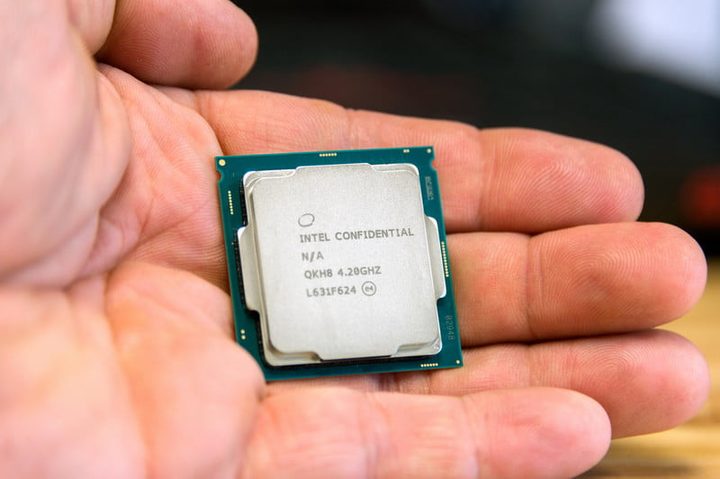
As we inch ever closer to the release of Intel’s next-generation CPUs, more and more details are emerging. Hot on the heels of a leak that suggests the Core i7 chips in the range won’t enjoy the benefits of hyperthreading, a new rumor claims that they and the top Core i9 CPUs, may have better cooling out of the box thanks to a soldered integrated heat spreader (IHS).

While many CPUs feature heatpaste between the actual core and the chunky metallic heatspreader exterior, many overclockers and enthusiasts will tell you that that’s far from the most efficient way to distribute excess heat. Some opt for a process called “delidding,” whereby they remove the heatspreader and replace the heatpaste with something better, but when the chip is soldered together instead, that’s no longer needed.

Recommended Videos

The two processors in particular which are said to enjoy this thermal benefit are the Core i7-9700K and the Core i9-9900K. German site Golem.de, via Hexus, claims that both have their IHS connected to the processor with solder, but that this benefit will be limited to the eight core CPUs in the ninth-generation range. That might be why the new CPUs are able to approach five gigahertz frequencies on a limited number of cores and could, in theory, unlock even greater overclocking potential for them for enthusiasts.

Six core CPUs will still use traditional heat paste, which may mean that a thermal improvement can be found by delidding them and replacing that material with one that is more conductive. That’s not always the case, as some chips just don’t benefit from it enough to risk potentially damaging your CPU.

All of this should be taken with a grain of salt, however, as almost all information about Intel’s next-generation CPUs is very firmly in the rumor camp for the time being. With an expected September release date, we won’t have long to wait to find out more and hear official details from Intel. Considering its recent track record of teasing higher performance than is realistically possible though, we’ll want to wait for independent reviews to make any concrete judgments on real-world performance.

Jon Martindale
Jon Martindale covers how to guides, best-of lists, and explainers to help everyone understand the hottest new hardware and…
Dell expands AI PC lineup with new slim Dell 14s and 16s laptops
Your next Dell laptop could last all day without charging
Dell 16s AI PCs

Dell has introduced the new Dell 14S and Dell 16S laptops, expanding its AI-focused Copilot+ PC lineup with slimmer designs, updated Intel processors, and improved battery life. The company is positioning both laptops as premium productivity machines that combine AI features, portability, and multimedia capabilities in a thinner form factor.

The new laptops are powered by Intel Core Ultra Series 3 processors, going up to the Intel Core Ultra 9 386H chipset. Dell says both systems include on-device AI acceleration with up to 50 TOPS NPU performance, allowing AI-related tasks to run locally without relying entirely on cloud processing. AMD Ryzen AI 400 Series variants are also expected to arrive later this month.

Read more
Intel has already started making chips for Apple, it seems, but not the most advanced kind
Intel Core Ultra Desktop CPU

The Apple-Intel chip deal that everyone said would never happen is apparently happening. And with some important caveats that the breathless headlines have largely glossed over.

Ming Chi Kuo suggests Apple has kicked off production of processors for lower-end iPhones, iPads, and Macs at Intel, running on its 18A-P process node with Foveros packaging. These are not the A-series chips powering the iPhone Pro or the M-series silicon inside a MacBook Pro. This is the legacy and mid-range stuff — the workhorses that ship in enormous volume but carry less prestige. The order mix is roughly 80% iPhone, which closely matches Apple's device sales breakdown. That detail matters more than it might first appear.

Read more
OpenAI is bringing in the mighty Codex tool to the ChatGPT app on your phone
The ChatGPT mobile app now has Codex so you can manage coding tasks anywhere.
openai-codex-chatgpt-app-remote-monitoring-feature

If you have ever wanted Codex to work through your bugs and pull requests while you grab coffee or commute, OpenAI just made that possible. Codex, the company's AI-powered coding agent, is now available in the ChatGPT mobile app on iOS and Android.

The feature is currently rolling out in preview across all plans, including Free and Go, in all supported regions. For now, mobile support works with the macOS Codex app. Windows support is coming soon.

Read more