  1. Home
  2. Computing
  3. Legacy Archives

Fujitsu Adds Multitouch to LifeBook T5010 Tablet

Add as a preferred source on Google
Fujitsu-2
Image used with permission by copyright holder

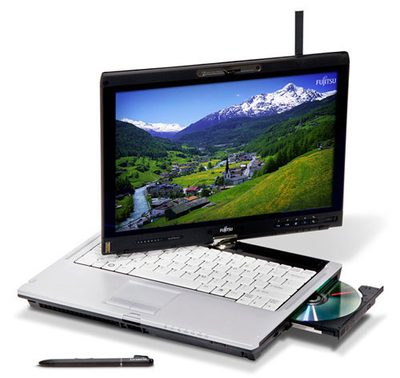
Fujitsu has announced its new LifeBook T5010 convertible tablet PC, featuring a multitouch-capable 13.3-inch WXGA display, with an optional dual digitizer designed to support touch-based featured coming in Windows 7. With the dual digitizer, users will be able to perform two-fingered action for common tasks like scrolling, panning, zooming, and rotating objects and media on screen; the T5010 also sports a modular bay that can be used to hold a second hard drive, optical drive, or extra battery.

“The LifeBook T5010 convertible tablet PC represents our initial offering in a line of dual digitizer convertibles that take advantage of the advanced capabilities of the anticipated Windows 7 operating system,” said Fujitsu America’s senior director of mobile product management Paul Moore, in a statement. “The benefit of touch is that it’s intuitive and practical. Consumers, mobile professionals, and students will immediately see the value and convenience it adds to the computing experience.”

Recommended Videos

The LifeBook T5010 weighs about 4.5 pounds, and features an 2.4 GHz Intel Core 2 Duo processor, 1 to 2 GB of RAM, 80 to 12 GB of hard drive storage, and a modular DVD±RW DVD writer. The units also pack gigabit Ethernet, an integrated webcam and mic, Bluetooth and 802.11a/b/g/n wireless communications, and integrated security features like a smart card reader, trusted platform module, security panel, and fingerprint sensor. The T5010 also features a spill-resistant keyboard, and features a bidirectional swivel hinge for converting between a tablet and a notebook. Wireless broadband options are also available from AT&T and Verizon Wireless.

The LifeBook T5010 is available now, with prices starting at $1,759, and $1,859 with the dual digitizer. The units run Windows Vista Business now, but we expect Fujitsu will offer Windows 7 as soon as Microsoft pulls the trigger in October.

Geoff Duncan
Former Contributor
Geoff Duncan writes, programs, edits, plays music, and delights in making software misbehave. He's probably the only member…
Old tech keeps coming back because new tech got annoying and we miss simpler times
Dumb phones, discs, cameras, and retro consoles are cycling back because modern tech got too needy for its own good
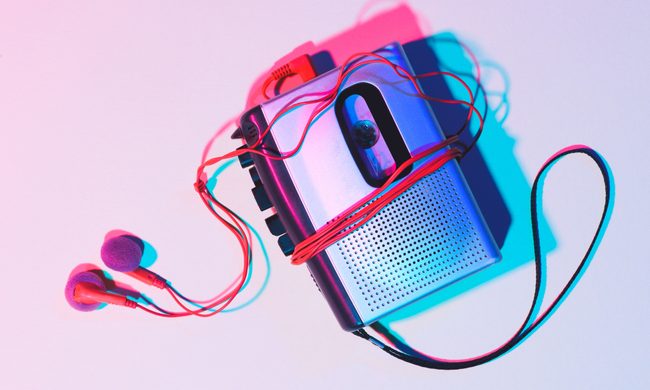
Toned picture of retro cassette player and earphones on tabletop.

Old jeans and old sneakers get a pass because fashion is cyclical. One year something looks dead, a few years later it’s back with a better markup and a straight-faced explanation about authenticity.

I’m starting to see consumer tech the same way. The revival isn’t limited to one corner of the junk drawer, either. It’s showing up in phones, cameras, audio gear, movies, and games. A tiny camera dangling from a wrist has more personality than another glass slab taking overprocessed night-mode shots.

Read more
The best trick AI can pull is disappear into my gadgets instead of turning into a product
AI may finally become useful when it stops announcing itself and starts quietly fixing the annoying parts of everyday tech
Appliance, Blow Dryer, Device

My wife recently woke up from a nightmare where AI had taken over human bodies. The likely culprit was less dramatic: Google Photos kept nudging her to “AI” herself when she only wanted to look at pictures of our cats.

That’s where a lot of people are with AI right now. Curious, tired, mildly creeped out, and increasingly annoyed when normal apps start acting like every action needs a software demo attached.

Read more
Why RAM Is So Expensive in 2026 — And What PC Buyers Should Do
RAM memory chips

If you’ve been planning a PC build or even browsing pre-built systems, you’ve likely run into the same issue: RAM prices are unusually high. In some cases, costs have increased by as much as 500%, pushing up overall system prices and making builds harder to justify.

This isn’t a short-term fluctuation. It’s the result of multiple shifts happening at the same time, most of which are tied to how quickly demand for memory has changed.

Read more