Instant film cameras are the vestigial organs of the photography world, and yet they have inexplicably soared in popularity over the past few years. They are impractical, wasteful, take low quality photos, and can end up costing a lot of money if you actually use the things, as there’s a price attached to every exposure.
As a photo technology writer, none of this appeals to me — or at least, it didn’t. But after using a Leica Sofort while vacationing with family, I’ve had a change of heart. Instant film photography can be something truly special, but it’s not about the photography so much as the experience. Whether or not that justifies the Sofort’s premium price is up to you — and I have lingering concerns about the disposable nature of instant film — but I will say this: I am officially no longer a cynic, and after reading this, hopefully neither will you be.
Style you can buy
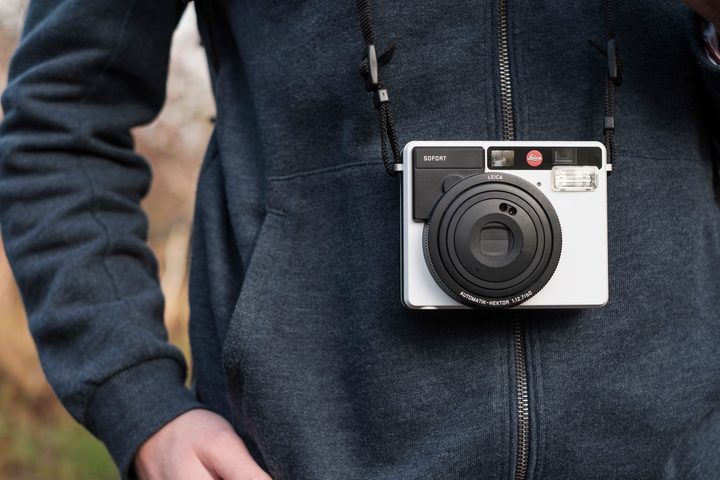
The Sofort (German for “instant”) is classy piece of hardware that looks both fresh and antiquated at the same time. It exhibits a definite ’80s vibe and will feel immediately familiar to anyone who ever carried around a Walkman, right down to the click-clack of putting in a new film cartridge, a process that’s eerily reminiscent of loading a cassette tape.
Leica hasn’t brought any new features to the table — the Sofort is a just rehoused Fujifilm Instax Mini 90, and uses the same Instax Mini film — but it has sprinkled a dash of conservative German styling into the mix which I quite like. I felt much better about wearing the Sofort around my neck than the other, rather childish-looking Instax cameras available (actually, the Mini 90 doesn’t look too bad).
The Sofort is classy piece of hardware that looks both fresh and antiquated at the same time.
Like other Leicas, the Sofort stands out by not standing out, especially the new — and more expensive — black model. The white finish of my review unit was also quite handsome, although if you prefer a casual Friday look, Leica also offers mint (looks like chewing gum) and orange (looks like a Chiclet; so, also chewing gum).
Of course, you’ll pay for that extra style. With a price of $279 (or $300 for the black version), the Sofort has a big head start in the race to drain your bank account, easily lapping the $120 Mini 90. And with instant photography, the costs don’t stop with the purchase of the camera. Depending on how and where you buy Instax film, you may pay as much as 90 cents per shot, although buying in bulk can cut the price significantly. I paid $43 for three boxes of film, 60 exposures in total, for a cost of about 72 cents per exposure. That’s still not great — especially considering you incur that cost regardless of whether the picture is a masterpiece or a misfire. New cameras do come with a box of film, so that’s at least something.


Unlike an actual Leica, the Sofort is a fully automatic machine and very much a point-and-shoot. It does, however, give you some creative control: You can force the flash on or off, use the macro mode for close-ups, and frame yourself using the built-in mirror for perfect selfies or set the camera on a tripod and use the timer for group photos. It even has a bulb mode for doing long exposures; just hold the shutter button down as long as you wish to get blurry, abstract streaks of color.
For every 10 photos, I end up with a small pile of trash — or a larger pile if I don’t like any of my photos.
There are also some problematic design choices. The parallax viewfinder sits a good distance away from the lens; for close-ups, this means the actual photo will look much different from what you saw through the viewfinder. It can be easier to simply look at the lens to make sure it’s pointed at your subject, rather than relying on the viewfinder. Also, the tripod socket is positioned at the extreme edge of the bottom of the camera for reasons that remain mysterious. It’s probably not a huge issue given that precision tripod maneuvers are not what this camera is designed for, but it does look a bit weird.

Trash to treasure
Beyond the expense, what really got to me was the amount of waste generated by the film. Each 20-exposure box is split into two individually sealed 10-exposure film cartridges. Once exhausted, you end up with a wrapper, cartridge, and dark slide (the protective panel that automatically ejects itself when the film is loaded) under your authority, which is both a major annoyance and a minor environmental catastrophe.
Sure, the film cartridges are recyclable, and some DIY-minded folk have even turned them into picture frames, but I still have trouble wrapping my head around the idea that for every 10 photos I take, I end up with a small pile of trash — or a larger pile if I don’t like any of my photos.

On the other hand, I admit I have no idea how much waste is produced by the manufacture of digital imaging sensors and associated electronic components. Maybe it’s far, far worse — maybe you’d have to shoot 10,000 Instax photos to equal the carbon footprint of a single digital camera (which nobody is going to do because that would cost $7,200). I do not know how many pictures it would actually take to cross that threshold (maybe it’s only 10), but that not knowing is what makes it so easy to accept digital photography while rejecting single-use plastics I can see with my own eyes.
Instant film leads to some beautiful accidents.
But none of that mattered the moment I was able to look through someone else’s eyes. I have a 2-year-old niece and nephew, twins, who were born into a world where print photography is merely the exception to the norm. I’m sure they can navigate an iPad better than I can, but they had never seen an actual, physical photo of themselves. I took a picture of each of them — not very good ones, mind you — and I honestly do not have the words to describe the looks on their faces when I handed them over. I’ll just say, the $43 was worth it; the mini Pacific garbage patch was worth it.
Then I reached for my digital camera to capture that moment.


And I guess that’s the thing; instant film leads to some beautiful accidents, but for pictures I know I care about, I only trust a digital camera. And I’m fine with that — instant photography certainly isn’t out to replace digital, but I now see it has a valuable place alongside it, creating memories and experiences that may not matter to your Instagram followers, but matter deeply to you.
I don’t know that the Leica Sofort was any more effective in facilitating that experience than the cheaper Fujifilm Instax Mini 90 would have been — but I do know I looked better during it, and that has to count for something.