1. Home
  2. Emerging Tech
  3. News

How to move a mole: NASA scientists design rescue operation for Mars lander

Add as a preferred source on Google
NASA InSight: A Plan to Get the Mole Moving Again

NASA’s InSight lander is facing some challenges as it investigates the Red Planet. Earlier this year it deployed its drilling instrument, the Heat Flow and Physical Properties Package (HP3) to learn about temperature variations within the Martian soil. But a part of the instrument called the mole got stuck while drilling.

Recommended Videos

Since then scientists have been trying to figure out what caused the problem —  and what to do next. They believe the mole is stuck because there is not enough friction in the soil. In other areas of Mars, the friction in the soil is higher, so the mole was designed to let loose soil flow around it and hold it in place. But in this particular area, they think the soil may have become compacted and created a gap around the mole. The mole therefore has nothing to grab onto and can’t move.

Alternatively, the mole could have hit a rock and gotten stuck.
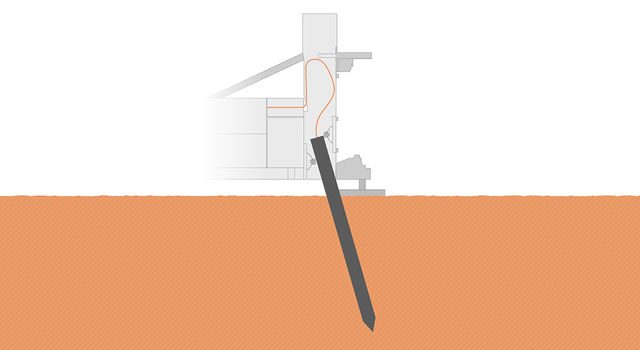
The self-hammering mole, part of the Heat Flow and Physical Properties Package (HP3) on NASA’s InSight lander, was only partially buried in the soil of Mars as of early June 2019, as shown in this illustration. NASA/JPL-Caltech/DLR

The proposed solution is to move the mole’s support structure. If the mole can be moved, this could potentially solve either problem.

If the mole has just hit a small rock, moving to another area will allow it to dig again. And if the problem is the low density soil, then InSight could use its arm to compact the soil before digging begins to create more friction. “Moving the support structure will give the team a better idea of what’s happening,” HP3 Principal Investigator Tilman Spohn of the German Aerospace Center (DLR) explained in a statement. “But it could also let us test a possible solution. We plan to use InSight’s robotic arm to press on the ground. Our calculations have shown this should add friction to the soil near the mole.”

The plan does have risks. The mole will stay in place while the support structure is moved around it in three steps over the course of a week. Then it comes time to move the mole itself. Once the mole is taken out of the soil, it may not be possible to get it back in.
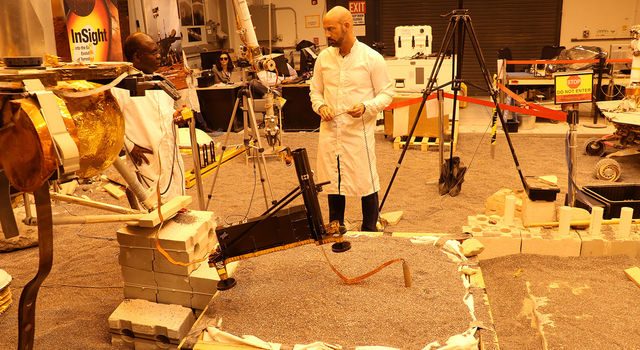
Engineers in a Mars-like test area at NASA’s Jet Propulsion Laboratory try possible strategies to aid the Heat Flow and Physical Properties Package (HP3) on NASA’s InSight lander, using engineering models of the lander, robotic arm and instrument. NASA/JPL-Caltech

The team hopes to start moving the support structure by the end of June and to have the mole in its new position by mid-July. For more information, the InSight team has answered questions about their efforts to save the mole on NASA’s website.

Georgina Torbet
Georgina has been the space writer at Digital Trends space writer for six years, covering human space exploration, planetary…
DJI’s first 360° drone offers 8K video recording and a freakishly long transmission range
From omnidirectional obstacle sensing to 42 GB of onboard storage, the Avata 360 is DJI doing what DJI does best: raising the bar for everyone else.
DJI Avata 360° drone.

DJI has officially entered the 360° drone arena with the launch of the Avata 360. It’s the company’s first-ever fully immersive FPV drone, and a direct shot at the Antigravity A1, a rival built by an Insta360-incubated brand. Looks like the drone wars just got more interesting. 

What makes the Avata 360 worth looking at?

Read more
I transferred all my chats from other AI apps to Gemini — and it works flawlessly
Google Gemini Graphics Featured

You know that moment when AI assistants like ChatGPT, Gemini, or Claude suddenly lose the plot mid-conversation and start hallucinating like they’re absolutely sure they’re right? Yeah…it’s equal parts funny and painfully annoying. My usual reaction is switching between apps, hoping one of them gets it right. But the real problem is that I have to start over every single time. It feels like I’m stuck in a loop explaining my life story to different AIs, one after the other.

Now with Gemini, I can now jump in from other AI apps without that whole reset conversation. Finally, the Google gods have blessed us. I tried it out expecting the usual hiccups, but it was surprisingly smooth and quick.

Read more
Google expands Search Live globally with voice and camera AI
The feature is now available in 200+ countries with multilingual support
Google Search Live

Google is taking another big step toward turning Search into a full-blown AI assistant. The company has officially expanded Search Live globally, making the feature available in over 200 countries and territories, along with support for dozens of languages.

https://twitter.com/google/status/2037201891130523917

Read more