  1. Home
  2. Emerging Tech
  3. News

SpaceX launched 60 Starlink satellites, but things didn’t go as planned

Add as a preferred source on Google

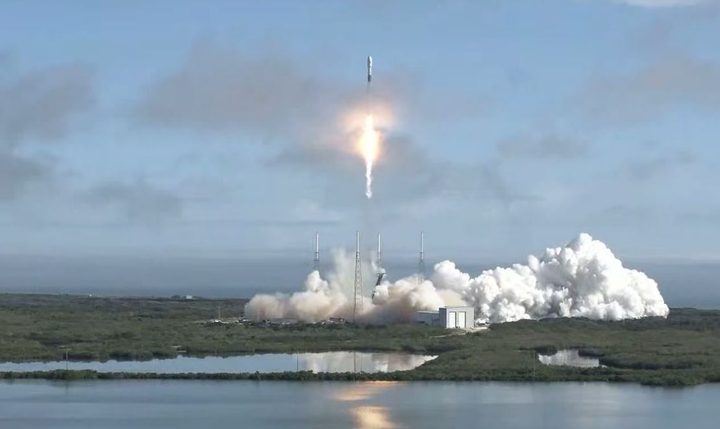
60 Starlink satellites are launched aboard a Falcon 9 rocket on Monday, 17th February 2020.
60 Starlink satellites are launched aboard a Falcon 9 rocket on Monday, 17th February 2020. SpaceX

SpaceX has successfully launched and deployed 60 more Starlink satellites, bringing the total number of satellites in the network to nearly 300. The Starlink project aims to create a network of satellites that can provide broadband internet access across the globe, even in remote areas that are currently poorly served and lack broadband access — but not everything went according to plan.

Recommended Videos

The launch took place at 7:07 a.m. PT on Monday, February 17, with the satellites launched aboard a SpaceX Falcon 9 rocket from Space Launch Complex 40 at Cape Canaveral Air Force Station in Florida.

At 7:23 a.m. on Monday, February 17, SpaceX posted to Twitter confirming its successful deployment of the 60 Starlink satellites.

Successful deployment of 60 Starlink satellites confirmed! pic.twitter.com/bKBtI5UZEB

— SpaceX (@SpaceX) February 17, 2020

The Falcon 9 rocket used in this launch is also notable for having been previously used. Its first stage was launched as part of the CRS-17 mission in May 2019 and the CRS-18 mission in July 2019, both commercial resupply missions to the International Space Station (ISS) launched as part of NASA’s commercial resupply program. The program uses private companies like SpaceX and Boeing to ferry cargo to and from the ISS, carrying supplies to the station and the results of scientific experiments back to Earth.

The Falcon 9 was also used for the JCSAT-18/Kacific1 mission in December 2019, in which it deployed a satellite for Kacific Broadband Satellites, a Singaporean company. The re-use of rocket parts is a major SpaceX innovation in the sector. While agencies such as NASA have been considering developing reusable rockets since the 1960s, no one has been able to actually develop a working partially reusable rocket before SpaceX.

Once the first stage of the Falcon 9 rocket separated, the plan was for the stage to land on the droneship “Of Course I Still Love You,” stationed in the Atlantic Ocean. Then the fairing would be recovered by two recovery ships, “Ms. Tree” and “Ms. Chief.” Unfortunately, the stage missed the droneship and landed elsewhere. But SpaceX did confirm that it made a “soft landing” into the ocean.

Had it been successful, this would have been the 50th landing of a first stage from a Falcon rocket. For now, SpaceX will have to wait a little longer before it can claim this accolade.

Georgina Torbet
Georgina has been the space writer at Digital Trends space writer for six years, covering human space exploration, planetary…
Google is redefining the cursor for computers, and it’s AI-charged future looks ridiculous
Google’s Magic Pointer could be the next evolution of AI on laptops
AI, App

The humble mouse pointer has barely changed in decades. It moves, clicks, selects, drags, and occasionally turns into a spinning wheel of frustration. Google now wants to turn that tiny arrow into one of the most powerful AI tools on your laptop, which sounds ridiculous until you think about how often you use it.

The company has announced Magic Pointer for Googlebook, its new category of Gemini-powered laptops. The feature gives the cursor AI abilities, allowing it to understand what you are pointing at and help you act on it without needing a long prompt or a separate chatbot window.

Read more
6 things Gemini Intelligence is about to do across your Android devices
Logo, Disk, Symbol

Google is bringing Gemini Intelligence to Android, which brings the best of Gemini to its most intelligent devices. The company really wants you to get your work done by Gemini throughout the day, all while staying in control and keeping your data private. Google is rolling out these features starting with the Samsung Galaxy and Google Pixel devices this summer. Furthermore, we’ll see these features on other Android devices, including watches, cars, glasses, and laptops, later this year.

Your assistant is about to get a lot more hands-on, without you having to ask twice

Read more
Google’s next Chrome update is a big deal for Android users
Electronics, Mobile Phone, Phone

Gemini is clearly becoming the centerpiece of Google’s AI strategy, and that focus is now extending deep into Chrome on Android. Starting in June, Chrome is getting a fresh wave of AI-powered features built around Gemini, and the goal is pretty simple: turn your browser into something that actually helps you think, plan, and act, instead of just showing you pages.

Chrome is about to get a little too helpful in the best way

Read more