1. Home
  2. Trash
  3. News

Digital Trends may earn a commission when you buy through links on our site. Why trust us?

Google bans employees from using Zoom over privacy concerns

Add as a preferred source on Google

Google has banned its employees from downloading and using Zoom on their work computers over the videoconferencing service’s recent security and privacy woes.

Google announced the new policy in an email to employees last week. The story was first reported by Buzzfeed News.

Google spokesperson Jose Castaneda told Digital Trends that Zoom does not meet the company’s security standards. 

“Recently, our security team informed employees using Zoom Desktop Client that it will no longer run on corporate computers, as it does not meet our security standards for apps used by our employees,” Castaneda said. “Employees who have been using Zoom to stay in touch with family and friends can continue to do so through a web browser or via mobile.”

We reached out to Zoom to comment on Google’s decision not to use its app and will update this story when we hear back. 

The news follows SpaceX’s decision to stop using Zoom over the same concerns, and NASA has reportedly banned its staff from the videoconferencing app as well, according to Reuters. 

As more people hold virtual meetings amid the coronavirus outbreak, Zoom has rapidly gained in popularity as one of the top videoconferencing apps, but not without some concerns over its privacy. 

A recent investigation by Motherboard revealed Zoom’s iOS app was sending some data about users to Facebook, which was not made clear in the app’s privacy policy. Data shared included people’s location, which device they were using, and advertising identification data. Zoom has since updated its iOS app to stop sending data to Facebook. 

There has also been the issue of “zoombombers,” or internet trolls that are able to easily sneak into meetings and send inappropriate content to others in the call. 

Zoom CEO Eric Yuan has insisted that improvements have been made and Zoom recently changed its default settings to promote privacy. 

“We have all of the security features built-in, however, we need to offer some education. We should have enforced settings for brand new users, especially consumers, and that’s what we have done recently,” Yuan told CNN. “We’ve doubled down, tripled down on security and privacy.”

Allison Matyus
Former Digital Trends Contributor
Allison Matyus is a general news reporter at Digital Trends. She covers any and all tech news, including issues around social…
The Digital Trends App Bundle is yours to try for a whole week, free
Digital Trends App Bundle

Recently, we've entered an exciting collaboration with Maple Media, creating a bundle of 17 apps worth having on your phone. From relaxed fun to serious productivity boosts, these apps cover all your bases and provide a fun boost to your phone. Normally, the bundle is $9.99 per month (far lower than the cost of using the apps individually), but for your first 7 days you can get access to the bundle for free. View the full Digital Trends App Bundle for a complete list of the apps, or read on for a summarized take.

Start your free trial

Read more
The Galaxy S26 Ultra might not see much of a battery upgrade after all
It looks like it will stay the same as the last five years.
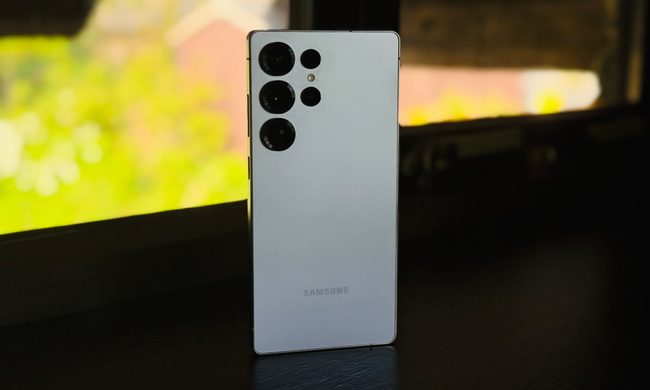
The back of the Samsung Galaxy S25 Ultra.

What's happened? This week, China's Quality Certification Center released information about a battery (EB-BS04898ABY) with a maximum capacity of 4,855mAh. That's the same capacity as was previously seen in the Samsung Galaxy S25 Ultra, and fans have taken this certification to mean the Galaxy S26 Ultra will not see a capacity increase after all.

The Samsung Galaxy Ultra models have had the same battery capacity for the last five years.

Read more
The Galaxy Tab S10 Lite is official, and it’ll be here sooner than you think
Galaxy Tab S10 Lite

What's happened? Samsung has officially announced the Galaxy Tab S10 Lite, a budget-friendly alternative to the Galaxy Tab S10. The device has been rumored for months, but this is the first time Samsung has officially acknowledged its existence.

The Galaxy Tab S10 Lite will have a 10.9-inch display and a peak brightness of 600 nits — a bit on the lower side, versus the iPad Pro's maximum brightness of 1,600 nits.

Read more