
Some patent applications from Apple seem a bit on the crazy side and some are a little more grounded. Recently, Apple was granted a patent for a dual-screen MacBook that would replace the built-in keyboard with a virtual one like on the iPad. It would also gain the ability to wirelessly charge an iPhone.
Apple first submitted the patent for an “integrated interface system” three years ago, and we were skeptical that a dual-screen MacBook would even work. However, the company has finally been granted the patent, so we’ll have to see what it does with it.
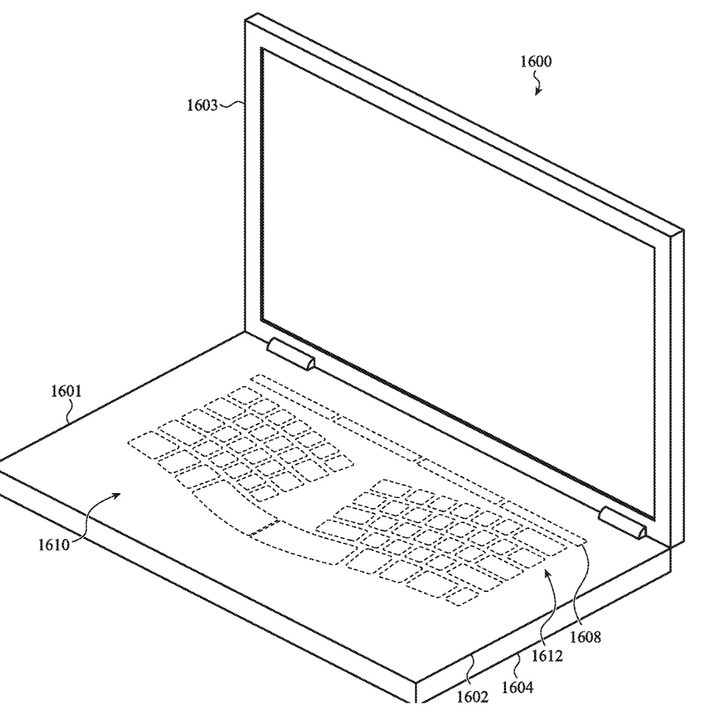
The primary goal of the dual-screen is to provide the flexibility to change the interface as needed. For example, there could be multiple keyboard configurations to reflect different languages or region-specific layouts. The position and size of the keyboard could be changed depending on user preferences. It’s all very similar to what the current iPad virtual keyboard is capable of.
Apple doesn’t stop at keyboard configurations, though. One of the figures show the ability to interact with external objects such as a joystick for gaming or 3D modeling applications. Apple also envisions several biometric sensors such as Touch ID being integrated into the screen.
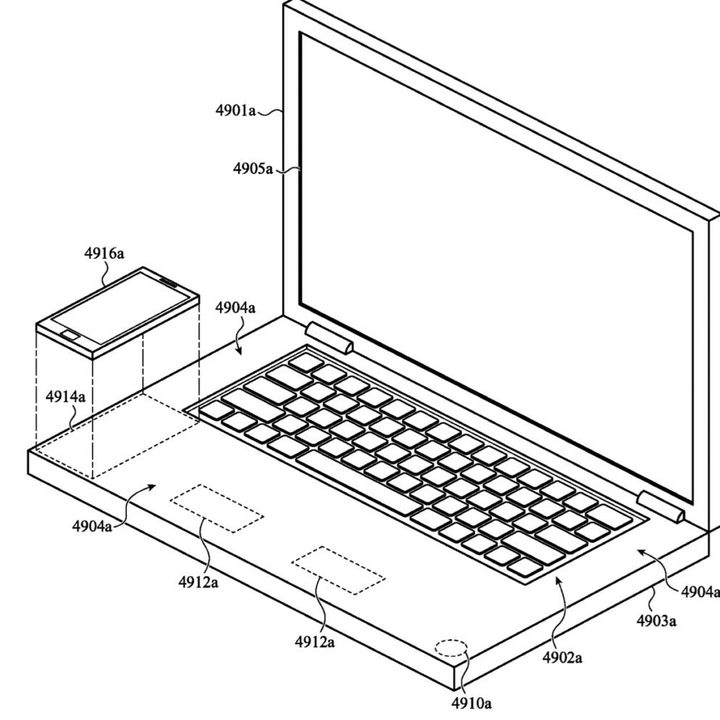
One feature that might perk up the ears of the Apple faithful is the inclusion of a wireless charging area for the iPhone or any other smartphone (assuming it’s using the Qi standard). This would make it much more convenient than purchasing a separate wireless charger, as well as reduce desk clutter.
Obviously, a dual-screened device is not a new concept. Lenovo in 2018 released the Yoga Book C930, which featured a unique e-ink screen. The company followed that up with the Thinkpad X1 Fold, a laptop with no physical keyboard at all, but with an actual folding screen. Of course, we can’t talk about dual-screen laptops without mentioning Microsoft’s delayed Surface Neo and Windows 10X.
There have been calls for Apple to put a touchscreen on Macs for a while, but probably more so once the company starting putting its own ARM silicon into its laptops and desktops. The M1 chip is able to run iOS apps natively on a Mac, so it makes sense to add touchscreen support. However, we’ve written before that Apple will probably never make a touchscreen Mac, and Steve Jobs was notoriously against the idea altogether because of the ergonomics.
This newly granted patent gets around this ergonomic problem by allowing Apple to simply modify the displays however it wants. According to the patent itself: “… transparent dielectric material may form a continuous or seamless input surface that may improve the look and feel of the device without having the drawbacks of some traditional device constructions.”
These “drawbacks” simply mean that Apple doesn’t have to physically alter the keyboard or create new MacBook designs in order to change the look and feel. Everything can simply be done through the software. This would save Apple a lot of time and money in hardware design and could be Apple’s ultimate vision of combining the Mac and iPad into one device.
Regardless of which patent items ultimately get implemented, they hopefully won’t end up as unpopular as the Touch Bar.


