  1. Home
  2. Computing
  3. News

Pope says AI must be disarmed and shouldn’t dominate humanity. We’re going the opposite way.

The Pope just dropped his first encyclical, and AI companies should probably read it.

Add as a preferred source on Google
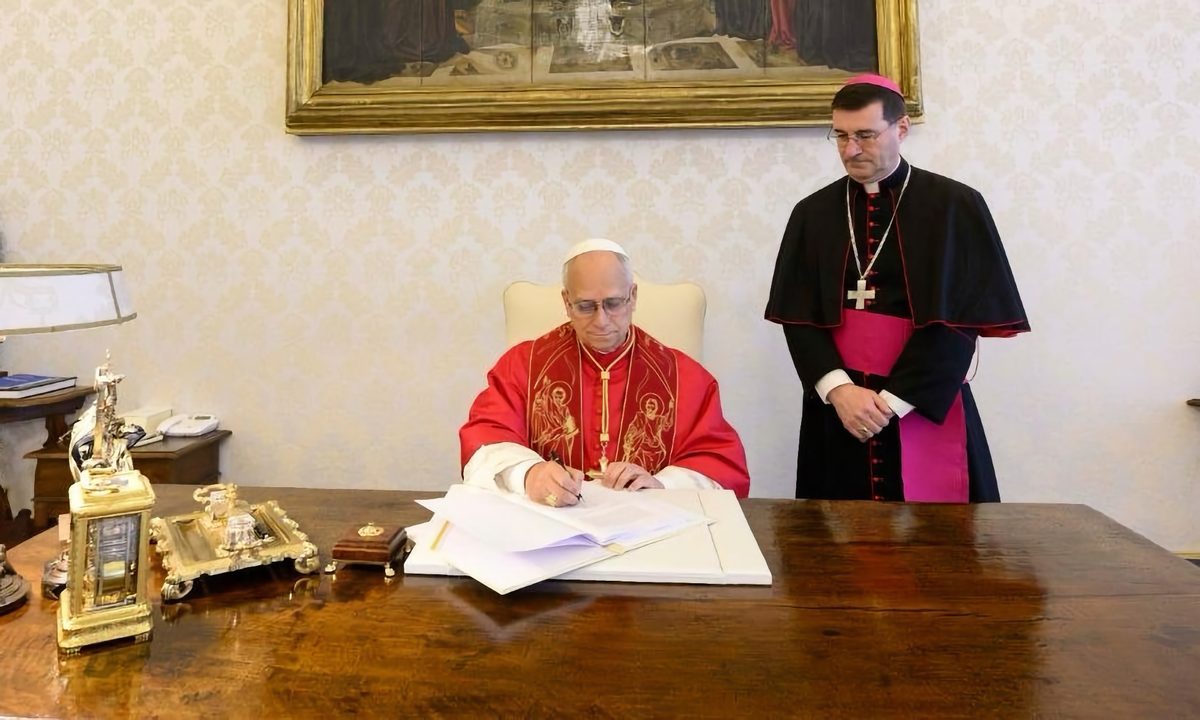
Pope Leo XIV signing his first encyclical
Vatican News

Pope Leo XIV signed his first encyclical on May 15, the 135th anniversary of Pope Leo XIII’s Rerum novarum. The document, Magnifica humanitas, was published on May 25 and addresses one of the defining challenges of our time: artificial intelligence and its impact on humanity.

The core message isn’t anti-technology. The Pope is clear that technology is neither a threat nor inherently evil. However, he does say that technology is never neutral, because it takes on the values of those who build, fund, and control it. That’s where things get interesting.

Is AI becoming a tool for the powerful?

A significant portion of the encyclical deals with the concentration of AI in the hands of a few. Pope Leo XIV warns that this risks widening the gap between those included and those excluded from the digital revolution. He calls for ethical standards shaped not by a handful of decision-makers, but by shared principles of social justice.

Recommended Videos

He also takes aim at the use of AI in warfare, writing that there is no algorithm that can make war morally acceptable. He argues that AI makes conflict faster, more impersonal, and lowers the threshold for resorting to violence, which is not progress in any meaningful sense of the word.

The timing of Pope Leo XIV’s encyclical is hard to ignore. In July 2025, the US Department of Defense awarded contracts to Google, OpenAI, Anthropic, and xAI to integrate frontier AI into military operations, ranging from battlefield decision-making to classified intelligence systems.

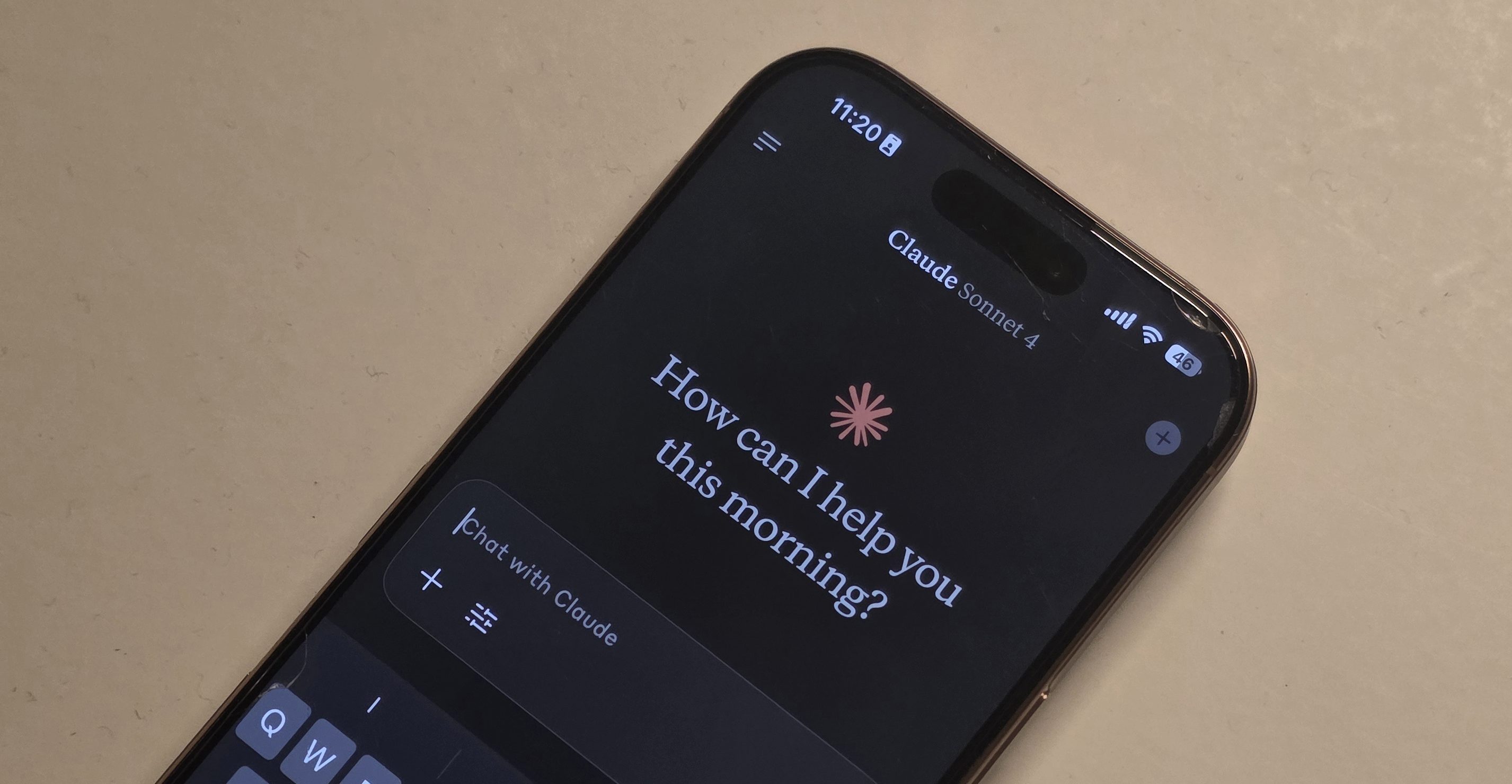
Anthropic eventually walked away from its deal in early 2026, citing concerns over autonomous weapons and mass surveillance, which promptly earned it a ban by the Trump administration. OpenAI stepped in almost immediately, signing its own Pentagon deal, which resulted in a massive backlash from its users, resulting in the mass uninstallation of its app.
By April 2026, the Pentagon had signed fresh classified AI contracts with OpenAI, Google, and others. It’s clear that Pope is not happy with these developments and is calling out the US government indirectly to stop making use of AI in warfare. 

Where does the Pope want us to go from here?

The crux of the entire encyclical is that the Pope wants technology to serve people, not the other way around. He calls for better labor protections, transparency in communication, renewed attention to schools, and legal frameworks that hold AI development accountable. 

He also singles out migrants, workers in dangerous conditions, and victims of abuse as groups that need our empathy and protection. At its heart, Magnifica humanitas is a reminder that no matter how advanced technology gets, the measure of progress will still be a human one.

Rachit Agarwal
Rachit is a seasoned tech journalist with over seven years of experience covering the consumer technology landscape.
I built an offline Grammarly alternative and turned it into a Mac app without any coding
It lives in a browser tab. It's a Chrome extension. It's also a Mac app. Claude built it for me in all three flavors.
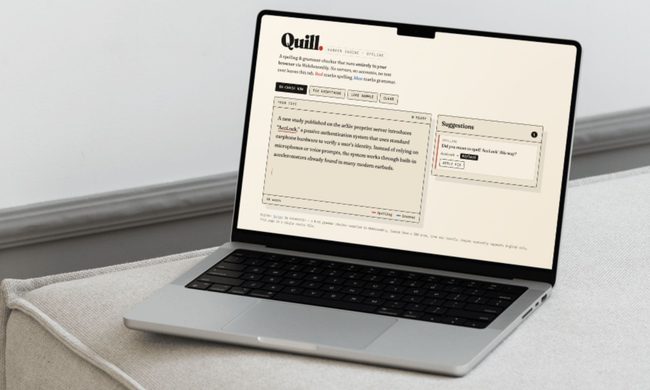
Grammarly alternative built using Claude.

I wrote this entire article while seated on an airplane experiencing unusually high turbulence. The software I used to spell-check and grammatically sanitize the draft was built at an airport. The language engine is running entirely on my Mac, fully offline, fixing all my typos and removing the double spaces while I mash the keyboard and sip a sugar-bomb coffee. 

Also, I don't know how to code. I didn't write a single line of code, and yet, the Mac software I am using right now looks classier and feels snappier than Grammarly ever did. Grammarly, if you don't know, is one of the most popular apps for spelling and grammar checking on the planet. So, how did I do it? I asked Claude. I narrated my wish, it asked my preferences, and in less than 30 minutes, I built myself a no-internet Grammarly replacement while also avoiding the "yet-another-subscription" curse.

Read more
China will put a unique ID code on humanoid robots, just like citizen ID for us humans
China is treating its humanoid robots like citizens. assigning each one a unique ID code from birth to recycling.
Robot with four arms

China has launched a national programme that will assign every humanoid robot manufactured in the country a unique digital identity code, effectively a citizen ID, but for bipedal machines (those that can balance and walk/run on two legs). 

The initiative, called the Humanoid Full Lifecycle Management Service Platform, was announced on Friday. It is led by the Humanoid Robotics and Embodied Intelligence Standardization committee, which is under China's Ministry of Industry and Information Technology (via South China Morning Post).

Read more
Huawei reveals its own replacement for Moore’s Law as it aims straight at 1.4nm chips
Huawei’s new chip playbook is pushing past 2nm
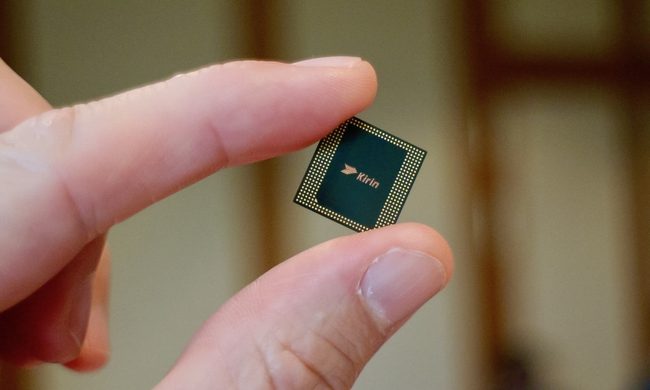
Huawei Kirin 980 processor

Huawei has revealed what it sees as a new path forward for advanced chips. At the 2026 IEEE International Symposium on Circuits and Systems in Shanghai, Huawei’s He Tingbo introduced the company’s Tau Scaling Law, a new semiconductor principle that Huawei says can guide chip development as traditional Moore’s Law runs into physical and economic limits.

The company says future high-end chips designed under this approach could reach transistor density equivalent to 14 angstroms, or 1.4nm, by 2031.

Read more