

During a keynote at Mobile World Congress (MWC) today, Federal Communications Commission (FCC) Chairwoman Jessica Rosenworcel emphasized that regulators and carriers need to start paving the way for next-generation 6G cellular technology now if they hope to avoid the same pitfalls they encountered with the rollout of 5G.
Although 6G is still years away from real-world deployment — most industry experts don’t think we’ll see it before 2030 — Rosenworcel said it’s crucial that the FCC and carriers start identifying the necessary mid-band spectrum now, so it’s ready when faster 6G technology arrives.
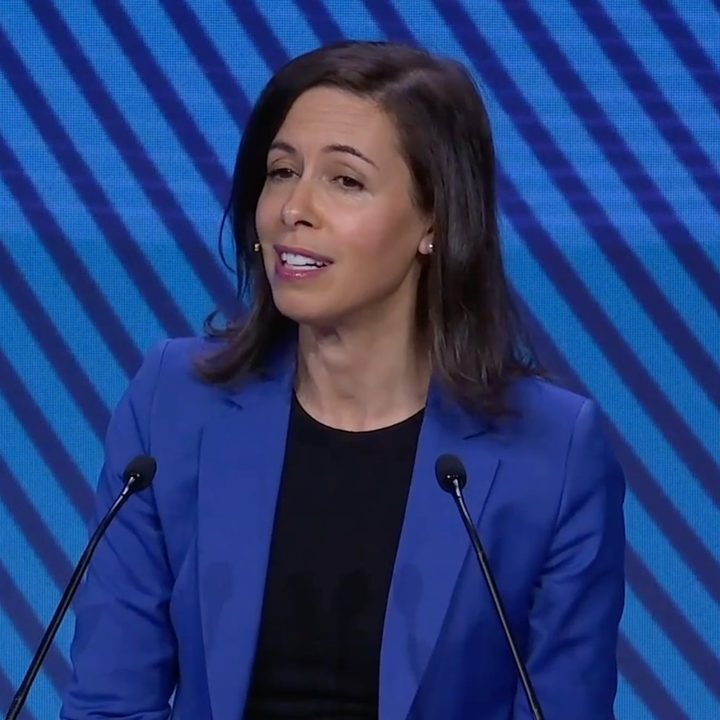
“It’s not too early to harmonize these efforts around the world, because that’s how we will ensure that this next generation can reach everyone everywhere,” Rosenworcel said during her MWC keynote in Barcelona.
Paving the way for 6G
Last summer, Rosenworcel created a new FCC Technological Advisory Council to make sure that the U.S. can stay on the leading edge of emerging communications technologies. Their primary focus is to monitor what’s happening with 6G developments to make sure that everything is ready when the time comes.
Rosenworcel hopes to avoid the messes that have plagued the rollout of 5G, which have often been the result of poor spectrum allocation and a lack of advance collaboration to address potential concerns with other stakeholders like the aviation industry.
Proper planning earlier on could have solved many of these problems, the FCC Chairwoman suggests, and she’s determined not to repeat those mistakes when the time comes to turn the switch on 6G.
“Let’s not forget the lessons we’ve learned with millimeter wave spectrum and 5G,” Rosenworcel said. “These waves are fragile. And while there’s a lot of this spectrum to deploy, it doesn’t travel very far, and right now deploying it is awfully costly.”
To that end, Rosenworcel said that the FCC plans to begin identifying the best mid-band spectrum to use for 6G now, years ahead of its actual deployment. Combined with the spectrum coordination initiative announced last month, this should provide ample time for discussion about the impact of operating public 6G cellular networks on these frequencies, plus plenty of opportunities for testing and certification of equipment.
Opening up more 5G spectrum
Rosenworcel isn’t just looking to the distant future, though. In her comments today, she also announced that companies will soon be able to bid for new 5G spectrum in the 2.5GHz band — which she said is the “single largest swath of contiguous mid-band spectrum we have below 3 GHz.”
This new spectrum is intended to help carriers extend 5G coverage into less populated areas, ultimately blanketing the entire country with solid 5G across the board.
T-Mobile already laid claim to a sizeable portion of the 2.5GHz spectrum in its merger with Sprint in 2020, and it’s been putting it to good use. However, it’s also reportedly hoping to acquire more in this next auction, which will be held in July.
The FCC doesn’t plan to stop with the 2.5GHz auction, with Rosenworcel adding that once that’s taken care of, the agency will work with other federal agencies to begin opening up, even more, mid-band 5G spectrum in the 3.1GHz to 3.45GHz zone. This sits on the lower end of the C-band spectrum, just below the controversial frequencies that made the aviation industry so nervous, but at this point, it’s largely used for military applications.
A massive infrastructure bill that began making its way through the U.S. legislature in August included a section for $50 million in pre-auction funding to be transferred to the Department of Defense so that it can figure out how to free up portions of this spectrum that can be auctioned off.
According to the bill, the FCC hopes to be ready to auction off this new chunk of spectrum by November 30, 2024, so that it can begin granting new licenses to carriers.


