
One of the major promises of the electric car is the fact that it’ll save you money, at least when it comes to fuel costs. That’s true more than ever with the rise of gasoline prices in recent times, making it pretty easy to spend $100 or more on a tank, depending on your car model. But perhaps one of the major misconceptions with electric cars is the fact that they’re not free. That’s right, you’ll still have to pay to charge your car.
But how much, exactly? Well, it varies radically. Things like the location of your charger, the car you’re driving, and more can all impact how much it costs to charge a car.
Generally speaking, you should expect to pay between $5 and $30 for a full car charge. You’ll be closer to the $5 mark if you have a car with a smaller battery and happen to charge at a cheaper location. And it’ll cost you more if you have a car with a large battery and charge at a fast charger.
The cost of charging basically boils down to the following equation: the number of kilowatt-hours (kWh) the battery in your car is multiplied by the price per kilowatt-hour you charge at. Public charging stations should provide a price before you start charging.
To get a more accurate look at how much you’ll charge, let’s dive in and do some math.
Cost of charging an electric car at home
The cheapest way to charge an electric car is by doing it at home. Public charging companies charge a premium to cover things like infrastructure costs and, of course, to make a profit. Apart from the charger that likely came with your car (or a faster one if you’re fancy), you don’t have those costs.
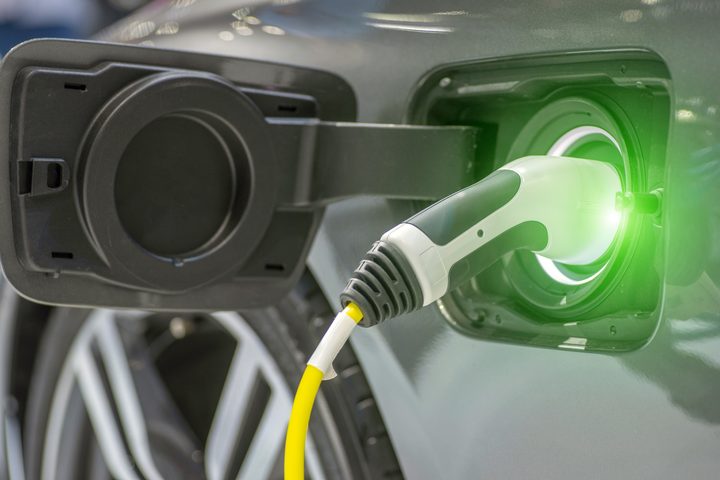
Calculating the cost of charging at home can get complicated because of the various costs of electricity. According to the U.S. Energy Information Administration, the average retail cost per kWh in the U.S. was 10.59 cents in 2021. That average varies radically depending on the state you’re in. If you’re in Louisiana, you’ll pay 7.51 cents per kWh. At the other end of the spectrum is Hawaii at 27.55 cents per kWh. We’re not going to add the complications of higher costs at different times of the day or year.
Then you have to factor in the size of your car’s battery. According to the Electric Vehicle Database, the average size of an electric car battery is 65.6kWh. That means that, on average, in the U.S., it’ll cost $6.94 to fully charge an electric car at home. On the most expensive side of the spectrum, like owning a Lucid Air Dream Edition, with its enormous 118kWh battery, and charging it in Hawaii, you could expect to pay $32.51.
These figures essentially factor in charging your car from 0% to 100% — so in most cases, you’ll only spend a few dollars at a time charging, say from 60% to 80%.
Cost of charging an electric car at a charging station
Charging your car at a public charging station is a whole different ballgame. Public charging companies have invested a lot of money into their fast-charging tech, not to mention the costs of installing stations, paying employees, and so on. The result? You’ll pay much more at charging stations.
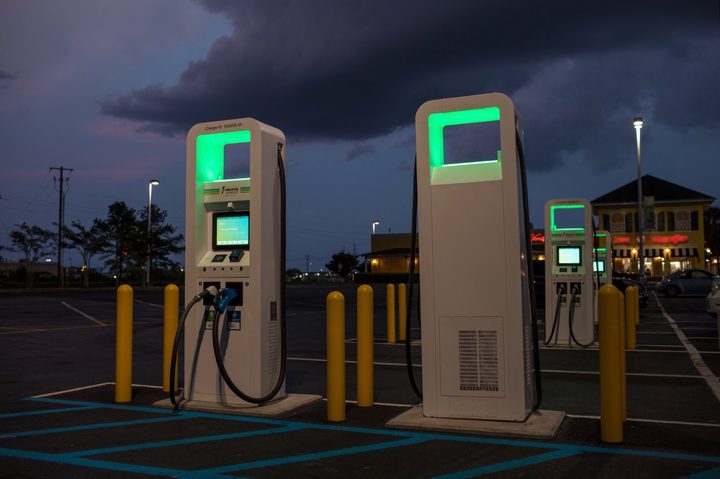
Charging stations can charge at different rates. So-called Level 1 chargers are most useful overnight, as they take up to 24 hours to fully charge a car. Level 2 chargers usually deliver a little less than 30 miles of charge per hour. Level 3 chargers, or DC fast chargers, can often fully charge a car in under one hour.
Because of the wide variation in costs, it can be very hard to narrow down pricing. Electrify America (EA) is one of the more popular charging networks in the U.S. and charges $0.03 per minute for Level 2 charging. Most of Electrify America’s chargers, however, are fast chargers that charge a per-kWh rate, no matter how fast you charge at. In California, at the time of this writing, EA charged $0.43 per kWh for guests and Electrify America Pass members and $0.31 for Pass+ members. So, if you’re a guest, you’ll pay an average of $28.21 for a full charge or $20.33 if you’re a Pass+ member. You’ll have to factor in the Pass+ fee of $4 per month.
Charging an electric car for free
The best and most consistent way to charge your electric car in your day-to-day life is at home, relying on public chargers for road trips and quick top-ups. But there are some ways to get free charging.
For starters, your employer may offer charging stations at your work, and those might be free to access. This is a great way to top-up during your workday.
You’ll also find free Level 2 charging stations in many public parking lots. For example, at your local mall, there may be a number of Volta charging stations that let you charge while you shop for free. Grocery stores sometimes have these, too.
Your car’s manufacturer may be offering free charging for a limited time, too. Tesla, for example, offered free charging to Model S and Model X customers who bought their cars between 2012 and 2016. Unfortunately, it no longer offers that. But other manufacturers like Audi, BMW, Ford, and others often offer at least a year of free charging at Electrify America or EVGo stations.
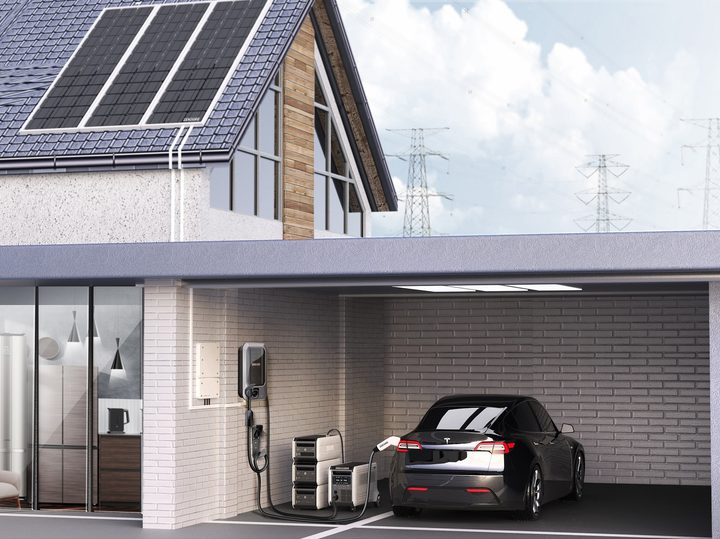
The last “free” way to charge your electric car is by not using energy from the grid. With solar panels and home batteries, you may be able to avoid buying electricity from your local provider. Of course, that’s not really free — you still have to pay for solar panels and batteries. But if you already have those set up or already planned on doing so, charging your car using them will add no additional cost, assuming your system can handle the additional strain.
How much cheaper is charging an electric car compared to filling up a gas tank?
It’s basically impossible to come up with an exact figure to answer this question. Setting aside the fact that there are tons of variables when discussing electric car charging, there are perhaps even more related to filling up a tank of gas — like the fact that the price of gas changes every single day. In other words, take the next few paragraphs with a huge grain of salt. We’re going to talk averages, and it’s incredibly unlikely that your figures will be the same.

According to AAA, the average price of gas on November 7, the day that this was written, was $3.804 per gallon for regular unleaded gasoline. Most cars have a tank between 10 and 20 gallons, so let’s use 15 as a decent average, considering the fact that we were unable to find good data about the actual average gas tank size. That would make fully filling up your car cost $57.06.
In other words, if you charged your car at home, on average, it would cost $50.12 less to charge an electric car if you did so at home. If you were to charge at an Electrify America charging station as a guest, it would still cost $28.85 less than filling up an average tank of gas. That’s around half the price.
The takeaway
In the vast majority of cases, you will pay less to charge an electric car than to fill up a car with a tank of gas. How much less can vary widely, depending on your car mode, where you charge, and more. And that doesn’t even begin to touch on the fact that electric cars are generally more expensive to buy than gas-powered ones. We have an entire article breaking down the full ownership costs of EVs versus gas-powered cars, from maintenance to insurance.


