  1. Home
  2. Computing
  3. News

Apple’s new M3 Pro might come with an unexpected downgrade

Add as a preferred source on Google

There’s no doubt that the introduction of new M3 chips was the main event at Apple’s Scary Fast show. Yet, it looks possible that the M3 Pro might actually have a significant downgrade compared to the Apple silicon chips that came before it.

Apple explained that the M3 Pro chip in the 16-inch and 14-inch MacBook Pro is up to 40% faster than the M1 Pro in the 16-inch MacBook Pro. Yet, as spotted by MacRumors, there are some situations where the latest chips actually look a little worse than their predecessors — at least on paper.
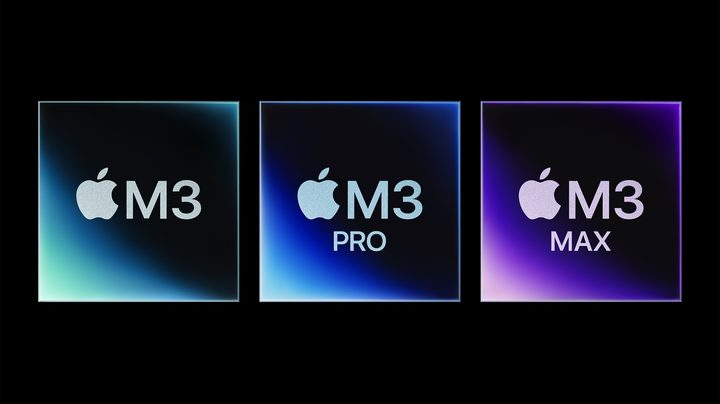
Logos for Apple's M3 chips.
Apple

For instance, the M3 Pro comes with 150GBps memory bandwidth, which is 25% less than the 200GBps found in the M1 Pro and M2 Pro. One variant of the M3 Max, meanwhile, has 300GBps memory bandwidth, while its M2 Max equivalent comes with 400GBps.

Recommended Videos

Because Apple spent most of the show comparing the M3 chips to the M1 series, it’s hard to actually know how much of a difference in performance there will be over the M2 chips. It’s possible that Apple’s comparisons mask a lower performance leap over the M2 than had been hoped, or that improvements elsewhere make these downgrades less relevant.

Waiting for real-world testing

Two MacBooks Pro renders side by side against a black backround.
Apple

The reduced memory bandwidth is not the only way the M3 Pro has changed versus what came before. Apple has tweaked the core configurations so that the M3 Pro with a 12-core CPU comes with six performance cores and six efficiency cores. The 12-core M2 Pro, though, has eight performance cores and four efficiency cores.

There’s another thing to consider. Every M3-series chip comes with a 16-core Neural Engine, just like the A17 Pro in the latest iPhones. However, while the A17 Pro’s Neural Engine can perform 35 TOPS (trillion operations per second), the M3 maxes out at 18 TOPS.

It’s unclear if any of this will actually be a problem. It could be that the performance cores in the M3 Pro are more powerful than those in the M2 Pro, so Apple doesn’t need to pack as many of them in. Similarly, Macs might be able to hand off more processing to the GPU than an iPhone can, meaning the Neural Engine doesn’t require as much power.

Ultimately, we won’t know for sure until we get the latest MacBook Pro models in for testing. Until then, we’ll have to keep our fingers crossed that the gains from the M3 chip are as impressive as Apple has claimed.

Alex Blake
Alex Blake has been working with Digital Trends since 2019, where he spends most of his time writing about Mac computers…
Buying a laptop may soon come with an instant carbon score thanks to AI
Researchers want AI to calculate the environmental cost of your next laptop
Laptop image

When shopping for a new laptop, most buyers compare specifications like performance, battery life, display quality, and price. But a new AI-powered initiative could soon add another metric to that list: carbon footprint.

Researchers are developing AI agents capable of calculating and displaying the environmental impact of consumer electronics in real time, potentially giving shoppers instant access to sustainability information before making a purchase. The effort aims to bring the kind of emissions transparency already available in services like flight booking platforms to the world of consumer technology.

Read more
The US government just hit the brakes on Anthropic’s most powerful AI models
Anthropic disables Fable 5 and Mythos 5 after US government directive
Laptop running Claude Fable

Anthropic’s troubles with the US government do not seem to be easing. The company has now been ordered to suspend access to Fable 5 and Mythos 5 for all foreign nationals, including foreign national Anthropic employees working inside the United States.

Anthropic said it received the directive on June 12 and is disabling the two models for all customers to comply. Other Anthropic models are not affected. The government has not publicly explained the full national security concern, but Anthropic says it understands the order is linked to a reported method for bypassing, or jailbreaking, Fable 5’s safeguards.

Read more
Nvidia’s RTX Spark made me hate content creation a little less
Adobe's AI-powered demos showed me a future where masking, rotoscoping, and scene detection might finally stop being a chore.
NVIDIA RTX Spark for Creators Image Generation Demo Computex 2026

Every video editor has a list of tasks they'd happily outsource to someone else. Exporting isn't one of them anymore because modern laptops are already plenty fast. The real-time sinks are the boring bits: manually masking subjects, finding scene cuts in long recordings, rotoscoping frame by frame, or wrestling with tedious edits that require more patience than creativity.

That's exactly why NVIDIA's RTX Spark demo at Computex 2026 caught me by surprise. I walked into the booth expecting another presentation full of AI buzzwords and benchmark charts. Instead, I walked out thinking that for the first time in years, hardware might actually be changing the editing experience itself, rather than simply making renders finish a little sooner.

Read more