
Macs with Apple silicon were a revelation when they launched three years ago, but we haven’t seen Apple demonstrate how it will carry that idea forward since then. We saw the M2 release and the middling performance improvements that came with it, but the M3, announced during Apple’s “Scary Fast” event, is the most important chip Apple has ever designed for Macs.
Although it carries the branding of the third generation of Apple silicon, it’s really the second true generation. There’s a lot riding on this release for Apple to prove that it can sustain its own silicon in Macs, and M3 is arriving at a time when there’s fierce competition on all sides.
Second-gen Apple silicon
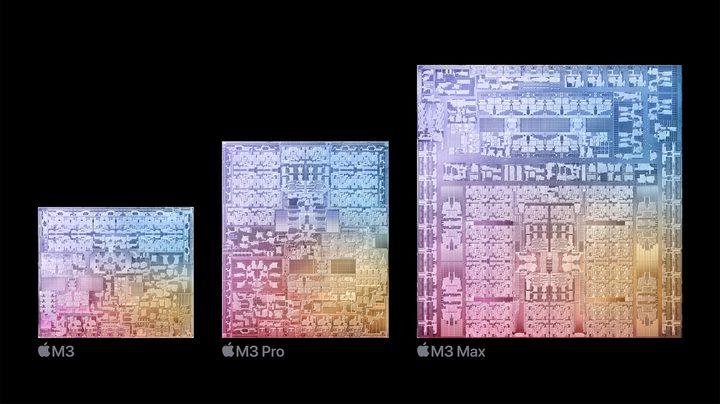
Wind the clocks back to May of last year. At the time, shortly before Apple’s annual Worldwide Developer’s Conference (WWDC), the industry was speculating on the release of Apple’s M2. Reports at the time indicated that Apple would move onto a 3nm process instead of using the 5nm process that the M1 was based on. But something changed. After the chip was announced, additional reports came out that Apple skipped the 3nm process because it couldn’t secure enough supply, likely due to supply chains being thrown out of sorts from the pandemic.
Instead of a seismic shift in performance like the M1 was, the M2 was a refinement of the Apple silicon we had already seen. It was the second generation in name only. It’s not dissimilar from a processor like Intel’s recent Core i9-14900K. It’s a 14th-gen processor, but it’s based on the same hardware that powered the 13th-gen.
The M3 is the true successor to the M1, offering a full process shift. I imagine it won’t look as impressive compared to the M2, likely falling in line with decent, if unexciting, generational improvements. Considering it’s launching devices like the 24-inch iMac that have been restricted to M1, though, M3 should represent a massive boost in performance.
We’ll have to see if that performance holds up when we have a chance to test M3 ourselves. Regardless, M3 is the true accessor to the M1, and it’s where we’ll see how Apple settles into a cadence of producing its own silicon in the future.
The gaming push

One vital aspect of M3 is the new GPU architecture. Apple made a big deal about the M3’s GPU during its presentation, announcing that the new architecture supports hardware-accelerated ray tracing, mesh shading, and an “industry first” feature in Dynamic Caching. All of these changes look like part of Apple’s larger push into gaming.
Apple has dabbled in gaming for years, mainly dipping its toe into the water with a casual audience through Apple Arcade, releasing smaller, more manageable experiences for iPhones, Macs, and even Apple TV. But over the past 12 months, there’s been a major effort put into core gaming. We’ve seen the Game Porting Toolkit open up Windows games on Mac, ports of Resident Evil 4 to iPhone, upscaling through Apple’s MetalFX, and even an appearance by gaming icon Hideo Kojima during an Apple event.
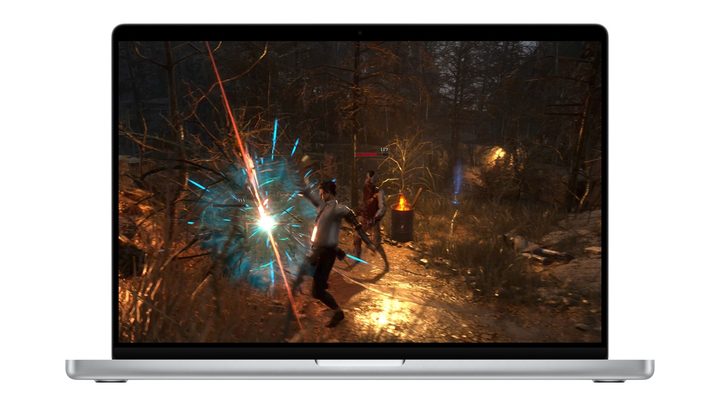
With that push, Apple is finally meeting its ambitions with hardware in the form of M3. Digital Trends saw a preview of games like Lies of P running on M3, and with titles as big as Baldur’s Gate 3 showing up with native Mac support, it seems Apple is finally hitting its stride with core gaming. If new AAA games can arrive on the platform with solid performance, Apple may finally have its foot in the door.
Apple’s gaming focus started months ago, but it’s finally ready for primetime with M3. The GPU upgrades seem like the big focus for Apple, and that’s focused almost solely on gaming performance.
Major competition

After Apple launched the M1, the computing world was sent into a frenzy trying to catch up. There have been attempts from AMD, Intel, and even Qualcomm, none of which could hold a candle to Apple’s silicon. It’s been a few years now, though, and times are changing.
Intel may finally have a competent Apple competitor on its hands with Meteor Lake, which is slated to roll out starting on December 14. Qualcomm recently announced its Snapdragon X Elite for Windows laptops, too, boasting about performance that clearly beats the Intel competition and makes the M2 look silly. And Qualcomm says it can do this while rivaling the battery life of M-series MacBooks.
Apple enjoyed a few years on top, with the computing world fumbling over rushed attempts to keep pace. That won’t continue forever, though, and Apple will likely find itself in much more competitive waters throughout the next year. Going further, if reports are to be believed, AMD and Nvidia are looking to develop ARM-based processors for PCs, as well, providing Apple with even more competition.
The M3 doesn’t have much competition at its release, but throughout the next year, Apple will have to weather the storm coming from the rest of the computing industry. We very well could be in the same situation we were with the M1, with yet more failed attempts from the competition. It doesn’t feel that way with the amount of computing power we’ve seen, though.
A lot to look forward to
The M3 is an exciting development for Apple. There’s a lot to look forward to, especially as Apple introduces the chip to products like the Mac mini and MacBook Air. There’s a lot riding on the M3, however, especially when we look back in a few months to see how it has held up.


