
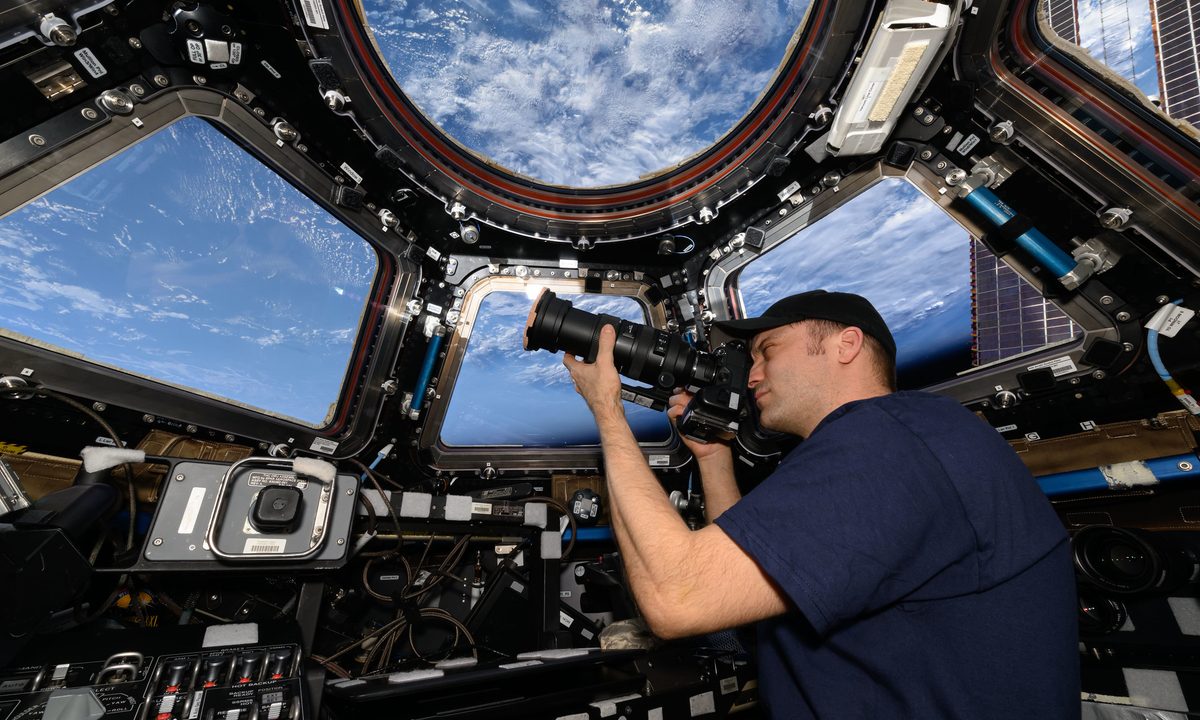
If Matthew Dominick ever offers to show you his travel photos, just confirm with him first that he’s edited them down from the half a million pictures that he took during his trip into space.
Yes, that’s how many images the NASA astronaut captured during his six-month stay aboard the International Space Station (ISS), which ended in October.
On Thursday, NASA posted a message (below) celebrating his impressive work, which besides visually stunning photos also includes mesmerizing time-lapses taken from the ISS as it orbited Earth 250 miles up.
When you and your camera come together to maximize your joint slay 🤝
Take a visual journey and see how @DominickMatthew captured the beauty of Earth, the cosmos, and @Space_Station life through his lens: https://t.co/eJJHO1SUgj pic.twitter.com/e1QD0P6njy
— NASA (@NASA) December 26, 2024
NASA remarked on how Dominick’s imagery, which the astronaut also shared on his own X account, showcased the beauty of our planet. “From the ethereal glow of auroras dancing across the atmosphere to comets rising up over the horizon during an orbital sunrise, each meticulously captured image reflects his dedication to sharing the wonders of space exploration through social media,” the agency said.
NASA noted how Dominick also shared tips on how he achieved his images, revealing his camera settings and other parts of his creative process.
The moon setting over the Pacific.
Went to the cupola to shoot Tropical Storm Hone near Hawaii but right after we passed by the storm the moon started to set.
400mm, ISO 500, 1/20000s shutter speed, f2.8, cropped, denoised. pic.twitter.com/YtboVnRNpF
— Matthew Dominick (@dominickmatthew) August 24, 2024
Some of his shots were simply breathtaking.
Peering out a Dragon Endeavor window that frames red and green aurora streaming by Dragon Freedom docked to the front of the International Space Station.
When Crew-9 arrived I moved out of my crew quarters on the ISS to make room for @AstroHague. I now sleep in Dragon Endeavor… pic.twitter.com/34XfeLXpcH
— Matthew Dominick (@dominickmatthew) October 7, 2024
“Amid his daily astronaut duties, Dominick dedicated personal time to this endeavor, amassing nearly 500,000 captivating photos of Earth and snapshots of life aboard the International Space Station, while having traveled 99,708,603 total statute miles around our home planet,” NASA said. “Through his lens(es), he invited us to experience the awe of space while highlighting the realities of life in orbit, fostering an authentic connection with those who engage with his work.”
Moonlight illuminates Cairo and the Mediterranean on a mostly clear night.
We were up late last night sleep shifting in preparation for undocking and return to Earth in the next few days. Cairo at night is one of my favorite views. I am happy the timing worked out to see it one… pic.twitter.com/zLmVozPvfL
— Matthew Dominick (@dominickmatthew) October 20, 2024
Dominick also documented the arrivals and departures of various spacecraft doing his half-year stay aboard the orbital outpost, while also sharing pictures showing scenes from inside the station.
Zooming through the lab on ISS. pic.twitter.com/6jzajAyy1E
— Matthew Dominick (@dominickmatthew) June 28, 2024
“What sets Dominick’s account apart is his playful perspective,” NASA said. “He invites his audience into lighthearted moments — whether he’s cleaning his retainer in microgravity, relishing the arrival of fresh fruit, or sharing insights from the ISS toolbox. By documenting and sharing these experiences, he demystifies the complexities of space travel, making it an accessible and relatable journey for all. Through his engaging posts, Dominick cultivates a deeper connection with his followers, encouraging them to share in the beauty and reality of life beyond our planet.”
Comet rises up over the horizon just before orbital sunrise with aurora streaking by.
50mm, 1.2, 1/4s, ISO 6400 pic.twitter.com/SlwWdFwQgH
— Matthew Dominick (@dominickmatthew) September 29, 2024
Dominick is now back on terra firma, but fans of ISS photography can currently enjoy the work of another NASA astronaut, Don Pettit, who has been posting some equally amazing photos since arriving at the orbital facility in September.


