  1. Home
  2. Computing
  3. News

Anthropic’s new Claude model offers both real-time and long-pondered responses

Add as a preferred source on Google
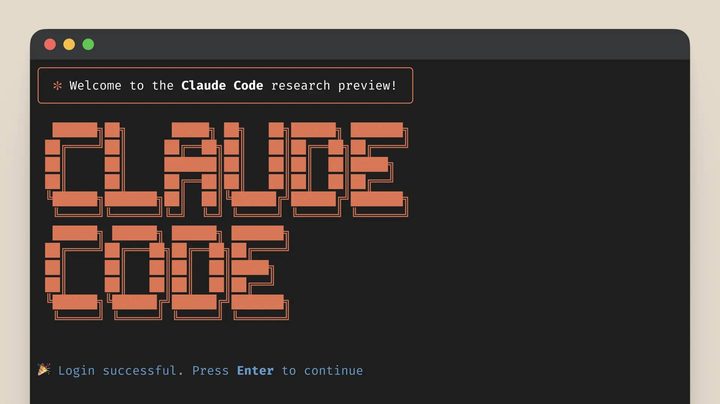
Claude code homescreen
Anthropic

OpenAI’s o3 and DeepSeek’s R1 models have some new competition. Anthropic announced Monday the release of its new “hybrid reasoning” model, Claude 3.7 Sonnet.

Existing reasoning models like o3, R1, and Google’s Gemini 2.0 Flash Thinking are designed to break down complex problems into smaller tasks, then deduce and verify their answers before responding, a process that returns more accurate answers at the cost of higher compute usage and longer inference times. Claude 3.7 Sonnet, on the other hand is capable of providing either “near-instant responses or extended, step-by-step thinking that is made visible to the user,” according to the company’s announcement post.

Recommended Videos

Claude 3.7’s dual nature is part of an effort by the company to simplify the user experience and eliminate the massive model picker menus found on other chatbot platforms. OpenAI announced a similar plan with its upcoming GPT-4.5 and GPT-5 models.

“Just as humans use a single brain for both quick responses and deep reflection, we believe reasoning should be an integrated capability of frontier models rather than a separate model entirely,” the company wrote. “This unified approach also creates a more seamless experience for users.”

Claude 3.7 Sonnet is rolling out to all Claude users, however, the model’s extended thinking ability will only be accessible with a paid subscription. Anthropic is quick to point out that even with its standard thinking process, Claude 3.7 outperforms the model’s predecessor, Claude 3.5.

The new Sonnet’s extended thinking process has been shown to improve the model’s response quality across a variety of math, physics, instruction-following, and coding tasks. “Claude is once again best-in-class for real-world coding tasks, with significant improvements in areas ranging from handling complex codebases to advanced tool use,” the company boasted.

Introducing Claude Code

Anthropic also teased its agentic AI, dubbed Claude Code, in Monday’s announcement. “Claude Code is an active collaborator that can search and read code, edit files, write and run tests, commit and push code to GitHub, and use command line tools,” the company wrote.

Anthropic is releasing Claude Code as a limited research preview and plans to further improve its performance in the coming weeks based on feedback from developers and other early adopters. The agentic AI builds off of the success of Anthropic’s earlier pseudo-agent, Claude Computer Use, which enabled the AI to manipulate its local computing system by mimicking the keyboard and mouse movements of a human user.

Andrew Tarantola
Former Computing Writer
Andrew Tarantola is a journalist with more than a decade reporting on emerging technologies ranging from robotics and machine…
I let Radial menu take over my Mac, and I’m never going back
One mouse jiggle, endless shortcuts. My Mac has never felt this fast.
Radial app running on Mac

I have been testing Radial for the past week, and it's quickly become one of those apps I didn’t know how I could live without. It's a radial menu for macOS that puts your shortcuts, scripts, and automations right where your cursor is, so you never have to go hunting through menus to find what you need.

The app just received its 5.0 update, adding AI actions powered by Claude, window layouts, variables, a redesigned settings interface, a new Atmosphere background effect, and a squircle menu shape. I got to try most of these, and here's what I found.

Read more
Android desktop mode made me miss my laptop in record time
I tried writing and publishing from Google’s phone-to-monitor setup, and the future of mobile computing immediately started sweating.
Computer, Electronics, Laptop

Android 17 desktop mode has a very simple pitch. Plug your phone into a monitor, add a keyboard and mouse, and watch the slab in your pocket pretend to be a computer. I wanted to give that pitch a fair shot, so I tried using it for an actual workday instead of a cute demo.

The goal was boring on purpose: write an article, edit it, build the page in WordPress, upload whatever needed uploading, and publish the thing without running back to my laptop like a coward.

Read more
As AI turbocharges digital abuse, UK agencies urge parents to limit who sees kids’ photos online
The National Crime Agency and Internet Watch Foundation are asking parents to tighten privacy settings as AI-generated abuse material rises.
Social Media

Parents who post pictures of their kids online are being told to rethink the habit. The UK's National Crime Agency and the Internet Watch Foundation have issued new guidance urging families to lock down their social media accounts, warning that publicly shared photos are increasingly being pulled and altered by AI tools to create child sexual abuse material.

The two organizations say most parents have no idea this is happening. Criminals no longer need to contact a child directly to generate such material. They can scrape an ordinary photo and run it through widely available nudify apps.

Read more