  1. Home
  2. Space
  3. News

New NASA mission captures a gorgeous cosmic rainbow

Add as a preferred source on Google
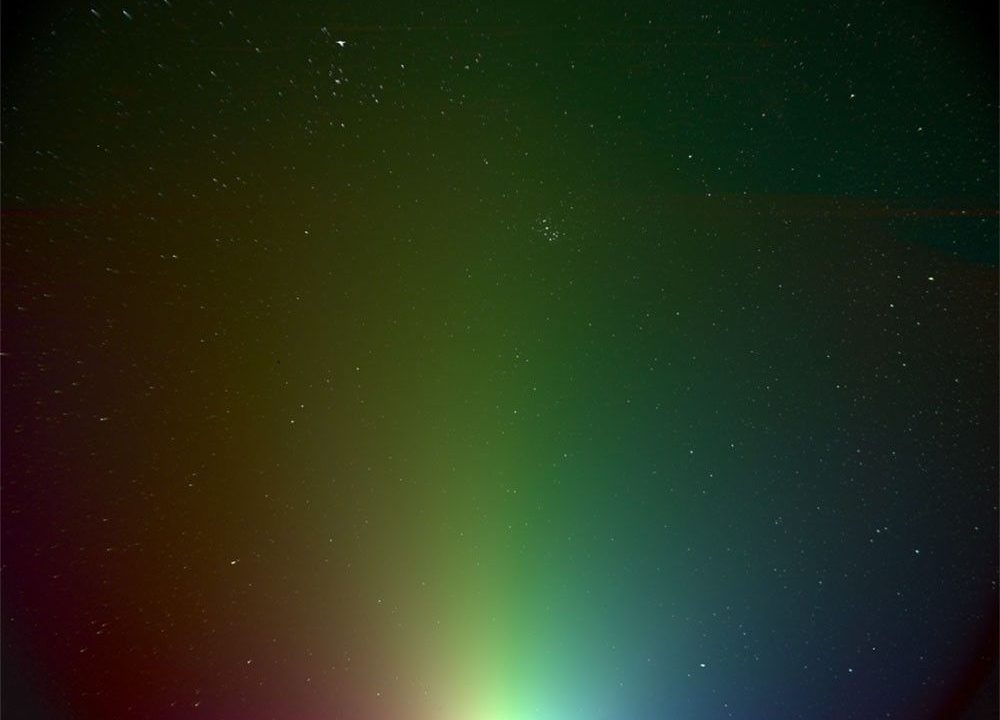
On April 18, 2025, the WFI-2 instrument (which captured its first light on April 14) took images through all three of its polarizers in succession for the first time to create this view. The image is colorized to show the polarization (or angle) of the zodiacal light, a faint glow from dust orbiting the Sun.
On April 18, 2025, the WFI-2 instrument (which captured its first light on April 14) took images through all three of its polarizers in succession for the first time to create this view. The image is colorized to show the polarization (or angle) of the zodiacal light, a faint glow from dust orbiting the Sun. NASA/SwRI

A new NASA mission is already collecting data and producing striking images of the solar system. Launched in March, the PUNCH (Polarimeter to Unify the Corona and Heliosphere) mission aims to study the sun’s corona and how the sun interacts with the wider environment of the solar system. Made up of four small suitcase-sized satellites, the mission is able to capture a continuous view of the entire inner solar system thanks to a camera placed on each satellite.

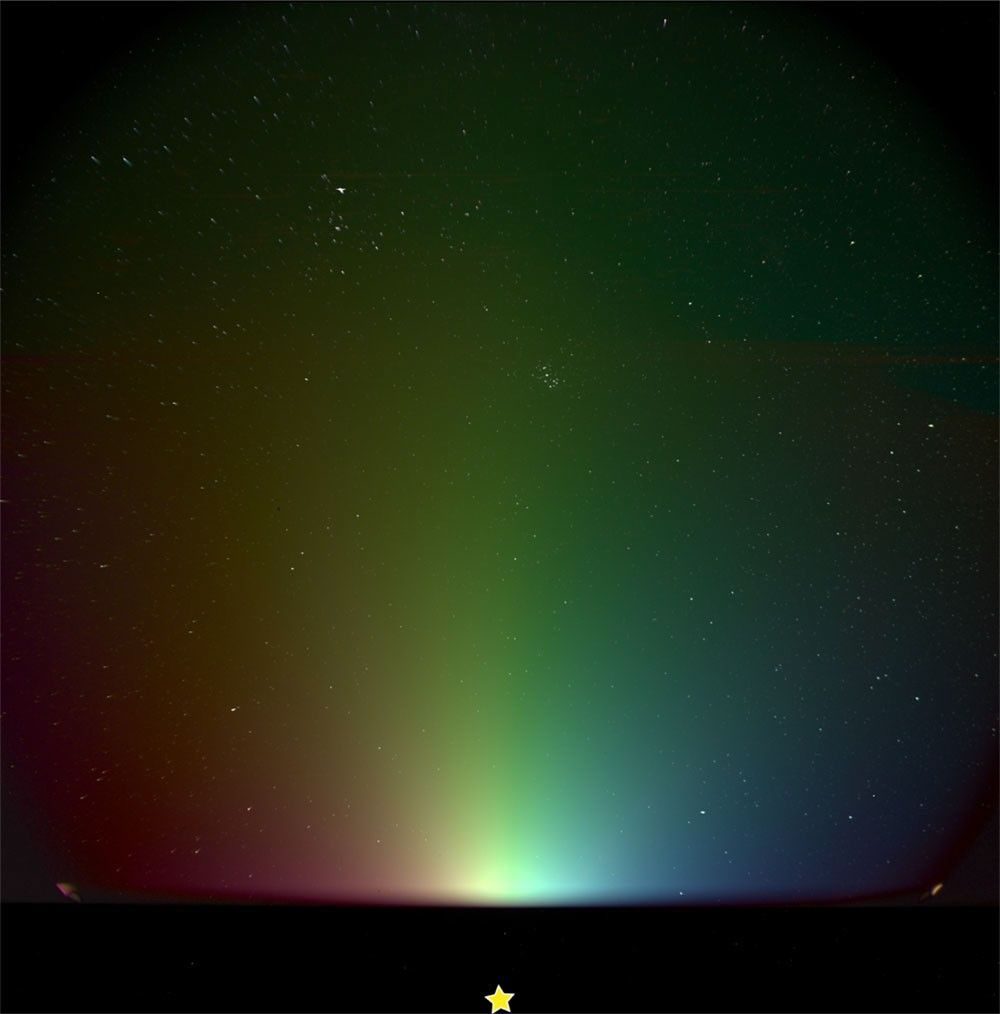
Before PUNCH can start doing science though, its instruments need to be brought online. As part of that process, PUNCH’s Wide Field Imager 2 captured an image of the zodiacal light coming from the sun. This faint glow, often seen before sunrise and known as false dawn, is a result of sunlight being scattered by the dust which floats through the solar system.

Recommended Videos

In the full image below, you can see a rainbow of zodiacal light, with the position of the sun marked by a star. The image uses color to represent features of the light: the hue of the light represents its direction, and the amount of saturation represents the degree of polarization. This data also shows background stars in white, like the Pleiades star cluster above the center of the image and the Hyades star cluster, a V-shaped cluster located toward the upper left.
Other instruments on board PUNCH also collected early data, including one which captured a striking view of the moon. This image was taken by the Narrow Field Imager (NFI), which is a type of instrument called a coronagraph that has a dark disk that is used to block out light from the sun. That allows less bright objects to be seen — in this case, the moon.
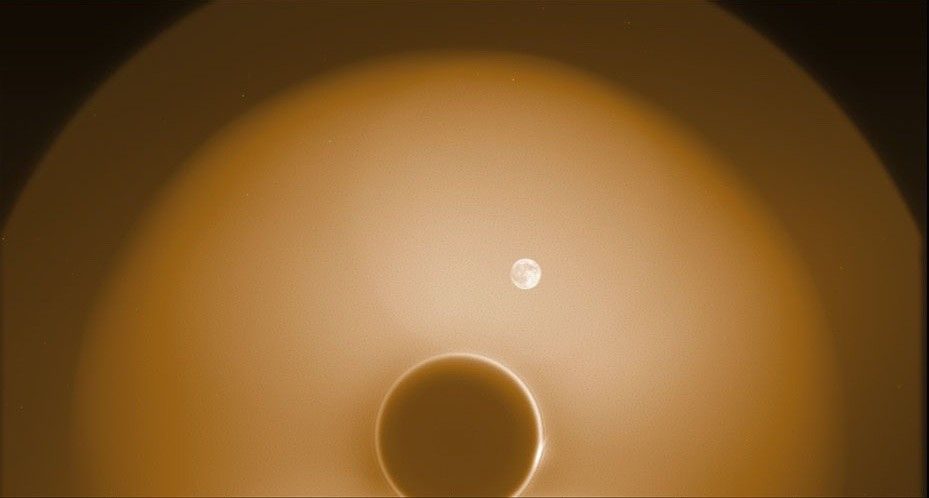
The NFI will be used to study the sun’s corona, so the purpose of this image was to check whether the moon would obscure the view — and the good news is that the moon won’t interfere with the science data, as it isn’t too bright compared to the background light being studied.

PUNCH will now continue collecting data, with two more instruments to be commissioned within the next few weeks before full science operations begin in June.

Georgina Torbet
Georgina has been the space writer at Digital Trends space writer for six years, covering human space exploration, planetary…
Orbot Robotics’ space robot has four arms, but its Goro physique has a purpose
This four-armed robot could make routine space-station work easier for astronauts
Robot with four arms

Helios is a new four-armed robot from Zurich-based Orbit Robotics, and at first glance, it reminded me of Goro from Mortal Kombat. But unlike the prince from Outworld, Helios is not built for combat. It is designed to help astronauts on space stations with the repetitive, time-consuming work that keeps life in space running.

Orbit Robotics says that in microgravity, legs are not much help. Instead of walking or standing, Helios needs to move through tight station interiors, hold itself steady, and handle cargo, tools, or equipment. Its four-arm design turns extra limbs into both mobility aids and working hands.

Read more
A billionaire crypto bro will lead humanity to Mars atop Musk’s Starship
Chun Wang could become one of the first humans to travel toward Mars
Chun Wang in a space suit

Neil Armstrong and Buzz Aldrin became the faces of the Moon landing era. Elon Musk’s Mars era may get a very different public face in Chun Wang, a cryptocurrency billionaire whose fortune traces back to Bitcoin mining.

Wang is expected to lead a future SpaceX Starship mission that would fly past Mars and return to Earth. SpaceX has not announced a launch date, and the plan still depends on Starship proving it can safely carry humans far beyond Earth's orbit.

Read more
Elon Musk will get a historical paycheck if he builds a colony of one milliion humans on Mars
SpaceX may hand Musk a historic payday, if Mars becomes a city
Elon Musk talks to the press as he arrives to to have a look at the construction site of the new Tesla Gigafactory near Berlin.

An executive's pay packages are typically tied to review, profit, share price, or operational targets. But SpaceX apparently has something different in mind. According to a Bloomberg report and details from SpaceX's IPO filing, Elon Musk's latest compensation plan includes a wild condition.

The company must establish a permanent human colony on Mars with at least 1 million inhabitants. However, this is only a part of the crazy deal.

Read more