  1. Home
  2. Cars
  3. Emerging Tech
  4. Legacy Archives

Department of Energy reverses course, now encourages hydrogen investment with H2USA campaign

Add as a preferred source on Google
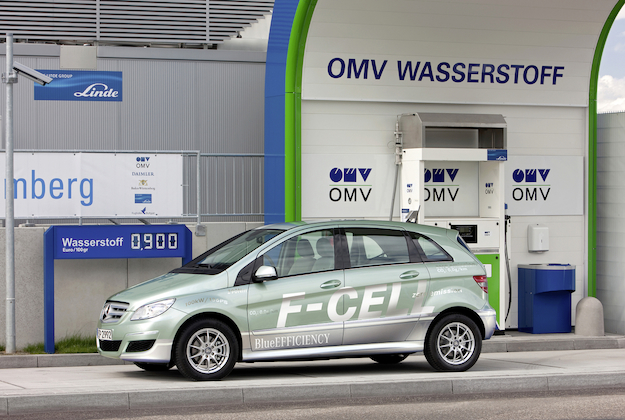
2011 Mercedes F-CELL
Image used with permission by copyright holder

When the Obama administration came into office, it aimed to cut $100-million from hydrogen fuel-cell research funding that had been promised by the George W. Bush administration. After automakers complained, congress added additional funds.

Since then, the Obama administration has distanced itself from the alternative drivetrain technology.

Recommended Videos

Recently, however, the story has changed. The Energy Secretary, Steven Chu, even went so far as to call hydrogen fuel cells an “important technology” at the 2013 Washington D.C. Auto Show.

The DOE will soon launch a hydrogen-promoting campaign tentatively called H2USA, according to an Automotivenews report. The program will compile a list of automakers eager to see hydrogen fuel-cell vehicles on the open market in the near future.

Why has the administration flipped the script on hydrogen? Although the infrastructure is extremely weak, hydrogen-powered cars stand as the only technology capable of matching the convenience of gasoline. Just like gasoline, hydrogen offers a long range on a single tank (or “charge”) and quick refueling, along with the zero emissions benefits of all-electric vehicles.

As it stands, there are only 20 hydrogen fueling stations in the U.S. and if the technology is to get off the ground, that number will have to increase drastically in years to come. The California Department of Energy has pledged to build 68 fueling stations within the state by 2015. With only $28.6-million to spend on the plan, which is around half what the plan would actually cost to complete, it’s unlikely the state will hit its goal.

Hydrogen fuel-cell technology has also improved a great deal since W. Bush’s administration. Fuel-cell cars are now capable of driving 75,000 miles before the fuel cell needs to be replaced, which is double what the vehicles were capable of in 2004.

More hydrogen news is surely soon to follow. We recently reported that Hyundai produced the first production hydrogen fuel-cell electric car for the European market. With the likes of Infiniti, Mercedes, Toyota, and other automakers working on their own hydrogen cars, it won’t be long before we see more road-ready hydrogen vehicles.

Nick Jaynes
Former Automotive Editor
Nick Jaynes is the Automotive Editor for Digital Trends. He developed a passion for writing about cars working his way…
We just got a hot signal that a Tesla and SpaceX could happen, after all
Tesla

For years, the idea of Tesla and SpaceX becoming a single company has lived somewhere between ambitious business theory and Elon Musk fan fiction. The two companies already share DNA, leadership influence, engineering talent, and long-term goals. But every time the topic surfaced, it felt more like an interesting thought experiment than a realistic possibility. Now, one of the most important people at SpaceX has added fresh fuel to the conversation.

Speaking in a recent CNBC interview, SpaceX President and COO Gwynne Shotwell was asked about the possibility of closer ties between Tesla and SpaceX. Her response wasn’t a flat-out denial. In fact, she suggested that bringing the two companies together could make life a little easier for Musk. That may sound like an offhand comment, but coming from Shotwell, it’s noteworthy. She’s been at SpaceX since its earliest days and remains one of the company's most influential executives.

Read more
Chinese drivers have figured out a silly way to fool Tesla Autopilot and it involves doll heads
God forbid a Tesla wants to drive itself!
Tesla Autopilot

Tesla's driver-monitoring systems are designed to ensure drivers keep their eyes on the road while using Autopilot and other assisted-driving features. But in China, some Tesla owners have reportedly found an unusual workaround: tiny plastic doll heads.

According to a recent Wired report, a growing niche market has emerged around figurines and gadgets designed to trick Tesla's in-cabin camera into believing an attentive driver is sitting behind the wheel. The most popular version involves miniature celebrity heads, often resembling actors or public figures, mounted near the rearview mirror to block the camera's view of the actual driver.

Read more
Tesla FSD update adds a new dialog that previews your car’s parking plan
Version 14.3.4 surfaces the car's intended parking method on screen before it begins the maneuver, a change that makes supervised autonomy feel more predictable.
Tesla FSD Supervised featured

Tesla has started rolling out Full Self-Driving (Supervised) version 14.3.4, and one of its standout additions makes the end of a trip feel notably more polished. The update introduces a new dialog box that appears as the car approaches its destination, showing the driver exactly how it plans to park before it begins the maneuver.

A robotaxi-style arrival experience

Read more