1. Home
  2. Emerging Tech
  3. Mobile
  4. Smart Home
  5. Legacy Archives

Digital Trends may earn a commission when you buy through links on our site. Why trust us?

PAR Works MARS app: Augmented reality guide for those who’ve given up on life

Add as a preferred source on Google
 

For many people, shopping, learning a new gadget, or exploring a new town can all be overwhelming things. Sometimes there are too many varieties of shampoos in a drugstore, or you don’t know which buttons navigate what on a new remote. You also don’t want to bother with manuals or flagging down shop owners for advice.

Recommended Videos

If the above instances sound like you, congratulations, you’ve given up on life. Just kidding (kind of). We know sometimes there are just too many options in the world, so PAR Works’ MARS app aims to help parse information overload with its latest augmented reality app. The free app simply takes a photo of anything you wish to identify, parse, or learn more about and can detect more information about it. For example, if you took a photo of someone’s shoes, it may recognize the brand and style – linking you to Amazon reviews, more color options, or Zappos for direct purchase. You can also take a photo of an aisle of grocery and locate where the items on your shopping list are specifically placed, or sort the results by price, review, or brand.
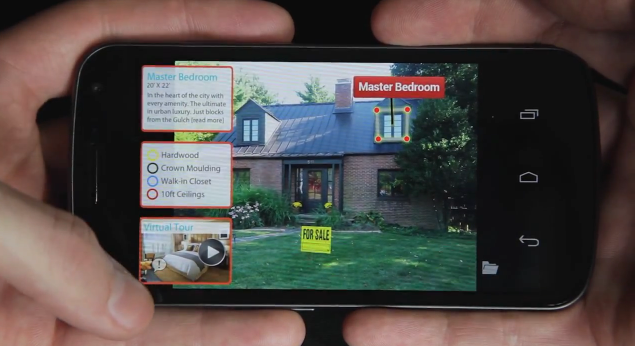
Par Works MARS app
Image used with permission by copyright holder

The data can be manually embedded by anyone, from retailers inserting information about their products to individuals adding instructions to how to preheat an oven. The app detects data in 3D from any angle of a photo; all it needs is Internet connection to recognize and sync photos to more info. If no data can be found, the user is prompted to take different angles of the product and add information about it so it can be stored in the database for future use.

“Let’s say, if you wanted to take a photo of your new car, or if you were Honda and you wanted to deliver a virtual manual to the users, you could have a Honda app where all somebody has to do is take a picture of their dashboard and they can see all of the buttons outlined in the photograph,” PAR Works co-founder and chief software architect Jules White explains. “Users can interact with the photos to find out what each button does before they use them.”

But the features extend before tutorials and information finder. With augmented reality, MARS can also plot out future developments, such as a construction site and the rendering of the finished product. Local businesses can embed coupons on their storefront for visitors who snap a photo of their shop. Basically, the app – a finalist for SXSW 2013 Interactive Award – makes life easier so you can spend less time figuring things out and more time enjoying them. Just don’t get too dependent on it before your phone’s battery runs out.

PAR Works’ MARS app is available for free on iOS and Android.

Natt Garun
An avid gadgets and Internet culture enthusiast, Natt Garun spends her days bringing you the funniest, coolest, and strangest…
Online payments are dimming the charm of one of America’s top tourist attractions
One of America's last analog tourist traditions just joined the cashless economy.
Photography, Binoculars, Camera

We all know those heavy, coin-operated binoculars perched on every scenic overlook in America, the ones you’ll find everywhere from the Empire State Building to the Grand Canyon. Turns out, they’ll soon start accepting tap-to-pay payments. 

This is great news, as you’ll no longer need to carry a quarter anymore, and making payments with your smartphone is much more convenient. However, I’d argue that the quarter was kind of the whole point.

Read more
The FBI secretly built an entire fake town just to practice cyberattacks
Hidden inside a warehouse in Alabama, the Kinetic Cyber Range recreates real-world digital attacks from start to finish.
FBI Kinetic Cyber Range Featured

While Hollywood has fake cities for filming movies, the FBI apparently has one for getting hacked. The agency has pulled back the curtain on its Kinetic Cyber Range, a 22,000-square-foot replica small town hidden inside its Huntsville, Alabama campus. But instead of training officers for shootouts or hostage rescues, the facility is designed to simulate realistic cyberattacks on homes, businesses, and critical infrastructure so investigators can practice responding to them in a controlled environment.

The FBI built an entire town just to simulate cybercrime

Read more
Brazil’s secret World Cup weapon taught the team when to ignore it
The data said he wasn't running enough. The footage said he was always in the “perfect tactical position.”
Soccer ball in net

Brazil has more World Cup titles than anyone, five of them to be precise, but after going through five straight tournaments without adding to that count, the team is leaning hard on data this time. 

Every player wears a sensor-packed "smart vest" tracking field position (via GPS), heart rate, and a stat called "player load," the same kind of numbers that your Whoop band or Apple Watch brags about, but tuned specifically for the sport.

Read more