1. Home
  2. Wearables
  3. Mobile
  4. Legacy Archives

Fitbit faces class-action suit over skin irritation issue with Force fitness tracker

Add as a preferred source on Google

Fitbit appears to be rather up against it at the moment. Earlier this year, the gadget maker had to apologize when some users of its Force fitness tracker started complaining of skin irritation caused by the gadget.

Last month it issued a voluntary recall of the device, offering affected users a full refund in return, while just a week ago another recall was issued by the US Consumer Product Safety Commission (CPSC), which also placed stricter rules on sales of the Force. 

Recommended Videos

And now the San Francisco-based startup is facing its first lawsuit in relation to the issue.

Filed earlier this week in the Superior Court of California in the County of San Diego, the suit, which is seeking class-action status, alleges “the company misled consumers in promoting and advertising the Fitbit Force device,” the Wall Street Journal reported earlier this week.

Filed by San Diego-based Gomez Law attorney John Fiske on behalf of aviation teacher Jim Spivey, the suit calls for Fitbit to contact all California-based purchasers of the Force and offer a full refund that should also include tax and shipping costs.

“We are asking for full disclosure of the dangerous aspects of the product and a full disclosure of why it’s causing these injuries,” Fiske said.

According to the Journal, Spivey bought his Force device in January and discovered there was a potential issue with the device shortly after when he visited Fitbit’s website regarding a separate matter.

Although he hasn’t yet developed any rash, he believes the onus is on Fitbit to alert consumers directly about the recall. “I have a concern that there is still a risk of developing an injury for me and others,” Spivey said.

Fitbit said recently that 1.7 percent of Force users had reported a skin-related problem possibly caused by the gadget, with 9,900 citing of skin irritation and 250 citing blistering.

The precise cause of the issue still isn’t known, with Fitbit recently ruling out any connection with the device’s electrical systems or battery. It’s been suggested it could be an allergic reaction caused by the nickel/stainless steel element of the Force’s interior.

For more information on the issue, check out this letter from Fitbit boss James Park.

Trevor Mogg
Contributing Editor
Not so many moons ago, Trevor moved from one tea-loving island nation that drives on the left (Britain) to another (Japan)…
Meta’s Ray-Ban Display now types messages from your finger movements
Neural Handwriting is a really cool feature, but Meta opening the Ray-Ban Display to developers is the quiet announcement that turns a clever wearable into a platform with immense possibilities.
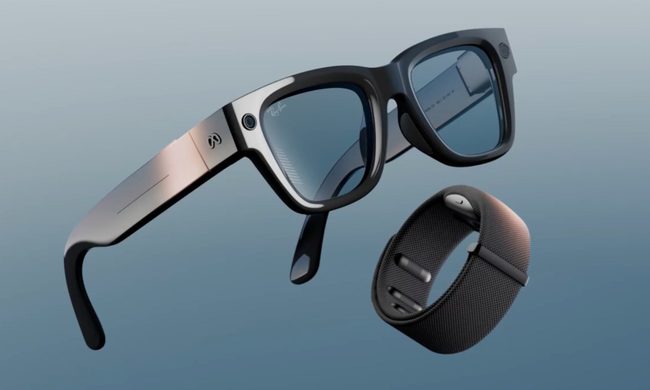
Meta Ray-Ban Display and EMG Band.

Six months into its life, the Meta Ray-Ban Display is starting to look less like an experiment, thanks to what is arguably the most significant update Meta has ever pushed for the device. 

The headline feature is Neural Handwriting, which is now available to every Ray-Ban Display owner, having spent its early months in limited access for Messenger and WhatsApp users. 

Read more
Forget smart glasses, these earbuds can see, hear, and remember everything for you
Electronics, Headphones

Smart glasses have always felt a little awkward to me. Sure, they can play music, take calls, snap photos, and even throw notifications in front of your eyes, but at the end of the day, they’re still just tiny screens sitting on your face. Now imagine removing the screen entirely.

That’s exactly what this new pair of AI-powered earbuds is trying to do. Instead of showing you information, these earbuds are designed to quietly hear, see, remember, and respond to the world around you. And honestly, this might be one of the more interesting directions wearable AI has taken so far.

Read more
Meta will allow third-party apps for Ray-Ban Display glasses. Your eyes must stay glued to digital reality.
Meta just handed developers the keys to the glasses display, and the possibilities are endless.
Meta Ray Bans Display close up shot

Meta announced its Meta Ray-Ban Display glasses with a built-in in-lens display that allows users to see what the smart glasses capture, see and respond to messages, and interact with its Meta AI.

While the built-in apps and features were good, the only way to unleash the potential was to allow third-party developers to build apps. And today, Meta is finally opening up the display on its Ray-Ban smart glasses to developers.

Read more