  1. Home
  2. Computing
  3. News

Acer’s new Chromebook 311 offers a military-grade build and easy repairs

With a military-grade build, fanless design, long battery life, and modular repairable parts, Acer's new Chromebook 311 models are built to survive classroom life.

Add as a preferred source on Google
Acer Chromebook 311 featured image.
Acer

Acer has launched two new Chromebooks aimed primarily toward students: the Acer Chromebook 311 (C725) and the Acer Chromebook Spin 311 (R725T). These laptops are built for K-12 classrooms and institutional setups, where durability, low maintenance, and reliable performance matter more than flashy specifications.

Both models feature an 11.6-inch HD IPS display (with optional touch support) and TUV Rheinland-certified low-blue-light panels. Unlike the regular version, the Chromebook Spin 311 has a convertible screen that doubles as a tablet when required.
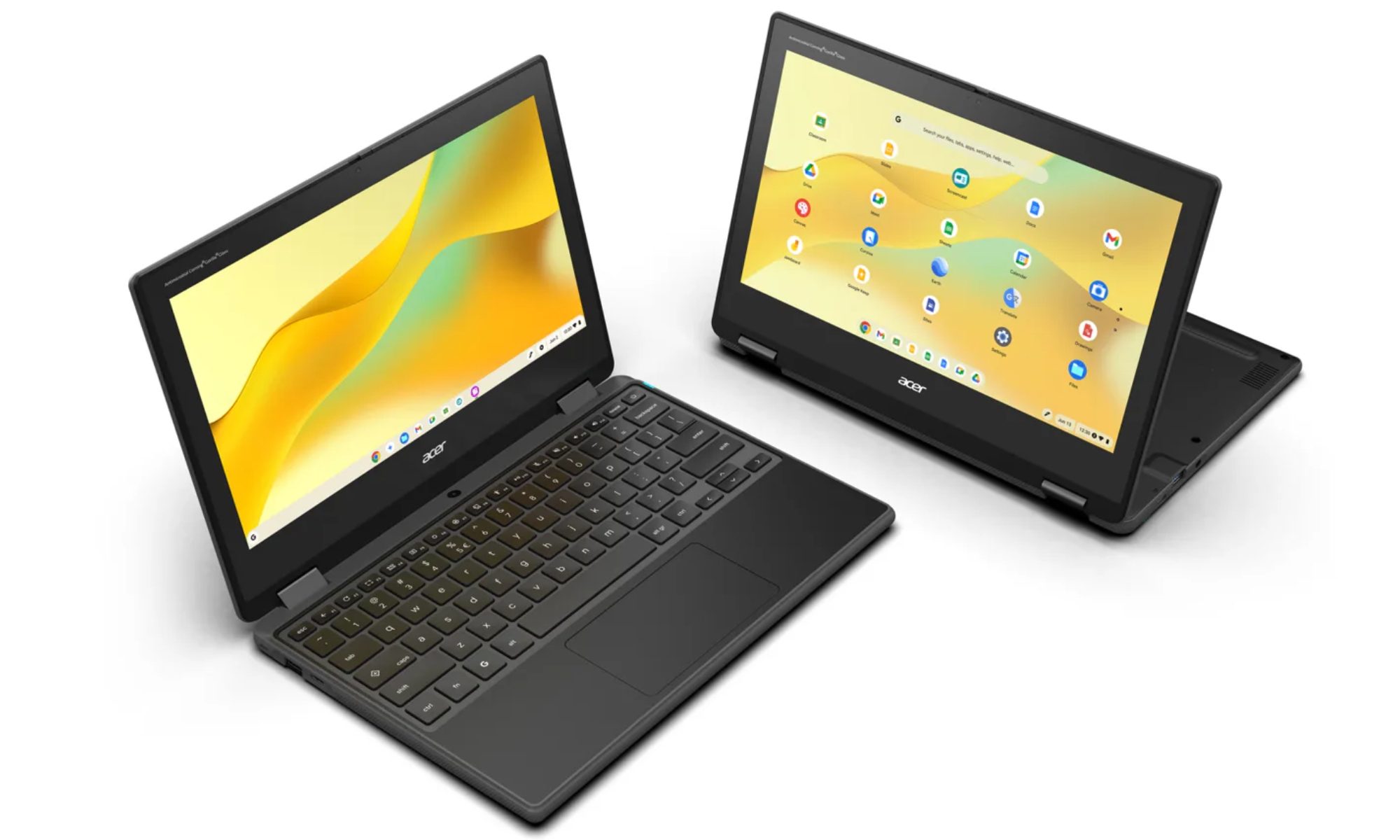
Rugged hardware made for K-12 realities

Under the hood, the panel is powered by the MediaTek Kompanio 540 octa-core processor, capable of handling everyday educational tasks and even more demanding apps like STEM tools and Minecraft Education Edition.

Recommended Videos

The chipset is paired with up to 8GB of LPDDR5X RAM and 32GB, 64GB, or 128GB of eMMC storage. It also has a 1080p front-facing webcam with dual microphones, and an optional 5MP “world-facing” camera for capturing your notes or projects.

Out of the box, both notebooks run Google’s lightweight Chrome OS, which provides a familiar (Android-like) user interface and access to apps via the Google Play Store. Connectivity options on the Chromebooks include Wi-Fi 7 or Wi-Fi 6E and Bluetooth v5.3 or v5.2.

The Chromebooks also get serviceable I/O ports, including two USB-C ports (supports charging and DisplayPort), two USB 3.2 Gen 1 ports, and a headphone/speaker jack. With a 45 Wh battery, the notebooks can last up to 15 hours between charges, though exact times may vary depending on usage.  

While these were the technical specifications, the Acer Chromebooks meet MIL-STD-810H testing standards. The company has used impact-resistant exterior, shock-absorbent bumpers, and an internal honeycomb structure to make the device drop-resistant (up to 1.2 meters).

There’s an additional bracket around the display panel and the I/O ports to withstand repeated plugging/unplugging, and a dedicated drainage system that channels liquid out of the device (it can handle spills of up to 330 ml).

Acer’s new Chromebooks should be available in North America by March 2026. While the Chromebook 311 will cost $499.99 for the baseline variant, the Chromebook Spin 311 could cost $579.99.

Shikhar Mehrotra
For more than five years, Shikhar has consistently simplified developments in the field of consumer tech and presented them…
Intel may bring back older desktop CPUs because DDR5 is getting too expensive
Older Intel Core CPUs from 10th to 14th Gen may get a second life
Intel Core i5-12400F box sitting in front of a gaming PC.

Intel may be preparing an unusual response to the ongoing memory crunch. According to Chinese outlet ITHome, citing ChannelGate, the company’s latest production plan includes restarting production of 13th-gen and 14th-gen Core processors.

The move is expected to increase supply across Intel’s 10th, 12th, 13th, and 14th Gen CPU families, especially in mainland China. For DIY PC builders, the timing is important. DDR5 memory prices have climbed sharply, making newer platforms harder to justify for anyone trying to build an affordable gaming PC.

Read more
Amazon wants to design in-house chips for Kindles, Fire TV, and Echo speakers
Apple did it first. Amazon is doing it now, starting with 40 million chips a year and a partner most people have never heard of.
Amazon Kindle Scribe dark mode featured image.

Apple's decision to design its own chips reshaped the consumer electronics industry. Amazon may be about to make the same call, just about two decades later.

Supply chain analyst Ming-Chi Kuo reports that Amazon is preparing to shift away from externally sourced processors for its consumer electronics lineup, marking what he describes as the company's first major processor procurement change in 20 years. The transition is expected to begin in 2027.

Read more
AI wants to summarize it all. TripAdvisor’s misleading reviews show AI will also ruin your travel plans
Spotless, friendly, and totally wrong. AI summaries are hiding the reviews that actually matter.
Tripadvisor logo on MacBook

Planning a trip is stressful enough without wondering if the glowing hotel summary you just read was written by an AI that skipped the scary parts. As it turns out, that might be exactly what's happening on TripAdvisor.

According to an investigation by consumer group Which?, reported by the Guardian, TripAdvisor's AI-generated review summaries are smoothing over serious guest complaints, and in some cases, downright dangerous ones.

Read more