  1. Home
  2. Computing
  3. News

Google Maps gets conversational AI and 3D navigation in one of its biggest update

Google Maps now answers the questions search never could — and shows you the road ahead in three dimensions before you even get there.

Add as a preferred source on Google
Google Maps Ask AI and 3D Navigation features.
Google

Anyone who has white-knuckled a highway merge while Maps cheerfully announced “turn right in 0.2 miles” onto a median knows the app was overdue for a reality check. On Thursday, Google delivered one.

Two Gemini-powered features dropped Thursday, and together they’re the biggest thing to happen to Maps in more than ten years.
What if you could just ask Maps a real question?

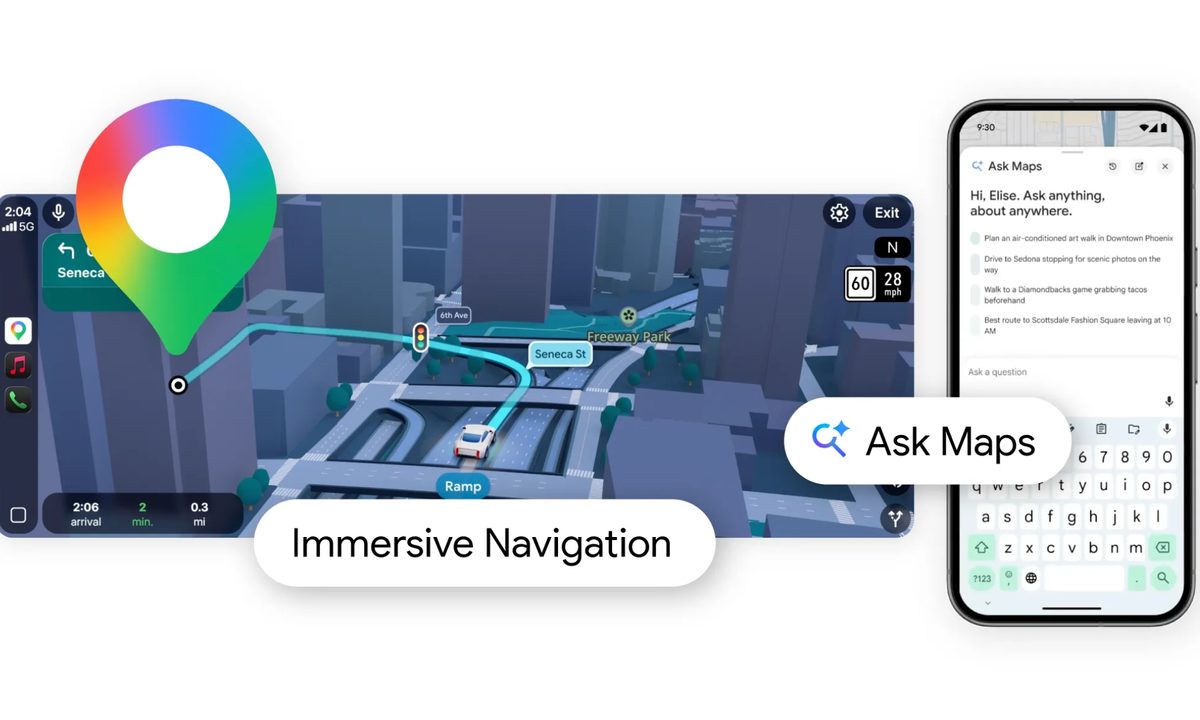
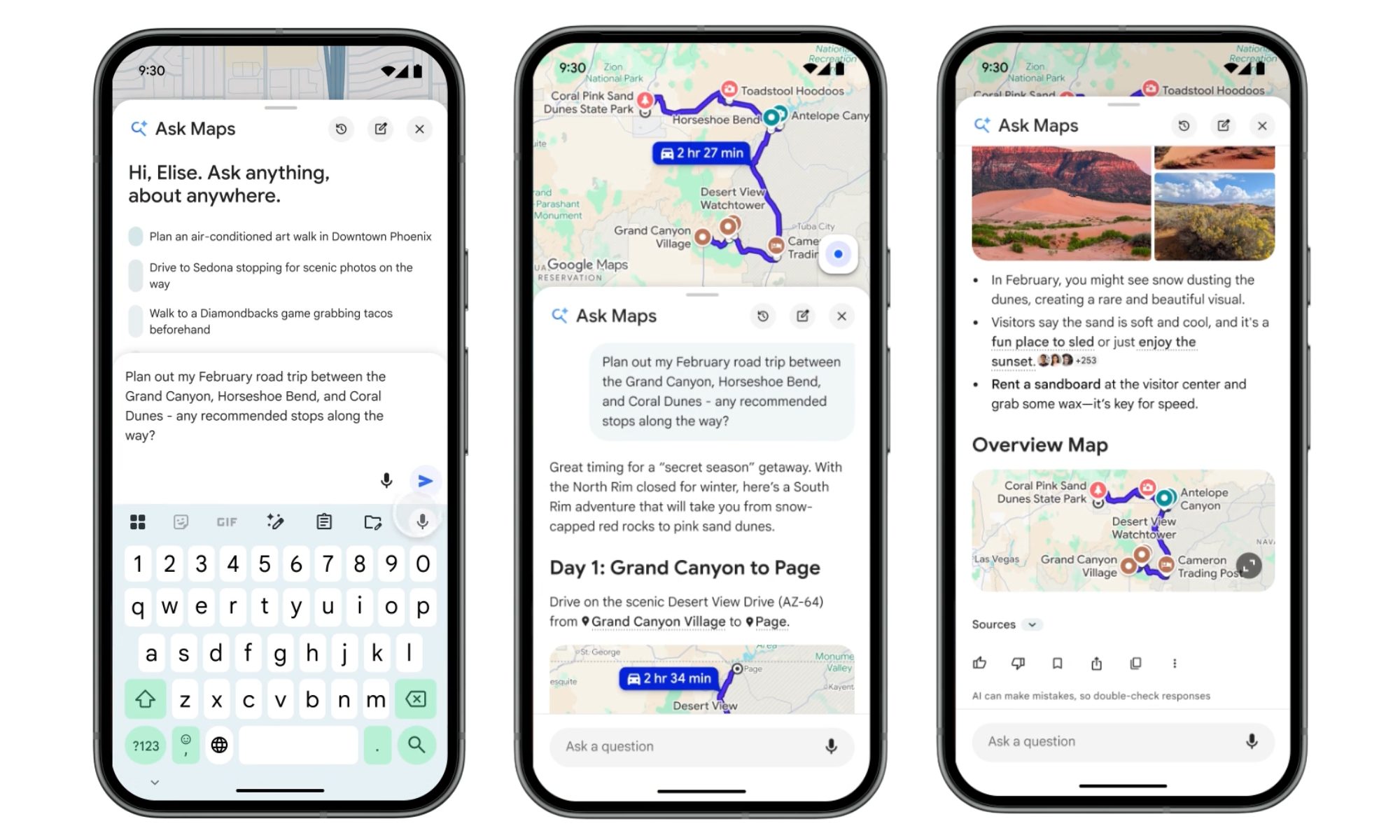
Ask Maps is the one people will talk about first — it’s an AI chat tab built specifically for the messy, oddly specific questions that normal search just fumbles.

Recommended Videos

Stuff like: “where can I charge my phone without waiting behind a dozen people for coffee?” or “I’m driving through Arizona this weekend, what are the recommended stops along the way?”

Gemini combs through north of 300 million places, informed by half a billion real contributors, and actually gives you a useful answer instead of a list of Yelp links you’ll never open.

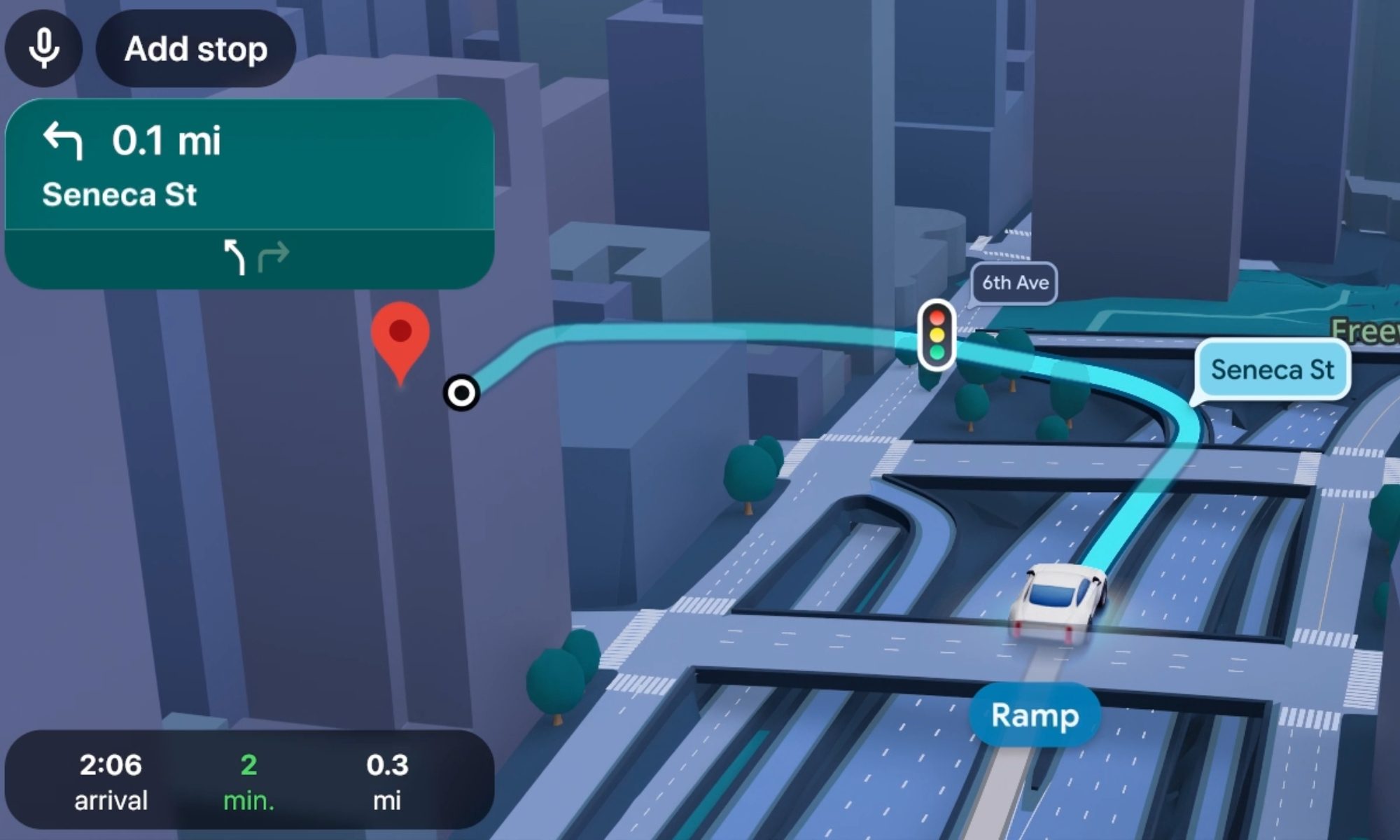
For drivers, the bigger upgrade might be Immersive Navigation — Google’s answer to everyone who’s ever flown past an exit because the flat blue line gave zero warning.
Where is the new Google Maps experience available?

The feature arrives with a full 3D visual overhaul, redesigned road details, and real-time guidance that actually reflects what you’re seeing out the windshield. Transparent buildings reveal what’s behind them before tricky turns.

Voice prompts now reference real context, like guiding you past one exit to take the next specific one, rather than the usual cryptic countdown. A Street View preview of your destination — plus parking suggestions — rounds out the arrival experience.

Ask Maps is live now for U.S. and India users on iPhone and Android, with desktop on the way. Immersive Navigation kicks off its U.S. rollout today and will spread to CarPlay, Android Auto, and Google-equipped cars over the coming months.

Shikhar Mehrotra
For more than five years, Shikhar has consistently simplified developments in the field of consumer tech and presented them…
Chrome is testing an Ask Gemini button that follows your text highlights around the web
Highlight text, get Gemini. Google is making sure you never have to look for AI in Chrome again.
Google Chrome with Gemini

Google is quietly testing something in Chrome Canary that I think will either become one of the browser's most useful or its most irritating additions ever. 

It depends on how often you highlight text to copy it without wanting an AI to jump in.

Read more
Intel Core 3 test shows it could give Windows laptops a fighting chance again MacBook Neo
Fresh PassMark scores suggest Wildcat Lake is closing the gap with Apple's A18 Pro.
Intel Core Series 3 Processors Featured

Apple's MacBook Neo has shaken up the budget laptop market with its $599 price tag and surprisingly capable A18 Pro chip. But if fresh benchmark numbers are anything to go by, Intel may finally have a worthy response. The company's upcoming Core 3 304 processor has surfaced on PassMark, and the results suggest that entry-level Windows laptops could soon be much more competitive.

Intel's Core 3 304 is closing the gap with Apple's A18 Pro

Read more
Hackers leak facial recognition records tied to millions of Madison Square Garden visitors
Facial Recognition Composite

Madison Square Garden has spent years using facial recognition technology to monitor who enters its venues. Now, that same surveillance system is at the center of what could become one of the year's most troubling privacy breaches.

The cybercrime group ShinyHunters has published a massive cache of data allegedly stolen from Madison Square Garden Entertainment after the company missed a ransom deadline. According to reports, the leak includes facial recognition records, customer information, internal security assessments, and other sensitive data tied to millions of visitors. While large-scale breaches have become depressingly common, this one feels different. Most data leaks involve passwords, email addresses, or financial information. This breach reportedly includes something far more personal: information connected to how people were monitored and identified in physical spaces.

Read more