1. Home
  2. Emerging Tech
  3. News

Wildlife tracking just got a massive upgrade, and it’s coming from space

A new satellite system is turning animals into a real-time poaching alarm, and it might just save Africa's rhinos.

Add as a preferred source on Google
rhino in wild
Max Planck Institute of Animal Behavior

There’s something remarkable happening in Namibia’s wildlife reserves. A satellite system called Icarus is watching animals panic, and this might be the most powerful anti-poaching tool scientists have ever built.

To understand why, you need to understand the poaching pandemic. More than 10,000 rhinos have been poached in South Africa over the last 15 years, and the poaching crisis shows no signs of slowing down. Rangers are outnumbered, reserves are vast, and by the time anyone realizes a poacher is inside the park, it’s often too late.

Recommended Videos

According to a new BBC report, scientists at the Max Planck Institute of Animal Behavior in Germany came up with an unusual solution. Instead of adding more rangers or cameras, why not let the animals do the watching?

How does the technology work?

Every time a threat moves through the bush, animals react in predictable ways. To map these panic signatures accurately, the team needed real data, which meant simulating poaching events at Okambara, a private wildlife reserve in Namibia. 

Armed hunters moved through the bush, firing rounds into the air while drones recorded exactly how each species reacted. The idea was not to hurt the animals but to record their reaction when they fear a poacher approaching. 

The goal is to use these panic patterns to train an algorithm that sends real-time alerts to rangers. As Martin Wikelski, a world-leading movement ecologist who heads the Max Planck Institute, puts it, even the most unlikely animals become useful in this system. Giraffes, for instance, don’t run. They just stand there, heads all pointing in the same direction, watching the danger from a safe distance. “So we know where the butcher is,” Wikelski says.

At the heart of this system are wildlife tracking tags. They track GPS location, activity, heart rate, body temperature, and atmospheric pressure. The goal is to have 100,000 animals tagged across the planet by 2030, each one acting as a beacon in a global early warning network.

Can it actually stop poaching?

At Kruger National Park in South Africa, the system has already helped free 80 wild dogs from snares. But real-time poacher detection remains a work in progress. In November, Icarus launched its first satellite, with five more planned by 2027. Once complete, it will receive real-time animal movement data from anywhere on the planet, making it harder than ever for poachers to operate in the shadows.

Rachit Agarwal
Rachit is a seasoned tech journalist with over seven years of experience covering the consumer technology landscape.
Starbucks kills AI manager tool because it wasn’t doing as good a job as a human
The system reportedly struggled with miscounts, mislabeled products, and store-level execution issues.
Starbucks Coffee Cups FEatured

For the last two years, tech companies have aggressively pushed the idea that AI is ready to replace huge chunks of repetitive human work. Meanwhile, Starbucks just discovered that accurately identifying milk cartons inside a coffee shop is apparently still harder than Silicon Valley promised.

The company is officially scrapping its AI-powered inventory counting system across North America just nine months after deployment, according to a Reuters report. The tool, designed to automate stock counting and reduce in-store shortages, reportedly struggled with frequent miscounts and labeling errors, including confusing similar milk types or missing products entirely.

Read more
This robot barista is trying to turn championship coffee into a scalable business
Cup, Beverage, Coffee

Some ideas sound theoretical until they appear in a place as ordinary as your morning coffee. Artly is trying to answer that question with the Barista Bot, its robotic barista system that is already serving drinks at locations including Muji in Portland, Oregon. The company is attempting to take something that has traditionally depended on human skill, repetition, and instinct, then translate it into a system that can reproduce the same result consistently at scale.

What makes the Barista Bot more interesting than a standard automation story is that Artly is not trying to build the coffee equivalent of a vending machine. Its goal is to replicate the techniques, standards, and workflow of a world class barista closely enough that the experience still feels intentional rather than automated. According to Digital Trends founder Dan Gaul, who visited the Portland location to try it firsthand, the coffee itself was surprisingly good.

Read more
Magic Cue, one of the smartest Android features on the Pixel phones, is coming to more apps
Google's most underused Pixel 10 feature is finally getting the third-party reach and redesign it needed to become the proactive AI assistant it was always supposed to be.
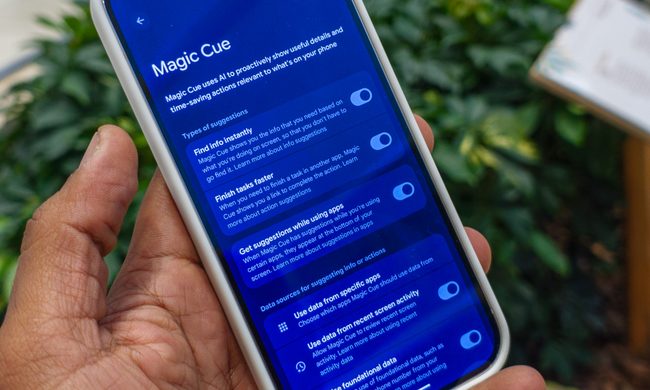
Magic Cue Settings splash screen on the Google Pixel 10 Pro in Obsidian

Magic Cue, I’d say, was the kind of feature that made me excited about the Pixel 10 launch. However, after the on-stage demo, the feature hardly showed up in day-to-day usage, much less in a useful way.  

Google apparently noticed. At I/O 2026, the company quietly announced that the feature is getting an expansion, along with a possible redesign. While it wasn’t the headline announcement, it could surely be something that makes Pixel 10 users excited again. 

Read more