  1. Home
  2. Computing
  3. Emerging Tech
  4. News

Research shows educational institutes must not put too much faith in AI text detectors

A UF study shows these tools are so unreliable that the entire evidentiary basis for claims about AI-generated academic writing may need to be reconsidered from scratch.

Add as a preferred source on Google
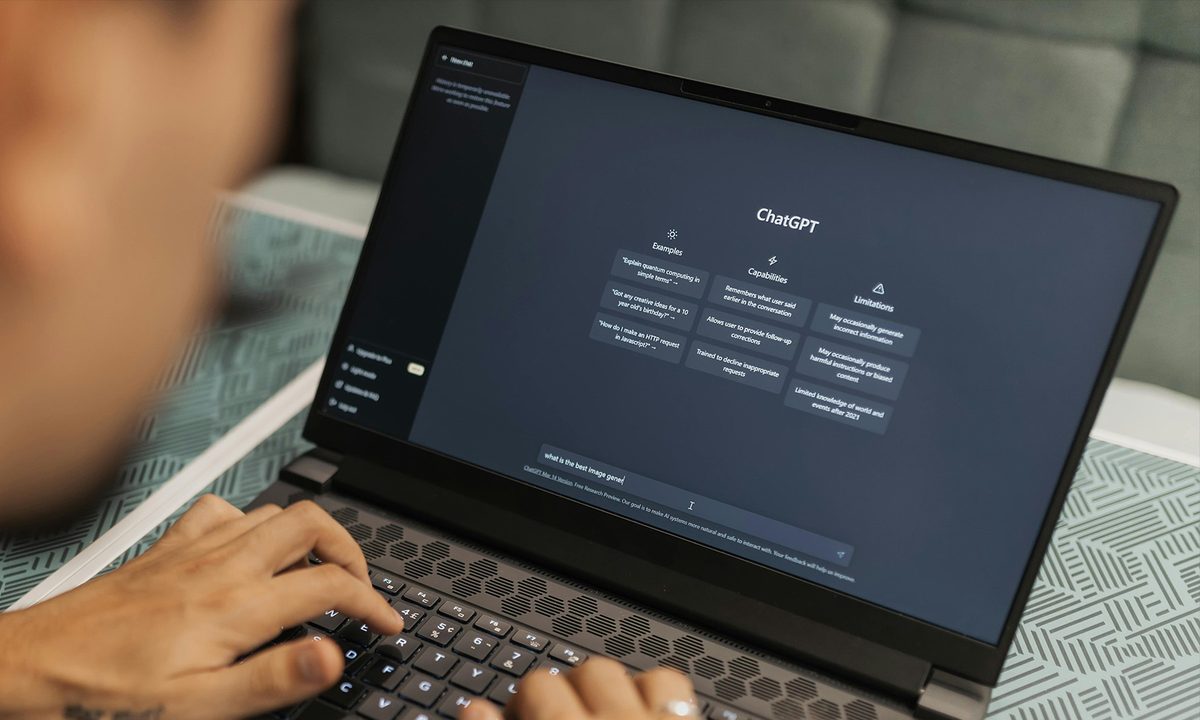
Man using ChatGPT on a laptop
Matheus Bertelli / Pexels

Here’s an uncomfortable thought for every academic institution currently using AI detectors to police student and researcher submissions: the tools don’t work as reliably as institutions assume. 

A paper presented at this week’s 2026 IEEE Symposium on Security and Privacy by researchers at the University of Florida concludes that commercially available AI-generated text detectors are “poorly suited for deployment in academic or high-stakes contexts.”

Recommended Videos

That’s a polite way of saying universities are making career-altering decisions based on results from tools that are essentially unreliable.
What did the research actually find?

Patrick Traynor, Ph.D., professor and interim chair of UF’s Department of Computer & Information Science & Engineering, led a team that tested the five most popular commercially-available AI text detectors. 

Using roughly 6,000 research papers submitted to top-tier security conferences before ChatGPT even arrived, they had LLMs create clones of those same papers, and then ran both sets through the AI detectors. 

The results showed false positive rates ranging from 0.05% to 68.6%, and, even more surprising, false negative rates between 0.3% and 99.6%. That upper figure is close to 100%, meaning the worst-performing detector missed virtually all AI-generated text.

While two of the five detectors performed well initially, they were rendered largely useless after the researchers asked the LLM to rewrite its outputs using more complex vocabulary (the paper calls this a lexical complexity attack).
Why does this matter beyond academic integrity?

Traynor put it plainly: “We really can’t use them to adjudicate these decisions. People’s careers are on the line here.” An accusation of AI-generated writing in a submission can permanently damage a researcher’s reputation, but we can’t put blind trust on tools making those accusations.

The argument is that the evidence about widespread AI use in academic writing is itself unreliable. “For as many studies as we see claiming that a certain percentage of academic work is AI-generated, we actually don’t have tools to measure any of that,” Traynor added. 

His research doesn’t just critique the tools; it exposes a systemic failure of due diligence by every institution that adopted these tools without demanding evidence whether they are accurate.

Shikhar Mehrotra
For more than five years, Shikhar has consistently simplified developments in the field of consumer tech and presented them…
AI may have just won a literary prize. My heart weeps seeing it poison our love for books.
updated book and AI photo

I had a hard time processing this news. As someone who has been deeply in love with stories since childhood and who grew up on the works of Arthur Conan Doyle, Terry Pratchett, J.R.R. Tolkien, and other such venerable authors, seeing an AI-written story win a prestigious writing award is hard to digest. 

If you are unaware, the winners for the Commonwealth Short Story Prize for 2026 were announced, and three of the five winning regional stories have been found to be entirely or partially written by AI. Or at least that seems to be the consensus among readers. As a reader and an amateur fiction writer, this hurt me deeper than any other tale of AI corroding our lives.

Read more
Canva and Adobe are coming to Gemini, and they want to make everything chatty
Adobe and Canva are plugging into Google’s assistant, betting that creative work starts with a prompt, not an app icon
Art, Collage, Photography

Canva and Adobe are moving deeper into Google Gemini, giving the assistant a bigger role before users ever open a design app.

Adobe says its "Adobe for creativity" connector is coming to Gemini in the coming weeks, giving users a way to describe tasks and send them through Adobe tools for imaging, design, and video. Canva is already rolling out its Connected App for Gemini in select English-language markets, with full availability coming soon.

Read more
AI can pass the Turing Test in live chats and appear more human than us. I am spooked now
UC San Diego researchers found GPT-4.5 was judged human 73% of the time in live conversations
Image of a human woman next to an AI-generated face with Real or Fake text at the bottom.

AI can pass the Turing Test in live chats, and the latest result lands with a chill. In a UC San Diego study, GPT-4.5 outperformed real participants at convincing judges there was a person on the other side.

The setup was harder to shrug off than a standard benchmark. Judges reacted to real-time exchanges rather than static prompts, then made a fast call based on conversation alone.

Read more