1. Home
  2. Phones
  3. Mobile
  4. Music
  5. Web
  6. Legacy Archives

YouTube’s paid service Music Key is Spotify for music videos and it only costs $8

Add as a preferred source on Google

Spotify made paying for unlimited music popular. Now YouTube hopes to do the same for music videos with its new service Music Key. The idea is to get people paying to watch music videos instead of stream them for free. Currently, Music Key is an invite-only beta and those who sign up to test the service will have access to the service for six months at no cost, before they have to fork over $8 a month. YouTube added that the final price will be $10 a month, but it hopes to get more users on the bandwagon by offering a lower introductory price.

YouTube plans to convert its millions of users to the premium subscription service by offering a bunch of goodies that will make many music streaming fans excited. Those who subscribe to Music key will have access to the 30 million tracks in the Google Play Music library, ad-free music videos, background playback, and offline caching, so that you can view videos and listen to music even when your Internet connection cuts out.

Recommended Videos

With Music Key, you’ll also be able to listen to entire albums in high-quality audio from the YouTube app. There will also be playlists available for your listening pleasure that are organized by theme and artist. YouTube will also give you recommendations based on your listening history to help you find new artists you might enjoy.

Most of the same features will be available to normal YouTube users, but they’ll have to deal with ads. YouTube is hoping that offline playback and the end of ads will be enough to convince people to pay for Music Key. After all, if it worked for Spotify, why not for YouTube? YouTube says its offering invites to its biggest music fans and creators, but that anyone who’s interested in testing out the beta can sign up on the new, Music Key website.

The decision to add a paid subscription service to YouTube seems to have been in the works for at least a year. Earlier reports mentioned that YouTube was mulling the idea over and signing deals with record labels to make it work. Indie artists put up a fight for a time, but it seems that they caved recently, giving YouTube full authority to push ahead with its plans.

Malarie Gokey
As DT's Mobile Editor, Malarie runs the Mobile and Wearables sections, which cover smartphones, tablets, smartwatches, and…
Old kindle owners are revolting against Amazon’s support shutdown with jailbreaking
Aging Kindles are still working, and some users refuse to let them die
Kindle-Paperwhite

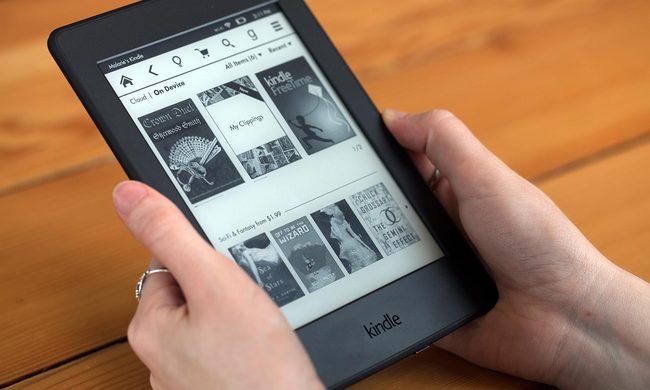
Amazon’s decision to cut support for older Kindles has pushed some longtime owners toward jailbreaking, a route many never expected to consider.

From May 20, 2026, Kindle devices released in 2012 or earlier will no longer be able to buy, borrow, or download new books directly from Amazon. Books already downloaded will still work, but the store experience is basically being switched off for these devices. Reports now suggest that some users are looking at jailbreaks as a way to keep older Kindles useful instead of replacing hardware that still works.

Read more
I’m weirdly excited about Android 17’s upcoming anti-doomscrolling feature
Android Pause Point screenshot.

I have spoken before about how doomscrolling has completely changed the way I consume short-form content. What used to feel like a quick break to watch a couple of YouTube Shorts or Instagram Reels somehow turned into an automatic habit I barely even notice anymore. I pick up my phone for one thing, open a social media app just for a minute, and suddenly I am trapped in an endless vertical stream of videos I did not even plan to watch. And the frustrating part is that I am fully aware of it while it is happening.

I have tried almost everything to change the habit — screen time limits, app timers, turning notifications off, hiding apps from my home screen, and even forcing myself to keep the phone away while working. Some of those tricks help for a while, but the muscle memory always creeps back in. Even during work hours, I still catch myself unlocking my phone without thinking and instantly falling back into the same doomscrolling spiral. That is why one particular announcement during the Android Show 2026 genuinely caught my attention. Buried between all the announcements was an Android 17 feature that actually feels useful. And I am weirdly excited for it to arrive on my Google Pixel 10a.

Read more
I use this iPhone feature every single time someone wants to borrow my device
Electronics, Mobile Phone, Phone

For me, there are basically two kinds of panic in life. The first is sending a risky text to the wrong person. The second is handing my unlocked phone to someone and instantly remembering that my entire digital life lives inside it. Unfortunately, I have experienced the second one far too many times. Most of the time, the reason is completely harmless. A friend wants to click a quick picture, my cousin asks to watch a reel, or someone just wants to place a food order or check the cricket score. But the second my iPhone leaves my hand, my brain starts speed-running through everything stored inside it — personal chats, banking apps, work emails, private notes, passwords, photos, and those screenshots I always forget to delete.

Smartphones are no longer just phones. They are essentially tiny, portable vaults that hold years of personal information, habits, conversations, and memories. Lending someone your device can feel like handing them a small extension of your brain for a few minutes. And honestly, that thought alone is enough to make me uncomfortable. That is exactly why one iPhone feature has become essential for me. It is called Guided Access, and I use it almost every single time someone asks to borrow my phone.

Read more