  1. Home
  2. Computing
  3. Gaming
  4. News

A half million Steam Controllers in seven months is pretty terrible

Add as a preferred source on Google

Seven months have passed and now we finally have some numbers on Valve’s recent venture into the hardware market, Steam Machines. The Linux-based hardware was often marketed as an open alternative to the increasingly locked-down approach incentivized by Microsoft with its release of Windows 10. It was also supposed to bridge the rift between console and PC gamers. But for all those promises, the sales figures are rather disappointing. Not that we’re surprised.

As part of updating the Steam Controller functions, the company announced that it’s sold over 500,000 Steam Controllers since the launch in November. The company has also verified that those numbers encompass to console-bundled controllers, so we’re likely talking about a total sale of less than 500,000 Steam Machines since launch. That includes every branded Steam Machine sold through Valve’s hardware partners.

Recommended Videos

In case you’re thinking 500,000 is plenty, think again. Comparing the sales of Steam Machines to the competition further increases the hurt for Valve. Rivals in the gaming platform sector like PlayStation 4 and Xbox One respectively reached 10.2 million and 5.5 million in sales in their first seven months on the market. Both consoles beat Steam Machines by double on their first day, reaching over a million sales each. According to John Peddie Research the global hardware market for new “Enthusiast” and “Performance” desktop PCs comprised about $18.3 billion. Even if your average SteamOS customer spent $1,000 per Steam Machine it wouldn’t amount to more than $500 million, barely 3 percent of the annual market.

SteamOS is Valve’s ticket into the hardware race, and could attract a whole new kind of community surrounding the company’s software and hardware releases. It has already seen tremendous success with its digital store, which is the largest of its kind in the world. Furthermore, it has made a noticeable dent in the virtual reality community by collaborating with HTC on the HTC Vive. If it could create a proper platform for its future virtual reality hardware and bundle it together with its Steam Machine brand things could get interesting, but we’ll have to wait and see where the privately held company decides to make its next move.

Dan Isacsson
Being a gamer since the age of three, Dan took an interest in mobile gaming back in 2009. Since then he's been digging ever…
Yet another research breaks the hype bubble for AI browsers serving serious security flaws
Four popular AI browsers can be exploited to steal your data from other open tabs.
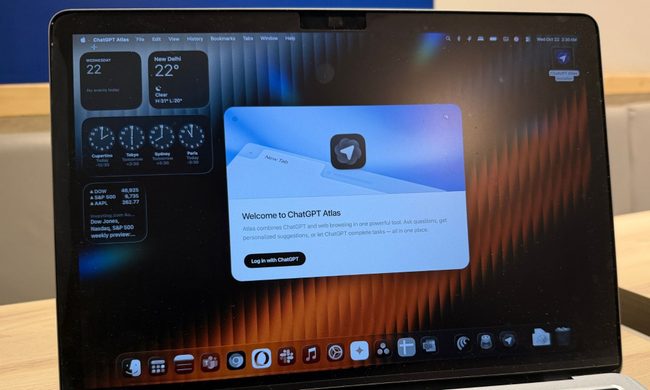
ChatGPT Atlas browser on a MacBook.

AI browsers are being sold as the next big thing. They can summarize pages, book trips, and even make purchases for you. But a new study from the University of Washington found that four of the seven most popular ones come with a security risk serious enough to let malicious websites steal data from other sites you have open. The more capable the browser, the bigger the risk turns out to be.

The 30-year security rule that AI browsers are breaking

Read more
Valve just gave away the blueprint for its coolest Steam Machine mod
Valve giving away the recipe instead of the dish, and honestly, we're okay with it.
Valve Steam Machine Featured Design Coverplate

While Valve’s Steam Machine launched at a higher-than-expected price due to the AI-driven chip shortage, it seems that the company is not sitting on its haunches and is still working hard to make the product more enticing to users. 

One of the coolest features of the Steam Machine is the user-customizable front faceplate, and Valve has just made it better. The company open-sourced its "Inkterface" project, which allows users to build their own e-ink faceplate for the Steam Machine.

Read more
Brave’s new Container feature is a lifesaver for anyone juggling multiple accounts
With this feature, you won't need to open three different browsers
Brave browser 3D logo

Brave has added Containers to its desktop browser, giving users a built-in way to keep different accounts, sessions, and browsing activity separate. The feature is available in Brave 1.92 for Windows, macOS, and Linux, and is rolling out in phases over the next few days.

Containers have been a highly requested feature, especially for users who regularly switch between work, personal, developer, or creator accounts. Once enabled, they let users open tabs in separate spaces where cookies and site storage are not shared outside that container.

Read more