
“Why you can trust Digital Trends – We have a 20-year history of testing, reviewing, and rating products, services and apps to help you make a sound buying decision. Find out more about how we test and score products.“
BMW cemented their status in the premium compact SUV segment when they released the X1 in 2013. Since that time, BMW has sold almost 62,000 of the little crossovers and maintains about a 50% market share in that market. The reason for their dominance is clear – the X1 hits all the right notes for a mostly younger, urban, active population who are looking for luxury, utility, and reasonable all-wheel-drive capability in an affordable upscale brand. Now for 2016, BMW has drastically revamped the X1, aiming to continue its dominant position.
To test the X1, I went to where BMW plans to build it – the mountain highlands of central Mexico. We stayed at the top of the mountains overlooking the stunning Barrancas del Cobre (Copper Canyon) in Chihuahua and drove down the canyons to the river village of Batopilas for lunch, then climbed back up again. The steep canyon walls with frequent rockslides made a near-perfect environment to watch the X1 change from a road-handling sports crossover to a capable rocks-and-gravel SUV and back again.
New Body and Interior
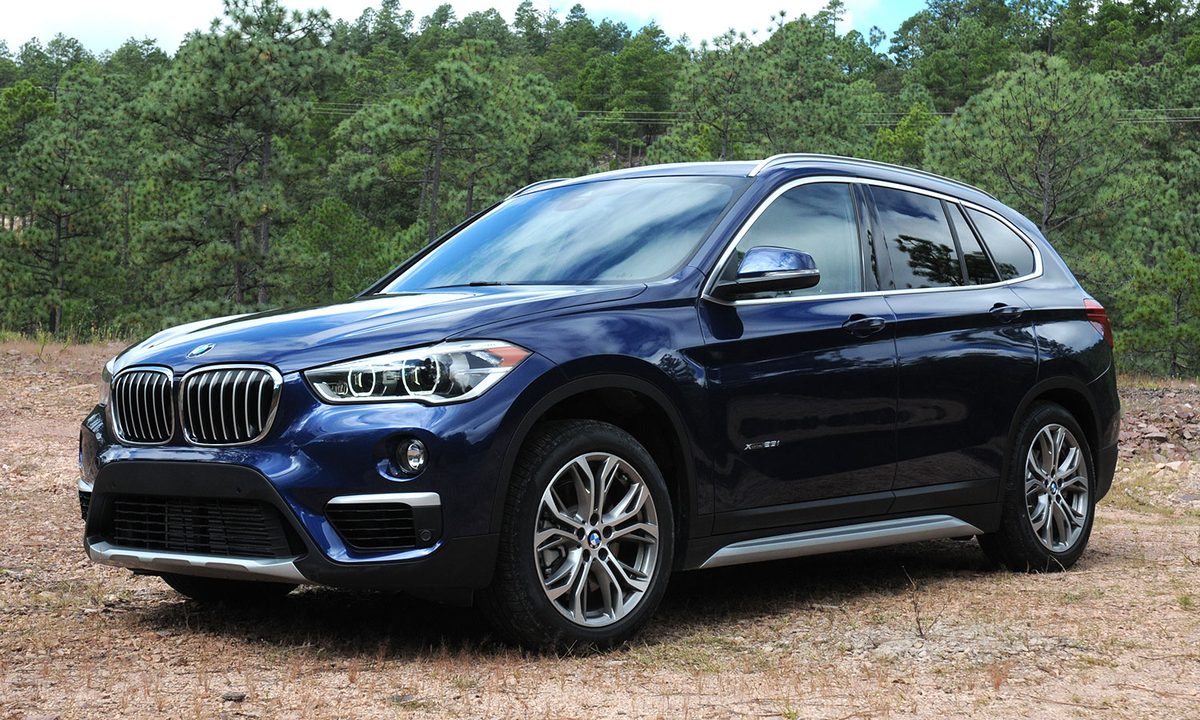
The main thing to notice about the 2016 X1 is the body. The new model is 2.5 inches wider at the wheels, and 1.5 inches taller – and you get all that height at the driver’s seat. The one place BMW shaved was the overall length, which is about an inch shorter. That may not sound like much, but BMW reduced the front and rear overhangs and gave the new X1 a shorter hood, so the net effect is a more pugnacious and sporty look than the first generation had.


The new X1 offers an all-new interior with high-quality soft touch surfaces, and up to 2.5 inches more rear legroom, if you buy the optional reclining rear seats. You get 1.5 inches more rear legroom with the standard seats. BMW also boosted rear cargo space by 15%.
Yet with all those increases, the X1 remains very much a compact crossover that’s right-sized for getting where you want to go – whether that’s working your way around and over a rockslide or finding your way into a tight parking space. For me, the short overhangs meant that I always knew where the corners and edges of the X1 were in relation to the often-challenging route. We crossed a couple of fairly rickety bridges with just inches to spare on each side, and we could see the remains of some cars that didn’t make it down in the ravine below. I was grateful to be in a trim compact instead of a giant warthog of the highway.
New Engine and Drivetrain
The new X1 also gets a new 2.0-liter turbocharged engine. BMW calls it a TwinPower Turbo, but don’t go thinking there are two turbos in there. It’s a single twin-scroll turbo, which just means that there are two different-sized air paths for the exhaust gases that drive the compressor. The smaller “scroll” helps the turbo get going at low RPM, and the larger one keeps it powered up at high RPM. The new engine puts out a modest 228 horsepower and 258 pound-feet of torque – but that’s enough to get the new X1 from 0-60 in 6.3 seconds and up to 143 MPH top speed. The X1 comes with an 8-speed automatic transmission and xDrive all-wheel-drive system. For the near-term, this is the only configuration available for the new X1.
To test the X1, I went to where BMW plans to build it – the mountain highlands of central Mexico.
The small displacement engine sometimes takes a moment to find its torque, but that 8-speed gearbox comes with paddle shifters, so when I put it in Sport mode and used the paddles, I overcame the turbo lag quite easily when I really wanted to move out. On the drive through the mountains, I found that the X1 likes to be driven with authority – it can take you from switchback slow to highway speed quickly and smoothly, but it wants some throttle and the occasional downshift with the paddles.
The new X1 has reduced powertrain drag by 30 percent under normal conditions, and with the Eco Pro mode set, the car will actually disengage the transmission when you’re coasting down from anywhere south of 100 MPH down to 30 MPH. Then BMW tosses in some not-obvious aero benefits with the new body, and standard features like engine start/stop, plus regenerative braking to ease off alternator drag. The EPA has not released official mileage ratings yet, but BMW expects to beat the last generation’s numbers.

The xDrive system is one reason to thank the motoring gods that BMW is a sports car manufacturer. Unlike many other AWD systems, the xDrive is biased towards a rear-wheel-drive sport driving experience. The xDrive system is capable of putting 100% of torque to the rear wheels, and it decides how to allocate that power based on your current speed, throttle and steering wheel position, and the vehicle dynamics information coming from the stability control system. You can put your thumb on the scale a bit by selecting the Sport, Comfort, or Eco Pro drive modes from the driver’s seat. What that all amounts to is that when you hit the gas on pavement, you’ll get a proper rear-wheel-drive experience, but when you’re on gravel, snow, or any other limited traction situation, you’ll get confident AWD performance.
We tested the AWD as well as the 18-inch and 19-inch wheel options, and aside from worrying about destroying a tire on some of the rock minefields, the X1 managed like a champ. Of course, we weren’t trying any really tough 4WD moves like climbing a gravel pile or driving down a riverbed, but we were straddling some pretty big rocks and running over loose gravel roads. The summary is simple – the BMW X1 can do anything you’re realistically going to attempt with a compact crossover.
Same Infotainment Technology
One area where BMW chose not to bring new features to the game is the technology package – although it’s not like the X1 is lacking. You get the latest generation iDrive system running on a 6.5-inch or 8.8-inch free-standing screen. The X1 then has a lengthy list of features combined into various option packages. You can get a heads-up display for speed and navigation, the navigation system on-screen, and the full suite of BMW’s ConnectedDrive smart services. The X1 has its own SIM, and so can have its own data plan separate from your phone.
On the safety side, you get the whole laundry list of features, but just know that if there’s a current safety or convenience feature you want, you can get it on the X1.
A Winning Combination
The DT Accessory Pack
Up your game and the get the most out of your gear with the following extras, hand-picked by our editors:
Allen Sports Deluxe 4-Bike Hitch Mount Rack with 2-Inch Receiver ($82)
How about a bike rack for the weekend?
Pro Series 63150 – Bullet Box Roof Top Luggage Carrier ($283)
A cargo pod for the top adds useful packing ability without sacrificing aerodynamics and fuel economy.
Covercraft QSS105RS Auto Snow Shield ($80)
A snow shield could be the best thing to take on the El Nino winter.
Wheel Locks ($62)
Keep your snow and summer wheels separated and convenient.
I’d be remiss if I failed to mention the stellar performance of the brakes. I got into the X1 at 7,500 feet of elevation and took it down to 2,500 feet in about two hours. When I got out to survey some particularly treacherous desviación I had to traverse to get around a rock the size of a Winnebago that had landed on the road, I could smell the brakes. But through 40 miles of steep grades and switchbacks, the brakes never once faded and the pedal was always ready to disminuya mi velocidad.
The 2016 BMW X1 xDrive28i will be priced at $35,795 including destination fees, which puts it right in the heart of the premium compact SUV market. BMW already owns the lion’s share of this market, and the new X1 just raised the bar for everyone else. Vaya con Dios to the competition.
Highs
- New interior a big improvement
- Taller, wider, more inside space
- Capable AWD on road or trail
- Fantastic brakes
Lows
- Turbo lag
- Still drives like an SUV


