
Audi’s follow-up to the shape-shifting SkySphere, the GrandSphere, takes the form of a luxurious sedan with a striking silhouette, electric power, and autonomous technology. It was designed as a concept car, and a highly futuristic one at that, but it’s also a preview of the technology the firm will inject into its range in the coming years.
Presented online ahead of a debut at the 2021 Munich auto show, the GrandSphere embodies a new way of designing a flagship sedan. Oliver Hoffmann, Audi’s board member for technical development, told Digital Trends that the model was created from the inside out, meaning the interior was completed before the exterior. It stretches about 210 inches long, so it’s approximately as big as the current A8, but it rides on an unusually long wheelbase.
Interestingly, the electric powertrain is part of what shaped the GrandSphere’s lines. “It is not possible to develop such a car with these proportions on a platform designed for internal combustion engines,” explained Hoffmann. That’s because an electric motor is far more compact than a gasoline- or a diesel-powered engine, so stylists are able to extend the wheelbase (which creates a more spacious cabin) while reducing the size of the front and rear overhangs.

What’s under the sheet metal is far more realistic than you might assume. Audi built the GrandSphere on the PPE platform it’s developing jointly with Porsche to underpin a wide variety of production-bound electric models, like the next-generation Macan. Power comes from a pair of electric motors that draw electricity from a massive, 120-kilowatt-hour battery pack to zap the four wheels with 710 horsepower and 708 pound-feet of torque. Audi pegs the concept’s zero-to-60-mph time at about four seconds and its maximum driving range at about 466 miles. Each motor is positioned above one of the axles, so the system delivers through-the-road Quattro all-wheel-drive.
Combining autonomous and electric technologies is a cocktail that opens a new world of possibilities in the realm of interior design. Step inside, and you’ll notice the GrandSphere is not equipped with a dashboard in the conventional sense of the term. It’s a layout that makes the cabin significantly more spacious. There are no screens, which is highly unusual in 2021, so the infotainment system’s contents are projected on a piece of wood trim below the windshield. Passengers can use a new feature called MMI Touchless Response to navigate the different menus; they can notably configure a scenic route and find hotels, restaurants, and other interest points on their way to their destination.


Users who want to drive can turn off the level four technology and summon a steering wheel and pedals from the compartment under the windshield. Otherwise, the GrandSphere handles most driving situations on its own.
While the system is still under development, and Hoffmann told me it’s too early to talk about the kind of hardware it will rely on, what’s already clear is that autonomous cars will initially deliver a ride that’s comfortable, safe, and predictable. Autonomous technology is still in its infancy, regardless of what CES has promised us, and some motorists remain very skeptical about letting a computer shuttle them to work — or pick up their kids from school.
“For the first level four cars, it’s not so important to deliver a sporty drive. We’re focusing on safety, and on what the customer — who is no longer the driver — feels. People have to be convinced that they’re safe in this highly automated driving situation, so what they feel when the car is cornering and accelerating is very important,” he explained. However, his background includes developing some of Audi’s quickest and best-handling models, like the V10-powered R8 sports car, and he’s not leaving that behind. “In the future, the next step will be maybe to make things a little more sporty; maybe you’ll be able to choose whether you want more comfort or more sport,” he added.
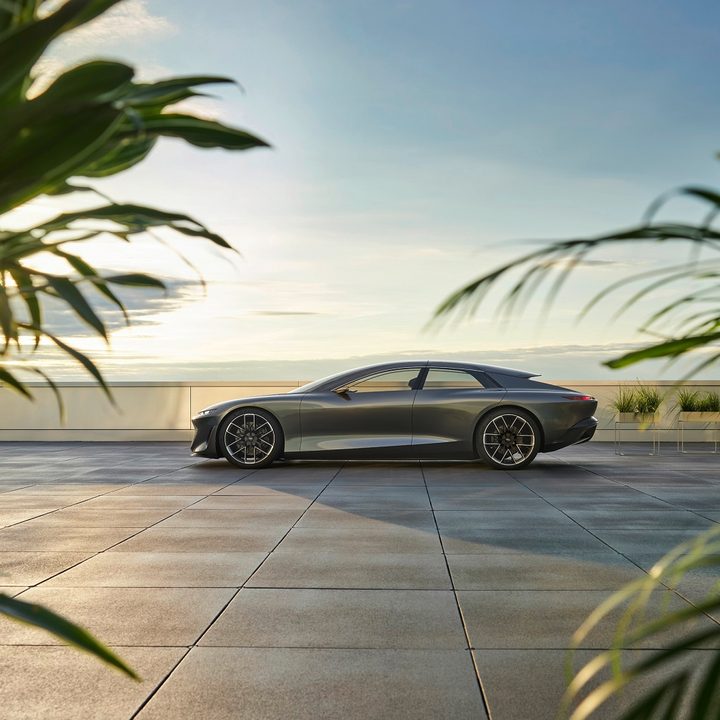
While the GrandSphere will not reach production as you see it in our gallery, it’s an accurate preview of the design cues and the technology features that Audi wants to incorporate into its future models in the not-too-distant future.
“Lots of the design [will reach production], of course, but the tech and the digitalization inside will also be seen on future production vehicles we’ll be working on for the middle of the decade,” exterior designer Amar Vaya told me.
Realistically, level four technology has a long way to go before it ends up in a showroom near you, but bringing it to production is a goal that Audi and its sister companies will continue to work towards. “I’m convinced we’ll see level four use cases in the middle of the decade,” Hoffmann noted, adding that there is a high demand for it in China.


