  1. Home
  2. Cars
  3. Emerging Tech
  4. Legacy Archives

Duke researchers remove virtually all CO from hydrogen production process

Add as a preferred source on Google

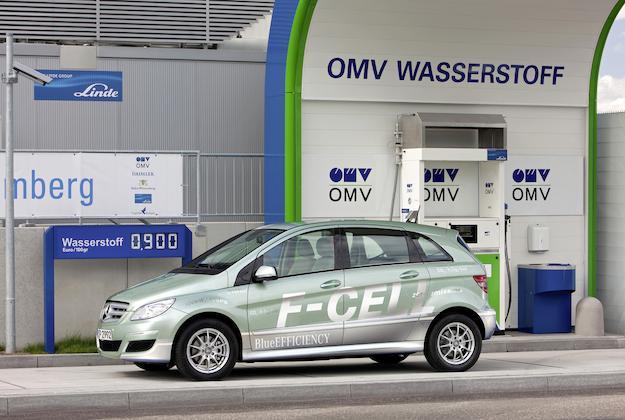
 Mercedes F-Cell

Yes, it’s true that hydrogen is wildly abundant on the planet but molecular hydrogen, the stuff used in hydrogen fuel-cell vehicles, is a bit of a sticky wicket. Not only is its production energy intensive, transporting and storing it is problematic.

Recommended Videos

Researchers at Duke University have devised a way to produce fuel-grade hydrogen without the pesky of carbon monoxide byproduct typically formed during the making of hydrogen. Additionally, carbon monoxide can damage the catalyst system and fuel cell membrane.

While the carbon monoxide isn’t completely eliminated, the process brings the levels down to “nearly zero,” according to Science Daily.

As you may well know, carbon monoxide is toxic to humans and animals alike so limiting its creation is essential to the proliferation of hydrogen as a mass-market fuel source.

Lead by Nico Hotz, assistant professor of mechanical engineering and materials science at Duke’s Pratt School of Engineering, graduate student Titilayo “Titi” Shodiya designed a new catalytic system used in the production of hydrogen.

Boiling down Duke’s methods to nearly comically simple levels, instead of the standard hydrogen catalytic process, which relies on gold as the soul catalyst, researchers instead “made both the iron oxide and the gold the focus of the catalytic process.”

So cutting out all the scientific mumbo-jumbo, what does this mean for you? Well, it would seem researchers have made a big step toward legitimizing hydrogen as a petroleum-based fuel replacement. It seems no fuel is perfect but hydrogen is getting mighty close.

Nick Jaynes
Former Automotive Editor
Nick Jaynes is the Automotive Editor for Digital Trends. He developed a passion for writing about cars working his way…
Volkswagen is bringing back the electric ID.Buzz bus with some cool upgrades for 2027
Until pricing and range are addressed, the upgrades feel like progress on everything except the things that actually held buyers back.
VW ID.Buzz exterior.

Volkswagen skipped the 2026 model year for the ID.Buzz entirely, a move that raised eyebrows and triggered the predictable “is the electric bus dead?” conversation. Well, it isn’t dead after all. The automaker has officially confirmed the 2027 ID.Buzz.

It’s arriving with the kind of updates that suggest Volkswagen actually listened to what early owners and reviewers were saying. The headline addition is the Tourer 4Motion, a new trim that turns the electric bus into a legitimate electric camper. 

Read more
After acing range and charging, Chinese EV brands flaunt three-wheel driving on SUVs
BYD, Aito, and Li Auto are making active suspension the new battleground after range and charging
Machine, Wheel, Transportation

Chinese EV brands have spent years trying to win on range, charging speed, and screens. Now the fight is getting stranger, with premium SUVs showing off three-wheel driving as the next battleground.

According to Car News China, BYD’s Denza B8 Flash Charge Edition, Huawei-backed Aito M9, and Li Auto L9 are all being used to show how active suspension can lift a wheel while the vehicle keeps moving at low speed. The demos look theatrical, and the intended uses are practical, including tire changes, off-road recovery, and crossing uneven ground without getting stuck.

Read more
This Android Auto update is trying to change how you drive and use your car
Road, Electronics, Credit Card

I use Android Auto every day, and at this point, it feels like a quiet co-driver sitting on my dashboard. That’s exactly why this upcoming refresh from Google actually matters. It is not just a visual tweak; it is a proper overhaul of how Android Auto should feel inside a modern car. The biggest change is the design. Google is bringing its Material 3 Expressive design language from phones into cars. That means Android Auto is getting a more modern, more fluid look with expressive fonts, smoother animations, and even support for wallpapers. This should really make the entire interface feel less rigid and more alive while you are driving.

Widgets finally make Android Auto feel useful at a glance

Read more