  1. Home
  2. Cars
  3. Emerging Tech
  4. News

Cheaper EVs ahead? GM and LG say new battery cells are the key

Add as a preferred source on Google
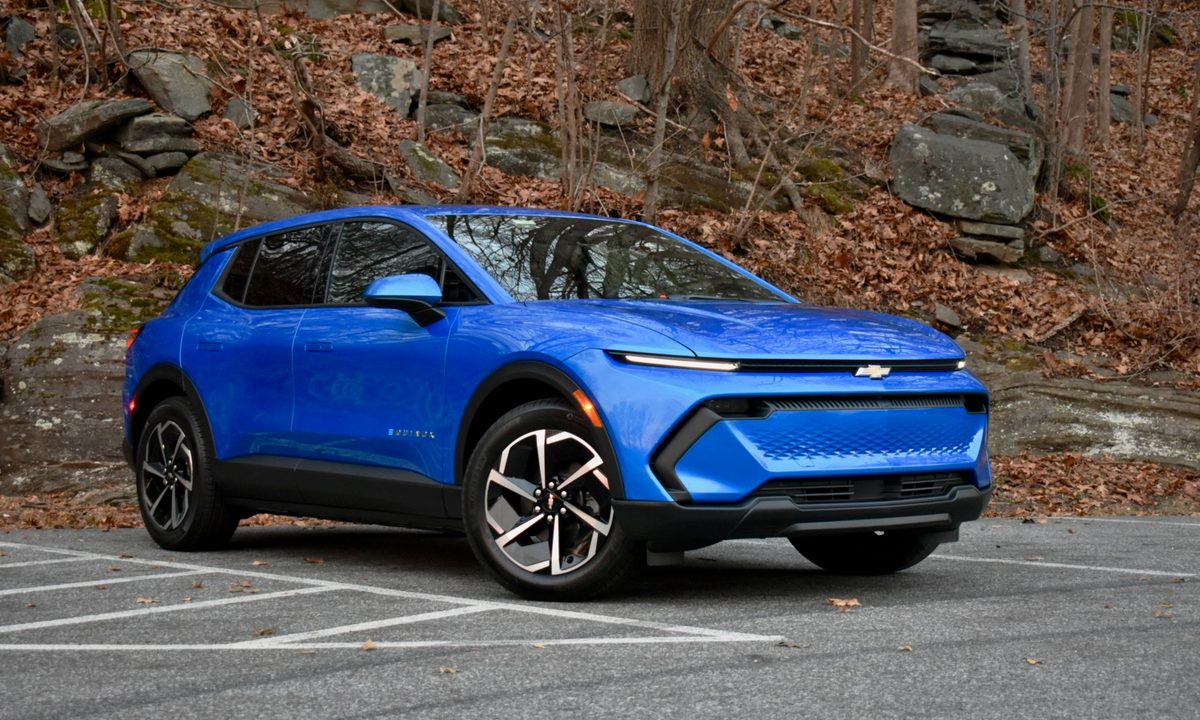
2025 Chevrolet Equinox EV front quarter view.
Stephen Edelstein/Digital Trends

General Motors and LG Energy Solution have announced a new phase in their ongoing partnership: developing a new battery cell chemistry that could significantly lower the cost of electric vehicles. The joint effort centers on lithium manganese iron phosphate (LMFP) battery cells, a variation of lithium iron phosphate (LFP) that’s gaining popularity for being more affordable and less reliant on expensive materials like nickel and cobalt.

This is a big deal because battery costs are still the single largest expense in producing EVs. According to GM and industry experts, LMFP cells could help bring the cost of electric vehicles close to — or even on par with — gas-powered cars. The goal? Making EVs accessible to a broader range of drivers without sacrificing range or performance.

Recommended Videos

GM plans to use these LMFP batteries in future Ultium-based EVs, its modular electric platform that underpins models like the Chevrolet Equinox EV and Blazer EV. Those models are priced starting around $35,000–$50,000 — still noticeably higher than GM’s most popular internal combustion engine (ICE) vehicles like the gas-powered Equinox and Silverado, which often start closer to $28,000 and $36,000, respectively.

If LMFP batteries can knock down those EV prices, that gap could shrink fast. This would be key to helping GM hit its long-term EV adoption targets while maintaining profitability. Unlike some pricier battery chemistries, LMFP batteries are more stable and cost-efficient, especially when produced at scale. GM and LG say production of these new cells will happen in the U.S., supporting domestic supply chains and eligibility for tax incentives.

In short, this partnership isn’t just a science experiment — it’s a step toward solving one of the EV market’s biggest roadblocks: affordability. If successful, it could mark a turning point in the electric era, where choosing an EV no longer means paying a premium.

Nick Godt
Former Freelance reporter
Nick Godt has covered global business news on three continents for over 25 years.
After acing range and charging, Chinese EV brands flaunt three-wheel driving on SUVs
BYD, Aito, and Li Auto are making active suspension the new battleground after range and charging
Machine, Wheel, Transportation

Chinese EV brands have spent years trying to win on range, charging speed, and screens. Now the fight is getting stranger, with premium SUVs showing off three-wheel driving as the next battleground.

According to Car News China, BYD’s Denza B8 Flash Charge Edition, Huawei-backed Aito M9, and Li Auto L9 are all being used to show how active suspension can lift a wheel while the vehicle keeps moving at low speed. The demos look theatrical, and the intended uses are practical, including tire changes, off-road recovery, and crossing uneven ground without getting stuck.

Read more
This Android Auto update is trying to change how you drive and use your car
Road, Electronics, Credit Card

I use Android Auto every day, and at this point, it feels like a quiet co-driver sitting on my dashboard. That’s exactly why this upcoming refresh from Google actually matters. It is not just a visual tweak; it is a proper overhaul of how Android Auto should feel inside a modern car. The biggest change is the design. Google is bringing its Material 3 Expressive design language from phones into cars. That means Android Auto is getting a more modern, more fluid look with expressive fonts, smoother animations, and even support for wallpapers. This should really make the entire interface feel less rigid and more alive while you are driving.

Widgets finally make Android Auto feel useful at a glance

Read more
BYD’s latest EV costs just over $10,000, goes 250 miles, and packs a LiDAR, too
LiDAR, 250 miles, and a five-figure price tag: the 2026 Seagull is proof that the future of affordable EVs is already here, just not in the West.
BYD 2026 Seagull.

BYD has officially unveiled the 2026 Seagull, sold internationally as the Dolphin Mini or Dolphin Surf, and the numbers deserve your attention. 

The updated compact EV’s price starts from 69,900 yuan, which is around $10,300, in China, and tops out at 85,900 yuan, which is around $12,600. It debuted at the 2026 Beijing Auto Show before going on sale this week (via CarsNewsChina). 

Read more