Hyundai and Kia have launched a handful of electric cars based on existing internal-combustion models, but now the two brands are taking things to the next level. The new Electric-Global Modular Platform (E-GMP) will be the basis for new vehicles that, unlike previous versions, will be designed from the ground up to be electric. Hyundai and Kia have hinted at E-GMP before, but have now provided concrete details ahead of the platform’s launch in 2021.
Like all modern vehicle platforms, E-GMP will be much more versatile than a basic chassis. It can be used for everything from sedans to SUVs, and from ordinary commuter cars to a high-performance model that can accelerate from zero to 62 mph in 3.5 seconds and reach a top speed of 160 mph, according to Hyundai.
Most of Hyundai and Kia’s current models are based on front-wheel drive platforms, but E-GMP is rear-wheel drive by default, with a single electric motor mounted on the rear axle. An all-wheel drive system, using a second motor for the front axle, will also be available. However, the system will be able to decouple the front motor when extra traction isn’t needed to boost efficiency, or to take advantage of the handling benefits of rear-wheel drive, according to Hyundai.
Following in the tire tracks of Tesla, the battery pack is mounted under the floor, to maximize passenger space and lower the center of gravity. E-GMP uses a standardized battery module, making it easier to manufacture packs of different capacities depending on the vehicle. Hyundai quoted a maximum range of 310 miles, albeit based on the more lenient WLTP testing cycle used in Europe. An equivalent number from the Environmental Protection Agency testing procedure would likely be a bit lower.
E-GMP can also accommodate an 800-volt charging system, allowing for an 80% charge in 18 minutes, according to Hyundai. It’s also capable of bidirectional charging, allowing an electric car to supply emergency power during an outage, run electronics at a campsite or even, Hyundai said, charge another electric car. It’s the EV equivalent of letting someone siphon a bit of gas from your tank.
The first production vehicle based on E-GMP will be the Ioniq 5, from Hyundai’s new EV-specific brand. Scheduled to launch in 2021, the Ioniq 5 is a small hatchback with retro styling inspired by the Hyundai 45 concept car. Kia will also unveil an E-GMP-based electric car in 2021, the first of seven new electric models it plans to launch by 2027. By 2025, Kia expects EVs to make up 20% of its global sales.
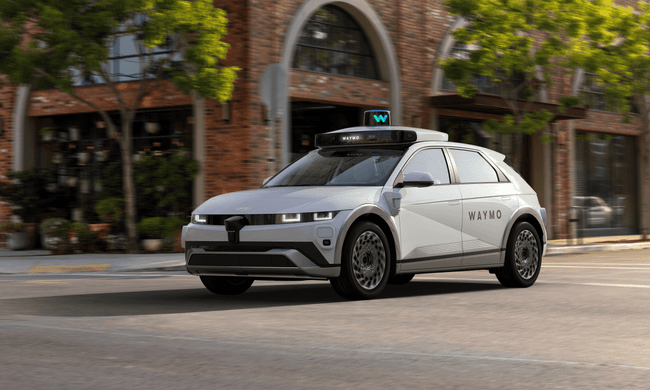
E-GMP will also be used for future electric cars for the Genesis luxury brand, as well as for an autonomous “robotaxi” designed for fleet use, Albert Biermann, head of Hyundai’s R&D division, told Digital Trends and other media during an online press conference. The company will also continue to sell models like the Hyundai Kona EV and Kia Niro EV, which are all-electric versions of gasoline or hybrid cars, Biermann said.
The economies of scale afforded by a single, Lego-like platform have proven attractive as automakers look to transition to EVs. Volkswagen has its MEB platform, the Renault-Nissan-Mitsubishi Alliance has CMF-EV, and General Motors has its BEV3 architecture and Ultium battery system. Using the same building blocks for multiple vehicles keeps costs down — and should make it easier to launch large numbers of new EVs.