
Want to know more about the latest Lamborghini Huracan Evo? Check out our first drive review.
An impending storm isn’t usually a cause for joy. This one, however, is.
The replacement for the Lamborghini Gallardo has been teased for over a year, but the wait is over. The Lamborghini Huracán LP610-4 should be a worthy successor.
The Huracán replaces Lamborghini’s best-selling model ever as the “entry-level” supercar in the lineup. Unlike most entry-level offerings, there’s nothing economical about it, though.
First, the name: Huracán is Spanish for hurricane, and is the name of the Mayan god of wind, storm, and fire.
That seems like an appropriate name for a supercar, but some fans were upset that Lambo had seemingly abandoned its tradition of naming cars after fighting bulls.
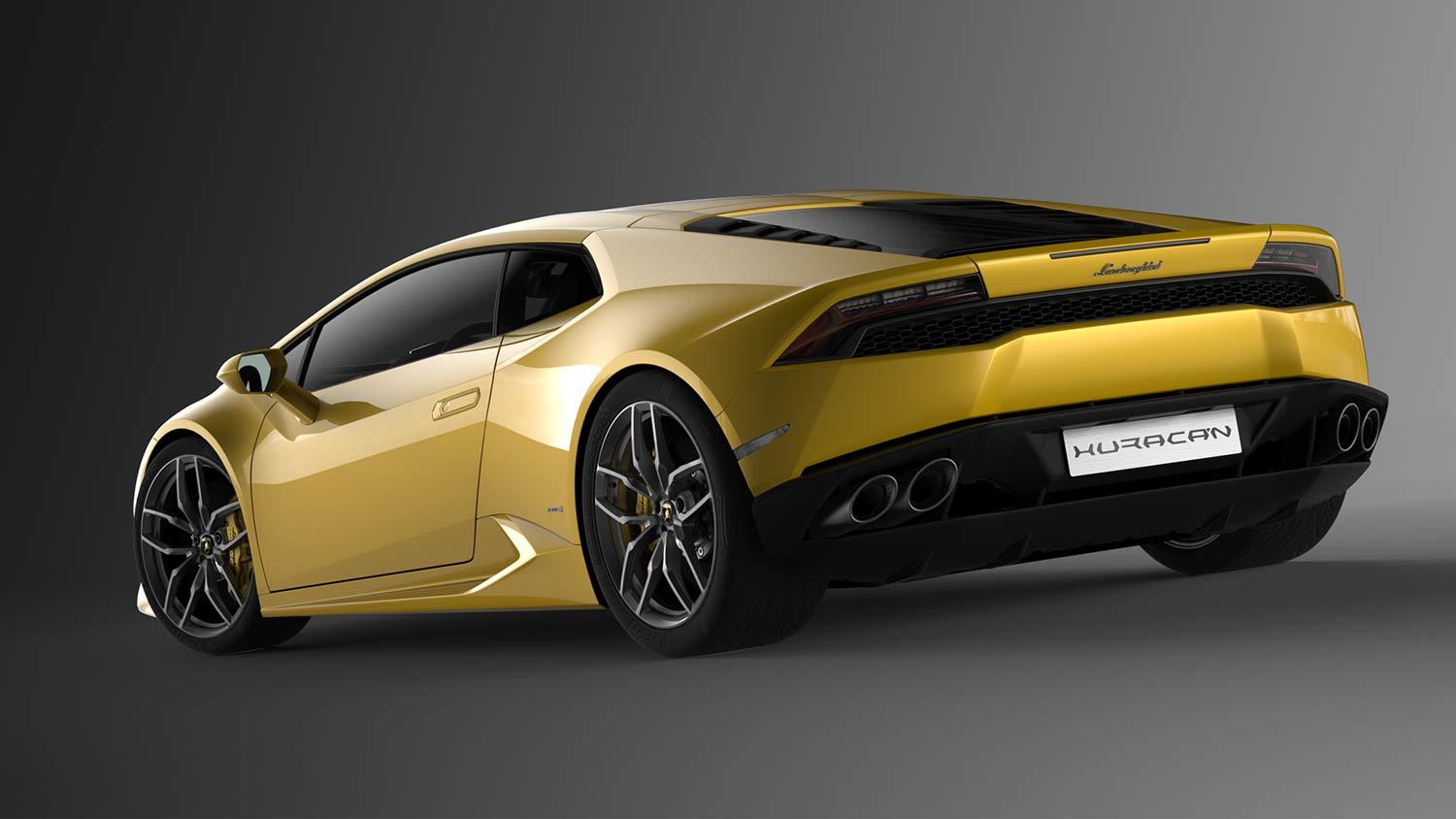 Not to worry, though. According to Lamborghini, Huracán was a bull that fought in Alicante in 1879. With its triple meaning of storm, Mayan god, and raging bull, this might be the coolest car name ever.
The rest of the car is pretty good, too, albeit a lot less controversial than its name.
There’s not much to criticize about the styling, which blends elements from the Aventador and Sesto Elemento into a very attractive package. The phrase “looks like a jet fighter” gets used a lot … but the Huracán actually looks like a jet fighter. Since it’s not as wide as the massive Aventador, it’ll probably be easier to maneuver like one, too.
Powering the Huracán is a 5.2-liter direct-injected V10 with 610 horsepower – hence the LP610-4 designation – and about 413 pound-feet of torque. Coupled to a new seven-speed dual-clutch transmission called “Lamborghini Doppia Frizione” (LDF) and all-wheel drive, it will hurl the Huracán from 0 to 62 mph in 3.2 seconds, to 124 mph in 9.9 seconds, and on to a top speed of over 200 mph.
The powerful V10 is one half of the equation, but the Huracán’s lightweight chassis is the other. Made from a mix of carbon fiber and aluminum, the car weighs roughly 3,135 pounds dry.
Lamborghini also included some electronic aids to keep the Huracán from laying waste to its driver. A steering-wheel mounted switch toggles between “Strada,” “Sport,” and “Corsa” modes, which adjust the behavior of the engine, transmission, all-wheel drive system, and even the sound.
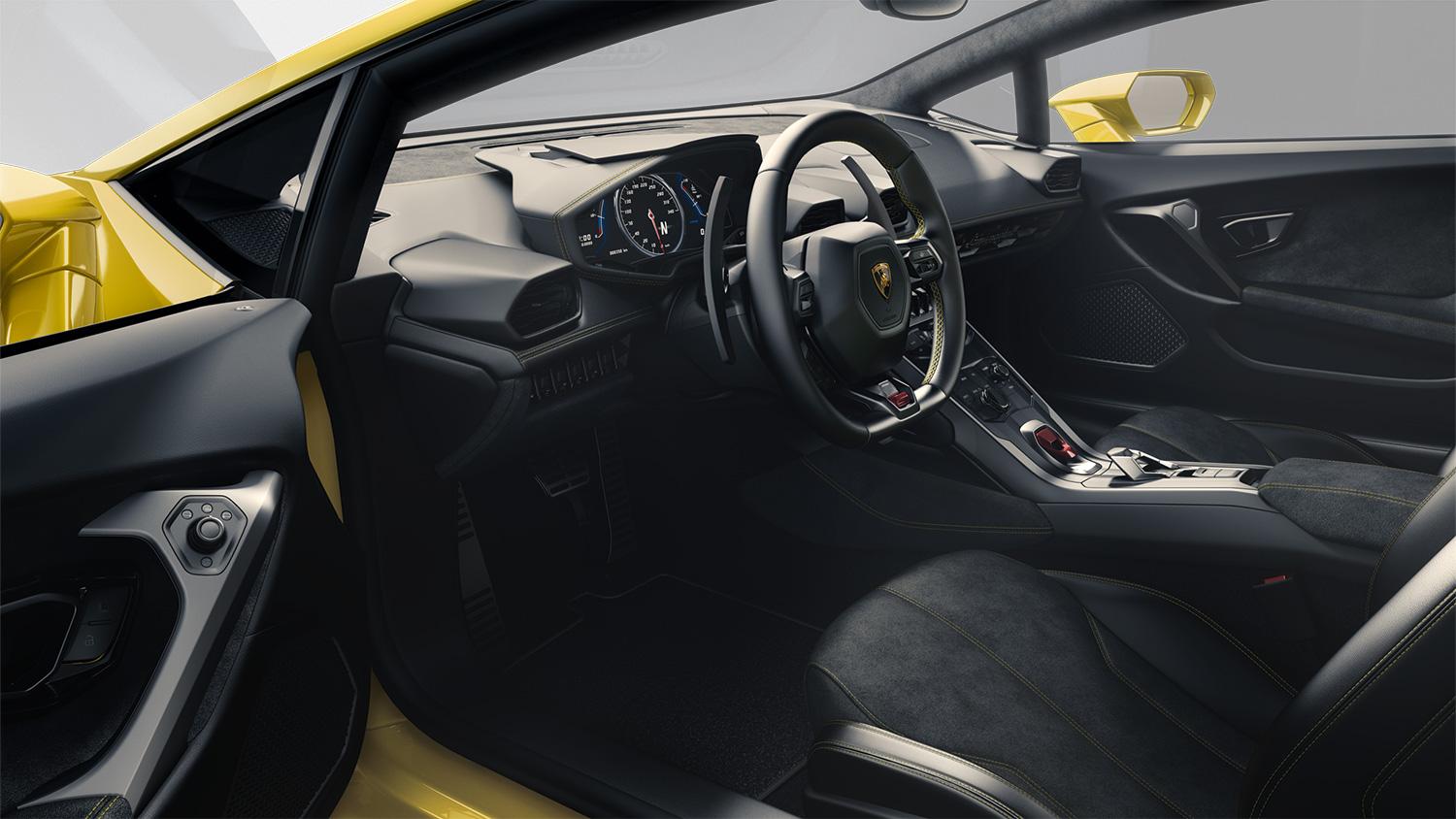 For further adjustability, the Huracán gets optional Lamborghini Dynamic Steering variable-ratio electronic power steering and magnetorheological dampers, similar to the ones used in the rival Ferrari 458 Italia and many Corvettes.
In the past, riding in a Lamborghini wasn’t much more comfortable than riding on the back of a bull, but Lambo has since tried to improve things. The Huracán features a 12.3-inch TFT instrument panel, which can be configured to display whatever information the driver wants. The rest of the interior is trimmed in Nappa leather and Alcantara.
The Lamborghini Huracán will make its world public debut at the 2014 Geneva Motor Show in March, but before that it will make the rounds at over 130 private preview events in 60 cities throughout the world. Because when you’re rich, why should you have to wait?
Lamborghini expects to deliver the first cars to customers in the spring, so start planning that bank robbery now.


