
Characterized by a large dose of humility rather than thick slabs of corporate jingoism, Lucid is an unusual player in the electric car arena. Instead of making boastful promises about the future, the company mostly keeps to itself and speaks only when there’s something significant to show.
Lucid took rivals by surprise with the electric Air announcement: A luxury electric car that boasts 1,000 horsepower, the Air recently obtained an enormous 517-mile range from a third-party testing company. So much for “range anxiety.” I was even more shocked when I found out the company achieved that figure using a 113-kilowatt-hour battery pack. Intrigued, I called Lucid’s engineering department to discover its secret. Here’s what I found out.
Rooted in physics
“Battery technology improvement is going to be incremental, unless there’s a breakthrough with solid-state or some other technology. In order for us, as a small startup, to make a statement, we knew deep inside that we had to get the range right,” explained Emad Dlala, a technology fellow at Lucid, in an exclusive interview with Digital Trends.
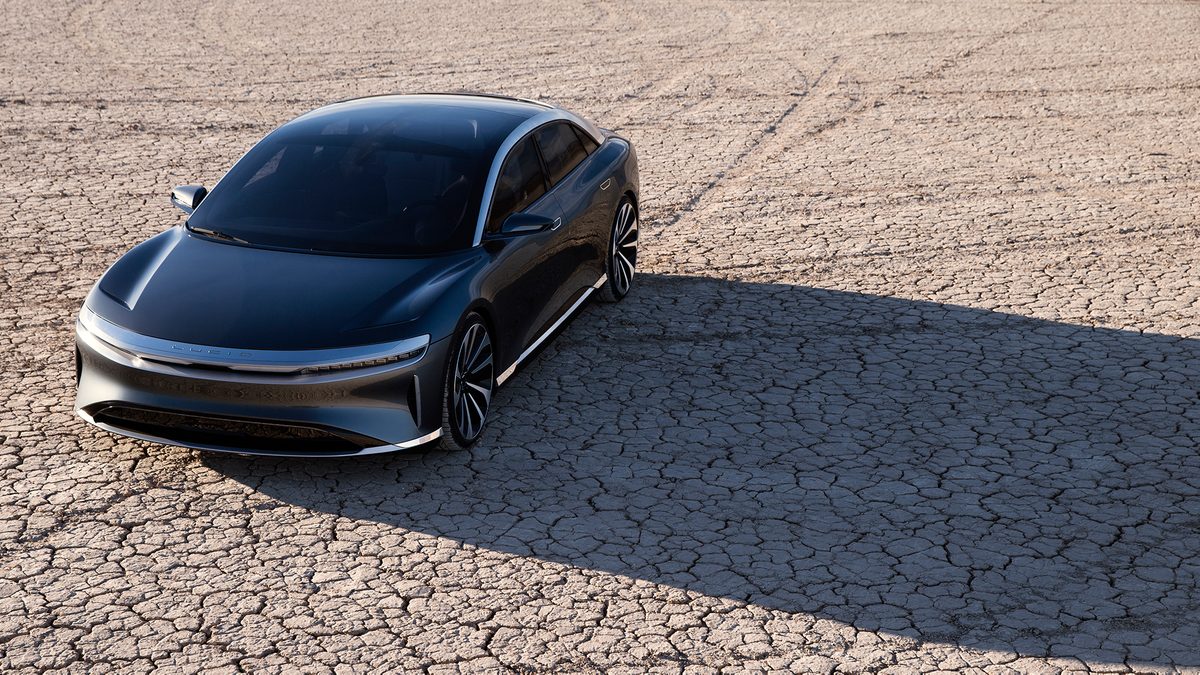
On paper, maximizing range is relatively straightforward; The bigger the battery pack, the more electricity it stores. Yet stuffing a mammoth battery pack under the Air wasn’t an option, because it would have added too much weight. “If you’re developing a truck, it might be okay for the weight to be compromised,” Dlala told us. Keeping weight in check is important when designing a sedan because Lucid wants the Air to deliver relatively agile handling.
“We didn’t break the laws of physics, but we approached them smartly.”
Lucid turned to physics instead. Starting from scratch, its engineers set out to reduce drivetrain losses (the amount of power lost through the driveline) and aerodynamic drag (the force that opposes the sedan’s motion). Both have a big effect on driving range, which partially explains why lower, sleeker-looking sedans tend to be more efficient than bulky, boxy SUVs regardless of what they’re powered by. Weight is another important parameter in this equation.
“We didn’t break the laws of physics, but we approached them smartly,” Dlala affirmed.
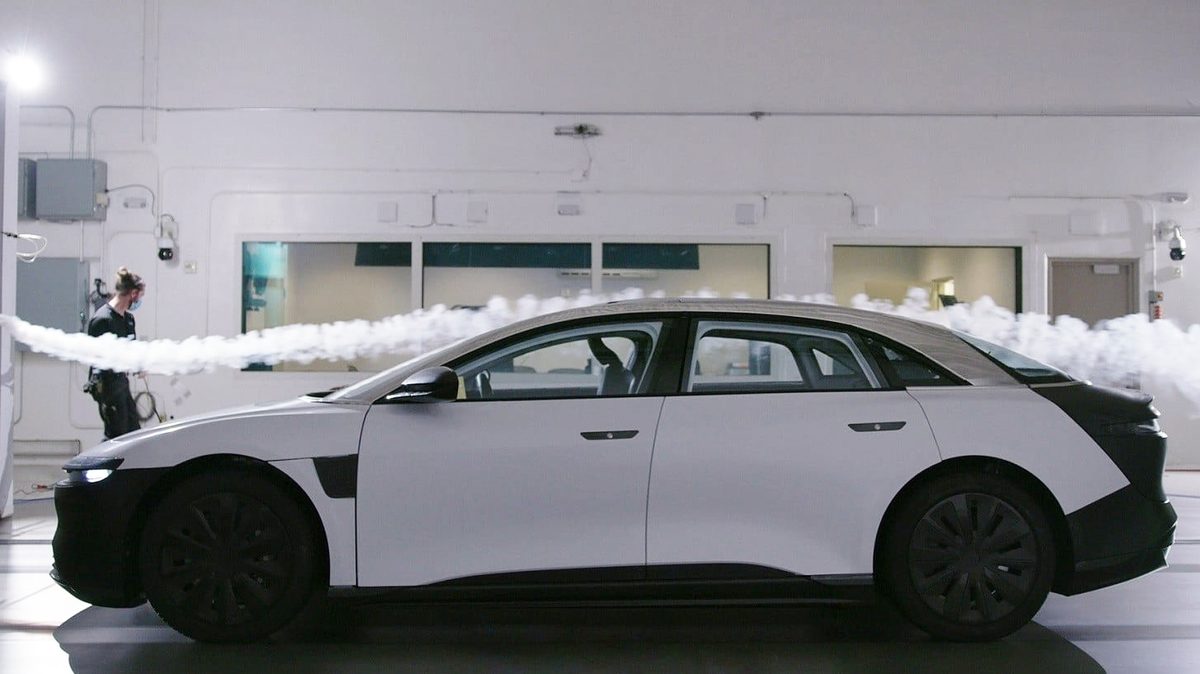
His team began by identifying every source of drag in a car (there are hundreds) and tweaking them to ensure they either catch less wind or bend it to their will. Vertical air intakes chiseled into each side of the front bumper direct air around the wheel wells, for example. There is also a vortex-generating air intake system behind the front bumper, which allowed engineers to reduce the size of the grille. And, you won’t see much if you crawl under the sedan. The underbody is completely smooth, meaning air travels from front to back without getting caught in nooks and crannies. Although not all of these tricks are new, applying them together creates a four-door sedan with a 0.21 drag coefficient, which is better than a Tesla Model 3‘s (0.23). Hours spent in a wind tunnel helped the company achieve that number, but it also relied extensively on computer prototyping to accelerate the design process.
More to come
As for the powertrain, Dlala told me his team identified a significant opportunity to introduce what he proudly called “revolutionary technology” that greatly reduces losses, but we’ll need to wait until the Air makes its global debut on September 9 to find out exactly what hides under the sheet metal. At this point, all we know is that the drivetrain consists of two electric motors (one per axle) that send a prodigious 1,000-horsepower output to the four wheels.
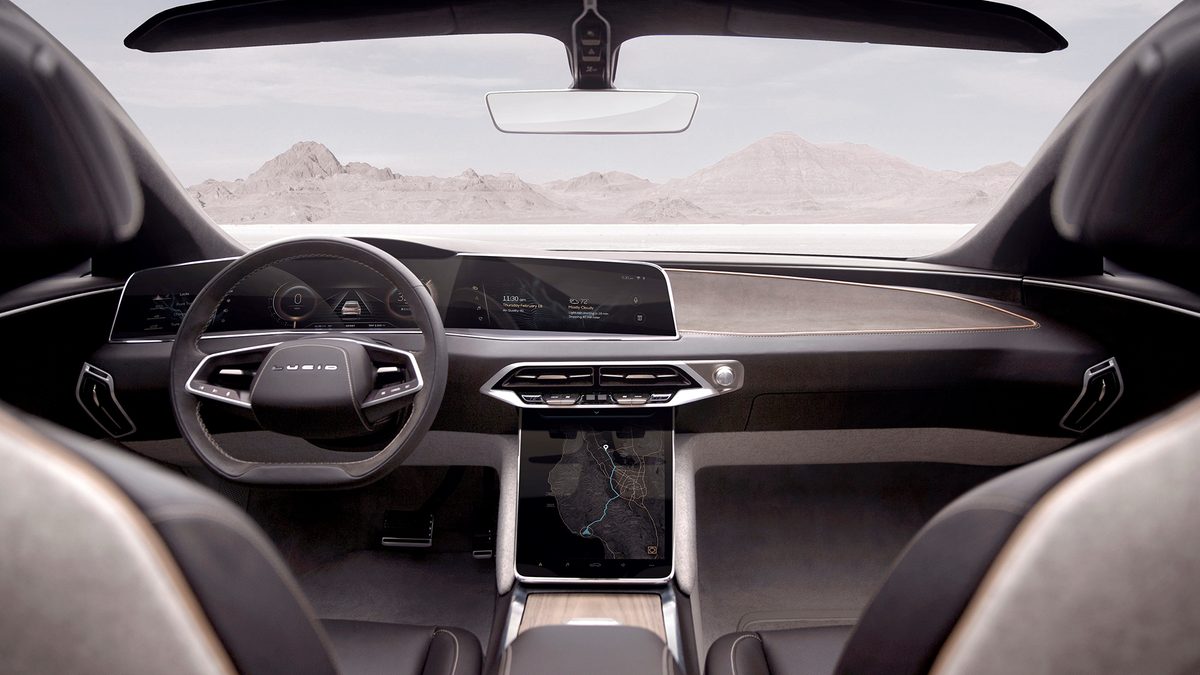
As humble and realistic as ever, Lucid concedes it now needs to prove it can deliver a production car with these specifications. As of writing, the Air remains a prototype at best, and customer deliveries haven’t started yet.
“What we achieved is still not in production, we know people will question it and that’s fine. We have full confidence in our achievements. This is going to be in production very soon,” Dlala concluded. Lucid will manufacture the Air in a new facility in Casa Grande, California, and pricing will start in the vicinity of $100,000.
Looking ahead, CEO Peter Rawlinson quietly confirmed the company’s second model will be an SUV, inevitably, that’s tentatively due out by the end of 2023. It will be built on the same basic platform as the Air, so it will be relatively big, and the two models will share many parts under the sheet metal. The firm’s chief executive (who previously worked as Tesla’s chief engineer) floated the idea of a longer vehicle as well, like a pickup truck. Lucid hasn’t received the proverbial green light for production yet, and it’s too early to tell what it will look like. But one thing’s clear: While rivals are busy showing sketches of future models to investors, Lucid prefers to focus on bringing the Air to production.


