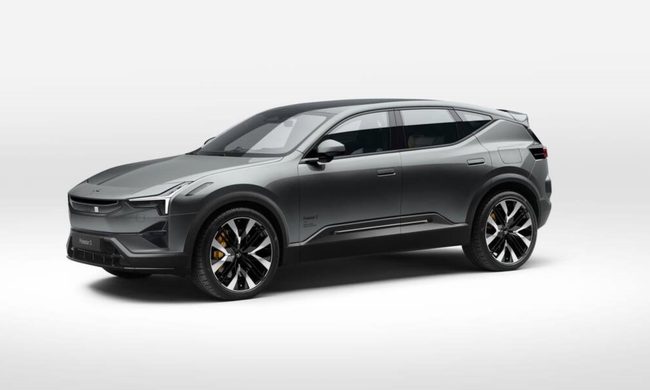


Welcome to Digital Trends’ weekly recap of the revolutionary technology powering, connecting, and now driving next-gen electric vehicles.
We’ve all heard it by now: The robotaxis are coming. But while tech giants and startups alike rush to erase the steering wheel, this week we’ll take a look at a quietly emerging countertrend: A few automakers believe some drivers just want their stick shift back.
But first, here’s confirmation that the automated-driving trend is now in full-fledge: Lucid—the maker of the jaw-dropping 749-mile-range Air sedan—just flipped the switch on its biggest software update yet. Starting July 30, Lucid will roll out hands-free drive assist and lane-change automation to its DreamDrive Pro-equipped vehicles. That’s the Air for now, with the Gravity SUV to follow later this year. The move puts Lucid right alongside Ford (BlueCruise), GM (Super Cruise), Mercedes (Drive Pilot), and Tesla (FSD) in the increasingly crowded highway-autonomy space.
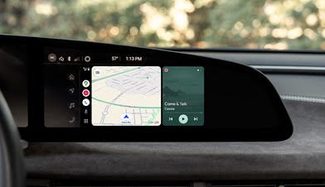
And yet, in a world where your car can now change lanes for you, Ford and others are working on a digital manual shifter for EVs. Really.
So which way is driving going? Fully hands-off—or back to the tactile, analog past?
Let’s take a look at both roads.
Lucid’s self-driving moonshot, Uber’s big buy-In
While Tesla and Waymo continue to dominate the robotaxi conversation, Lucid’s entrance into the fray isn’t just about a software update. The EV maker also announced a $300 million joint venture with Uber and Nuro, aiming to deploy 20,000 Lucid Gravity SUVs with Level 4 autonomy by late 2026.
The Lucid-Nuro-Uber team plans to launch in a major U.S. city (they haven’t said which yet), joining the ranks of Waymo, which already operates fully autonomous rides in Phoenix, LA, and San Francisco, as well as Amazon’s Zoox, and Cruise, which is attempting to recover after a high-profile accident and DMV suspension last year.
Lucid’s entry confirms the ongoing trend: Many automakers seem to believe driving might soon become something we watch, not something we do.
Ford says “not so fast”
Earlier in July, a Hyundai executive proclaimed that “no one wants manual gearboxes anymore”. The statement wasn’t shocking—manuals now account for just 1–2% of U.S. new car sales, with automatics and EVs dominating at 96–98%: The clutch pedal has been slowly disappearing from U.S. roads for over a decade.
So will the stick shift disappear forever? It appears some automakers are hedging their bets.
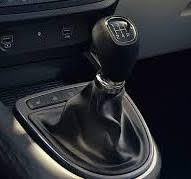 Earlier this year, it was revealed that Ford is developing a digital, haptic-feedback “H-pattern” shifter—a fake manual gearbox for EVs. The idea? Let drivers pretend they’re shifting gears even though they aren’t. It’s part nostalgia, part engagement play, and part branding experiment. BMW, Toyota, and yes, even Hyundai, are all exploring similar “manual EV experiences.”
It’s a peculiar about-face: Hyundai publicly says no one wants to shift gears anymore, while secretly prototyping fake ones.
Why? Because while most people don’t need a manual, some still want the feel of one.
The emotional science of driving
The Continental Mobility Study (2024) found that a majority of American drivers still see themselves as “traditional.” They welcome driver-assist systems—lane centering, adaptive cruise, automatic parking—but remain uneasy about surrendering full control.
That discomfort fuels both sides of this tech tug-of-war. One side wants to automate every inch of the driving experience. The other is doubling down on connection, feel, and driver engagement—even if that feeling is simulated.
Across the Atlantic, the divide looks different. Europe remains the stronghold for manual fans, with 50–70% of new car sales in the EU and UK still coming with clutch pedals. Italy leads with ~72% manual adoption, while Germany holds at around 61%. In the UK, the landscape is shifting fast: about 50% of buyers still say they’d pick a manual—but automatic-only driving tests are becoming increasingly common. In 2024, 21% of learners opted out of learning a stick, up from just 9% five years ago.
The trends do signal a push towards automatic, and eventually fully automated driving, but a not-so-silent minority is clinging to the last vestiges of hands-on driving.
Rivian finds the middle lane
If Lucid is racing toward autonomy and Ford is reaching into the past, Rivian might be carving out the smartest lane of all: the middle one.
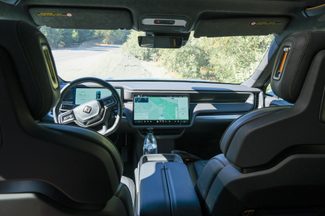 The adventure-focused EV company just announced a slick new navigation software update, in partnership with Google Maps and Google Cloud. The upgrade brings dynamic trip planning, off-road routing, charger location intel, and real-time traffic—all integrated into Rivian’s in-car OS. Digital Trends called it a “juicy mapping update to rival Tesla,” and it’s easy to see why.
But beneath the software is a deeper philosophy: Rivian isn’t trying to replace drivers. It’s trying to support them.
Rather than removing the driver altogether or pretending they’re still shifting gears, Rivian’s focus is on automating the boring parts—like parking, range management, and navigating backwoods trails—while preserving the joy of real, physical driving when it matters.
CEO RJ Scaringe has said beforethat driving isn’t just about getting from A to B—it’s about how you get there. That means giving drivers tools, not distractions. Assist, not replace.
Choose your future: drive it or let it drive you
As the EV race heats up, the real competition might not be about batteries or even software—it might be about philosophy.
Do we want our cars to drive us? Or do we want to keep driving, with a little help?
Lucid, Tesla, and Waymo are betting on full autonomy. Ford, BMW and Toyota are betting that we miss the feel of the road.
Rivian is betting that we’re somewhere in between.