  1. Home
  2. Cars
  3. News

One of China’s buzziest EV makers hopes to deliver flying cars next year

We could be seeing flying cars as early as next year.

Add as a preferred source on Google
The Xpeng LAC air module is displayed at CES 2025.
Nick Mokey / Digital Trends

Xpeng, one of the hottest Chinese EV makers, is reaching for the skies, literally. The company is hoping that its flying cars could start reaching customers soon. While this already sounds like science fiction, Xpeng has already started talking about orders, approvals, and mass production.

When can we expect these flying cars to hit the sky?
Recommended Videos

Reuters reports that Xpeng expects to begin large-scale production of its “flying” cars in 2027. The company’s President Brian Gu stated that they’ve already received more than 7,000 orders, with most of them in China. In the meantime, the necessary approvals with the country’s aviation authorities. Gu further added that he is “hopeful” that next year will mark the start of full-scale delivery, but the obvious caveat remains that certification still has to fall into place.

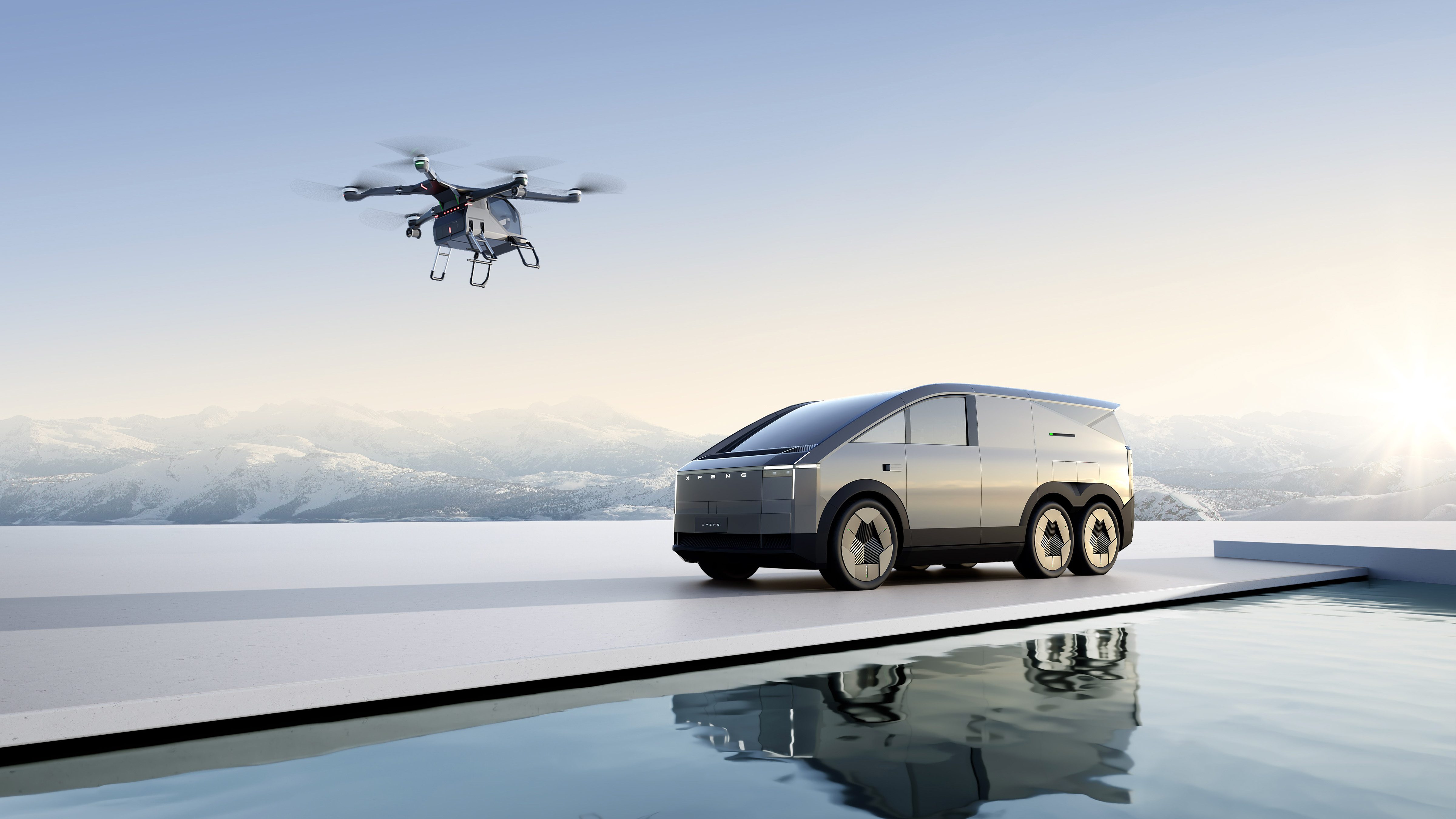
The flying vehicle in question is Xpeng’s AeroHT, which is a “Land Aircraft Carrier“. The setup basically includes a six-wheel van that carries a detachable two-seat electric aircraft in the back.

Flying cars are only one part of Xpeng’s plans

The executive is also betting on other projects to take flight soon, with planned mass production of humanoid robots in the fourth quarter of 2026, while 2027 will be a critical year for robotaxi testing with partners around the world. Xpeng even plans to start robotaxi testing in Guangzhou this year, which may involve the production of hundreds to thousands of robotaxis over the next 12 to 18 months.

So the EV maker isn’t treating the flying car as a quirky on-off side project, and is presenting it as part of a wider future-mobility push that also includes robotics, autonomous driving, and global expansion. Xpeng currently operates in around 60 countries outside of China, with over half of its revenue also coming from the overseas market in recent years.


Vikhyaat Vivek
Vikhyaat Vivek is a tech journalist and reviewer with seven years of experience covering consumer hardware, with a focus on…
This sleek electric sedan costs under $32,900 and pips Tesla with over 770-mile range
Avatr's sleek 06T sedan EV just dropped with a huge range flex
Avatr 06T Smart Sports Sedan in two colors

Avatr has launched the 06T in China, and the numbers are the first thing that grabs you. The sleek electric sedan starts at ¥219,900, which is about $32,000, and brings some surprisingly premium specs. For that money, buyers are getting a car packed with Huawei tech, a premium-looking cabin, and a headline range claim that easily clears the 700-mile mark in its range-extender form.

Why this number is a big deal

Read more
Volvo’s parent company just made a sleek $14,300 electric sedan that will elude US buyers
Official photos show Geely’s new EV sedan with up to 550km of claimed range, but this low-cost model looks set to stay out of the US
Machine, Wheel, Car

Volvo’s parent company has launched a new electric sedan in China that hits a familiar sore spot for US car shoppers.

The Geely Galaxy A7 EV pairs a clean, mainstream shape with a claimed 550km of CLTC range, and it enters the market at a price that still looks strikingly low by Western EV standards. It also appears set to stay far away from US dealerships.

Read more
Autonomous cars were supposed to free us from traffic hell. Research says otherwise
The self-driving dream might just be a traffic nightmare in disguise.
Self driving car from Waymo

Self-driving cars promised a future where you sit back, relax, and glide past the gridlock while the car handles everything. A new study from the University of Texas at Arlington has some bad news for that fantasy. According to research, widespread adoption of autonomous vehicles could actually make traffic significantly worse.

Professors Stephen Mattingly and Farah Naz conducted a meta-analysis on how self-driving cars could affect vehicle miles traveled (VMT). Their findings showed an average 5.95% increase in vehicle miles traveled. Non-shared autonomous vehicles pushed that figure even higher, to nearly 7%. 

Read more