

There’s a lot of talk about the idea that the growth in electric car sales has kind of slowed a little. It’s not all that surprising — EVs are still expensive, early adopters all have one by now, and they’re still new enough to where there aren’t too many ultra-affordable used EVs available. But plenty of people still want a greener vehicle, and that has given rise to an explosion in hybrid vehicle sales.
That’s especially true of plug-in hybrid vehicles, which can be charged like an EV and driven in all-electric mode for short distances, and have a gas engine as a backup for longer distances or to be used in combination with electric mode for more efficient driving.
But the question remains — how long will the stopgap of hybrid vehicles be an important part of the car market?
The numbers
It’s important to get one thing out of the way — EVs are still on the rise. It’s just that their sales aren’t growing as quickly as they were. They’re still becoming better, more widely available, and cheaper. And, they’re still likely the future of personal transportation, no matter what the hydrogen fans might have you believe. As of the third quarter of 2024, global sales of EVs grew 3.9% year-over-year, according to TrendForce.

But plug-in hybrids have been gaining a lot of steam too. The same report from TrendForce notes that sales of plug-in hybrids grew 55.3% over the same period. That’s pretty huge.
Essentially, plug-in hybrid electric vehicles (PHEVs) are growing faster than full-on battery electric vehicles (BEVs) — though sales of PHEVs still aren’t at the same level of BEVs. According to that report, BEV sales in the third quarter of 2024 totaled 2.509 million, while plug-in hybrid sales totaled 1.612 million. At this pace of growth, however, there’s no reason to think that PHEVs won’t overtake BEVs at some point.
Why are PHEVs growing so quick?
The reasons for the explosion in growth of PHEVs are less clear than the fact that they’re growing. That’s not to say there aren’t good reasons to buy a PHEV over a BEV — on the contrary, in many situations, PHEVs are a much better choice. But at least some of the growth could be due to customer confusion about the state of electric vehicles.
“Hybrid sales are growing due to general consumer confusion about electric vehicles, like charging infrastructure and tax credits. This uncertainty makes hybrids a simpler, less intimidating option for buyers, offering many of the same environmental benefits without the unknowns,” said David Boice, co-founder and CEO at Team Velocity, which helps automotive companies digitize the carbuying and ownership experience, in an interview with Digital Trends.
“Clear messaging about EVs is critical to address consumer concerns and encourage the shift. Until then, hybrids will remain a key step in the journey toward a fully electric future,” said Boice.
Of course, not all of the sales of PHEVs are down to customers being intimidated by the switch to all-electric — and it would be a little condescending to think that they were. Plenty of customers know full well what owning an EV would be like, but find that charging still isn’t where it needs to be for it to work for them. That’s especially true for those who can’t charge at home — and who would need to rely on public charging stations.
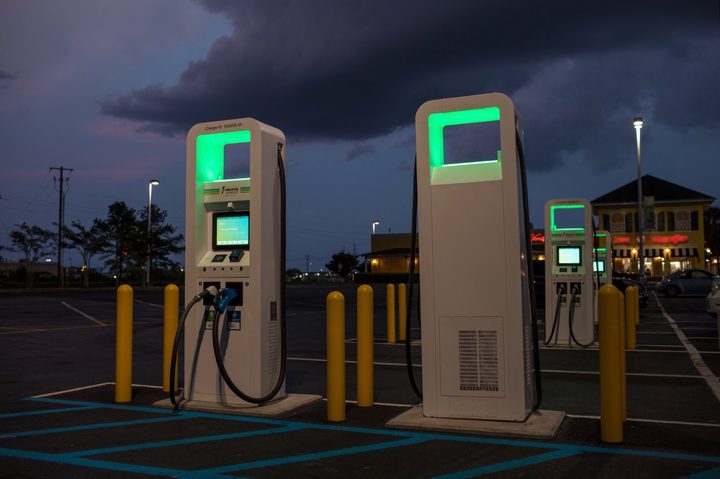
“Consumers want the benefits of electric without the drawbacks. A buyer might not be ready to go full charging station, but a boost in fuel efficiency is always welcome,” said Jon Vorisek, founder at Repair Surge, which provides online vehicle repair information.
Not everything is customer-driven, though. Part of the surge in plug-in hybrids also likely has to do with the need for manufacturers to meet fuel efficiency restrictions, according to Vorisek.
The best/worst of both worlds
If you are a carbuyer curious about PHEVs, then it’s worth knowing that while they can represent the best of both gas-powered and BEVs, they can also represent the worst of them.
It’s really only worth considering a PHEV if you can charge somewhere that you regularly park for extended periods of time. For most people, that will be their home, but for others, it might be their workplace. That’s because PHEVs usually have an electric range of between 25 and 50 miles, which isn’t all that much. The result is that if you want to use them in all-electric mode frequently, you’ll need to charge them often.

If you can charge at home, however, you might find that PHEVs work effectively like BEVs in your day-to-day use, at least in terms of efficiency. That really is a best-case scenario for PHEV ownership — allowing drivers to use their vehicle in all-electric mode in most day-to-day driving, and then switch to a hybrid mode for longer distances as needed, with the added convenience of being able to refuel at a gas station. That said, if you can charge at home, then there’s one less reason not to buy a BEV — as you’ll be able to keep your vehicle charged up all the time, without having to worry about going to public charging stations. That’s the best of both worlds — the efficiency and lower cost of an electric powertrain, with the convenience of gas station refueling.
But as mentioned, they also represent the worst of both worlds. PHEVs have to be recharged, which isn’t very convenient if you can’t do it at home, and if you don’t recharge frequently, your vehicle will be just as bad for environment as any gas-powered vehicle. Plenty of PHEV owners simply end up forgetting to recharge their vehicle, and relying completely on the gas engine.
Of course, in the long term, no matter how much hybrid vehicles sell in the next few years, we’re still likely headed toward full electrification. In fact, plenty of PHEV owners “graduate” to full electric after getting used to charging their vehicles frequently. When they do so, they discover the benefits of all-electric vehicles, like the longer range and better performance.
Basically, plug-in hybrids will likely continue to gain popularity over the next few years, then start to drop off as BEVs become cheaper and charging becomes more convenient.
“Hybrid vehicles are a convenient middle ground for buyers who aren’t ready for a fully electric vehicle, but the end state is probably a fully electric fleet. It’s just a matter of time,” said Vorisek.


