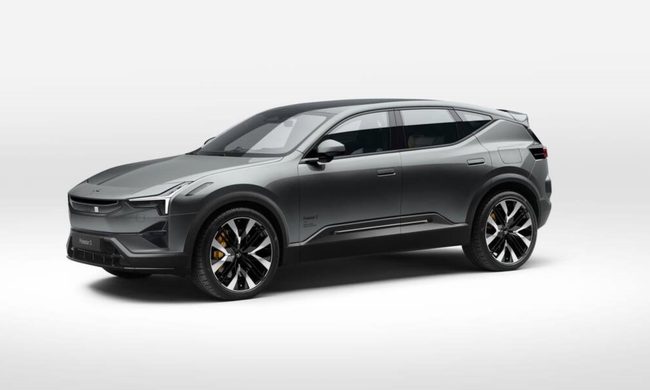
While the legacy automakers are finally pumping out solid electric vehicles, the new kids on the block are still arguably a little ahead of the curve. Tesla was first to the concept of an actually useful and powerful EV, since then, others have popped up — and there’s perhaps no better example than Rivian.
The Rivian R1S and R1T were the company’s first entries into the electric car world, but it has some arguably more exciting vehicles coming up. Its next major release, for example, will come in the form of the Rivian R2, a mid-size electric SUV that will compete directly with the revamped and redesigned tesla Model Y, codenamed the Model Y Juniper.
Based on what we know about the Rivian R2 and the Tesla Model Y Juniper, is one of these vehicles better than the other? We put the two EVs head to head.
Design
The overall designs of the Tesla Model Y and the Rivian R2 are radically different, and it all starts with the size of the cars.
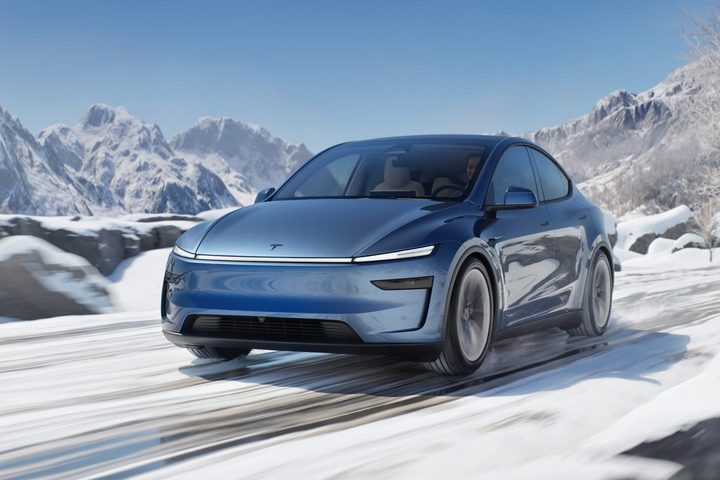
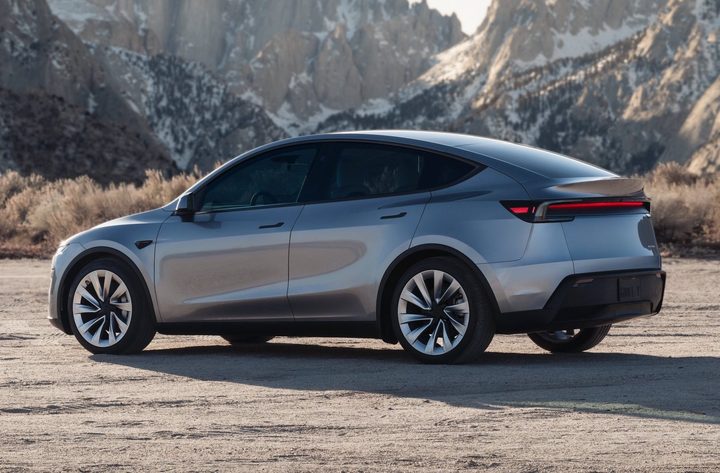
The Tesla Model Y isn’t quite an SUV — despite what some branding might have you believe. It’s more of a crossover, with a hatchback trunk and a tall roofline. The Model Y Juniper ditches the distinct slanted headlines in favor of a three-part light bar on the front, echoed by a light bar on the rear as the taillight.
The Rivian R2 is also pretty stylish—and unlike the Model Y, it is an SUV. It has a blockier, boxier design, ensuring that it has a little more space on the interior. The Model Y looks like a Tesla, and the R2 looks like a Rivian. It offers the same oval headlights on the front as the R1S and R1T, with a long light bar that extends across the rear. It’s also a good-looking vehicle and a little more rugged-looking than the Model Y.
We’re not going to argue that the Model Y or R2 is better-looking than the other. The fact is that the designs are quite different, so you’ll have to decide for yourself which you prefer.
Winner: Tie
Interior and tech
The interiors of the cars are pretty different, too. The Model Y is built to offer a minimalistic and stripped-back look and feel, and it achieves that. The car has a stark interior, with a relatively large infotainment display at the front. In its base form, the Model Y has two rows of seats, however while the previous-generation Model Y had an option for a third row of seats, a three-row option hasn’t been released for the Model Y Juniper just yet. We expect it will be later this year.
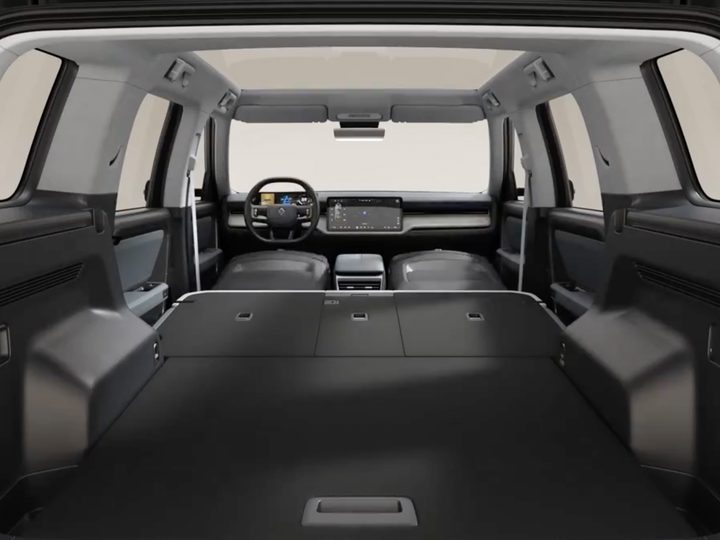
The Rivian R2 has more space on the inside, but unfortunately you can’t add a third row of seats. Rivian does allow drivers to take advantage of that space in other ways though. For example, you can fold down both the second and first row of seats, meaning there’s enough room for an air mattress, making it perfect for camping. The interior of the R2 is also a little more rugged than that of the Model Y, and it also offers a large infotainment display at the front, coupled with a second display for instrument monitoring, unlike the Model Y.
Neither the R2 nor the Model Y support tech like CarPlay or Android Auto, but they both have decently designed software and infotainment systems. They also both offer some self-driving features. By default, the Tesla Model Y has Tesla Autopilot, which includes adaptive cruise control and lane-centering. Like other Tesla cars, drivers can pay to upgrade to Enhanced Autopilot, or the poorly titled “Full Self-Driving Capability.” The Rivian R2 offers a suite of 11 cameras and five radar sensors to support an enhanced self-driving system that Rivian says will enable hands-free and eyes-off-the-road self-driving tech on highways.
Interior design is subjective too though. Do you prefer the minimalistic look or a more rugged build?
Winner: Tie
Performance
The R2 and the Model Y are both high-performing vehicles. That said, there are some things we don’t yet know about the performance for the Model Y Juniper. That’s because of the fact that the rear-wheel drive version of the updated vehicle is currently only available in China and Australia, where acceleration is rated from 0-100 kilometers per hour instead of 0-60 mph. The numbers are close, but won’t be exactly the same as in the U.S. That’s not to mention the fact that there’s no Model y Juniper Performance yet, though we expect one will eventually come out.
The RWD Model Y Juniper available in China can accelerate from 0 to 100 km/h in 5.9 seconds. The special Launch Edition New Model Y, which is an AWD Model Y Juniper being sold in the U.S., can launch from 0 to 60 mph in 4.1 seconds.
The Rivian R2 will be pretty fast, too, though there’s also a lot we don’t know about its performance. Rivian has announced it won’t be shipping until 2026, and we don’t know what the different trims and models will offer in terms of performance. We do know that the Rivian R2 will be available in single-motor, dual-motor, and tri-model variants, with the tri-motor model getting from 0 to 60 miles per hour in “less than 3 seconds.”
That is for the top-performance model — so we’ll have to wait and see how the lower-end models perform. But, given the fact that we have no details about a performance variant of the Model Y Juniper, the Rivian gets the win here…for now.
Winner: Rivian R2
Range and charging
Range is an important factor to consider, and both the Tesla Model Y and the Rivian R2 at least have options for decent range.
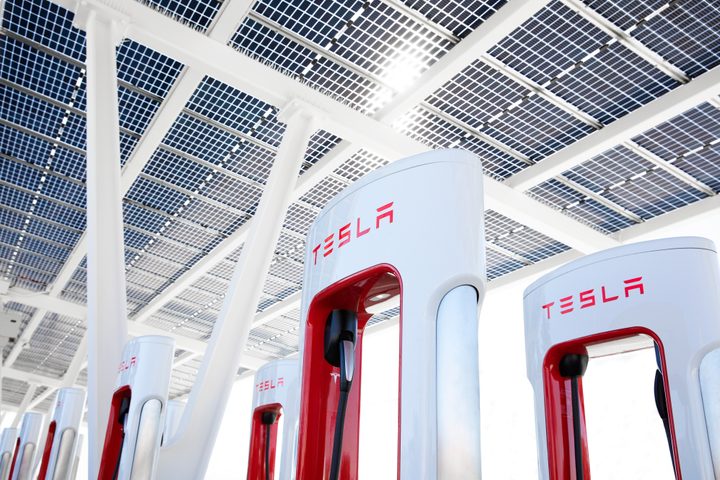
This is also an area of confusion for the Model Y Juniper, however. The RWD Model Y Juniper available in China offers 593 kilometers of range, which equates to 368 miles. However, the CLTC, which tests range in China, is usually more lenient than the EPA in the U.S. — so it’s likely the RWD Model Y Juniper will have a lower rated range once it’s released here. The all-wheel drive Model Y here in the U.S. has a range of 320 miles. The Model Y can charge at up to 250 kilowatts at a compatible Tesla Supercharger.
Of course, we don’t know the range of all the R2 models just yet. We do know that the R2 will be “over 300 miles” in range, but that seems to be for the larger battery models. The base R2 may be a little lower.
The charging speed on the R2 is expected to be similar to the R1S, which sits in at around 220kW. Hopefully, Rivian will step up charging speed a little by 2026, though we’ll have to wait and see. Both the Model Y and the R2 will offer a North American Charging Standard (NACS) charging port.
Frankly, we don’t know enough to really award a winner in this category. It’s a tie.
Winner: Tie
Pricing and availability
While the Tesla Model Y in general has been available for some time, the refreshed Model Y Juniper is new — and currently, you can only order the special Launch Edition New Model Y that costs $59,990. Even if you order it, you won’t get it until at least March.
The pricing and availability of the R2 is a little less clear. Rivian says that the R2 will be available in the “first half of 2026” with a starting price of $45,000, but we’ll have to see if that remains the case as we get closer to the release date. Rivian claims the vehicle will also qualify for the full $7,500 federal EV tax credit, however it remains to be seen if the credit will even be available in 2026, given the current administration’s stance on it. You can “reserve” an R2 right now, which basically just involves paying a refundable $100 deposit to get your place in line.
Neither of these two vehicles is widely available, but while the Rivian R2 will supposedly be cheaper than the current Model Y Juniper in the U.S., the Model Y Juniper is at least about to ship. It gets the win here.
Winner: Tesla Model Y
Overall winner: Tie
The Tesla Model Y and Rivian R2 are pretty different vehicles. The Model Y is a crossover, while the R2 is an SUV. The R2 is rugged and big, while the Model Y is a little more sleek and curved. And, of course, the Model Y Juniper is currently rolling out, while the R2 will start shipping in 2026.