



The 2025 Hyundai Ioniq 5 N tried to win over driving enthusiasts with simulated gear shifts, a combustion-car soundtrack, and of course lots of power — and it succeeded. So it was only a matter of time before Hyundai applied the same tricks to the Ioniq 6 sedan with which the Ioniq 5 shares a platform.
Few cars look as futuristic as the pebble-shaped Hyundai Ioniq 6, and it wears its N garb well. A larger rear spoiler and a front splitter help generate downforce to stick the car to the pavement without interfering with Ioniq 6’s low-drag shape, Hyundai claims. Subtly widened fenders make room for wider performance tires.
The Ioniq 6 N’s dual-motor all-wheel drive powertrain generates 600 horsepower in its default mode, or 641 hp in 10-second intervals with the N Grin Boost feature. With launch control engaged, the N will reach 62 mph from a standstill in 3.2 seconds, according to Hyundai, and reach a top speed of 159 mph. To ensure that performance is available consistently, the 84-kilowatt-hour battery pack has a more robust cooling system and N-specific thermal management logic.
There are plenty of fast EVs, but what sets Hyundai’s N models apart is their theatrics. A common criticism of EVs is that their lack of engine sounds and the need to shift gears makes them less fun, so Hyundai simply threw them in with N Active Sound+ and N e-Shift, respectively. There’s also an N Drift Optimizer that lets the Ioniq 6 N slide around like a rear-wheel drive car.
Performance records fall again

The Ioniq 6 N aims to be both fun and fast, but the bar for absolute EV performance is much higher. The Rimac Nevera R just broke 24 world speed records, including 23 set by the standard Nevera in 2023. But Rimac is most proud of its new 0-249-0 mph record, which it reclaimed from the Koenigsegg Regera plug-in hybrid with a 25.7-second time that’s 2.0 seconds quicker than the Swedish supercar’s and 4.1 seconds quicker than the original Nevera.
With 2,107 hp generated by four electric motors, the Nevera R also recorded a zero to 60 mph time of just 1.6 seconds and ran the quarter mile in 7.9 seconds — both slight improvements over the already-unfathomable performance of the Nevera. The R also reached a top speed of 268.2 mph, besting the standard Nevera’s 256 mph top speed and setting a new record for production EVs.
The Nevera R gets a relatively small 193-hp boost over the standard car, along with what Rimac calls “a comprehensive re-engineering of all major components.” That resulted in 15% more downforce from the fixed rear spoiler and enlarged diffuser, plus a 10% improvement in overall aerodynamic efficiency. New Michelin Cup 2 tires, and a revised torque-vectoring system designed to work with them, increase lateral grip by 5% and reduce understeer — the sensation of the car ploughing on rather than turning due to lack of front-end grip — by 10%, the company claims.
BMW uses AI to look for battery defects
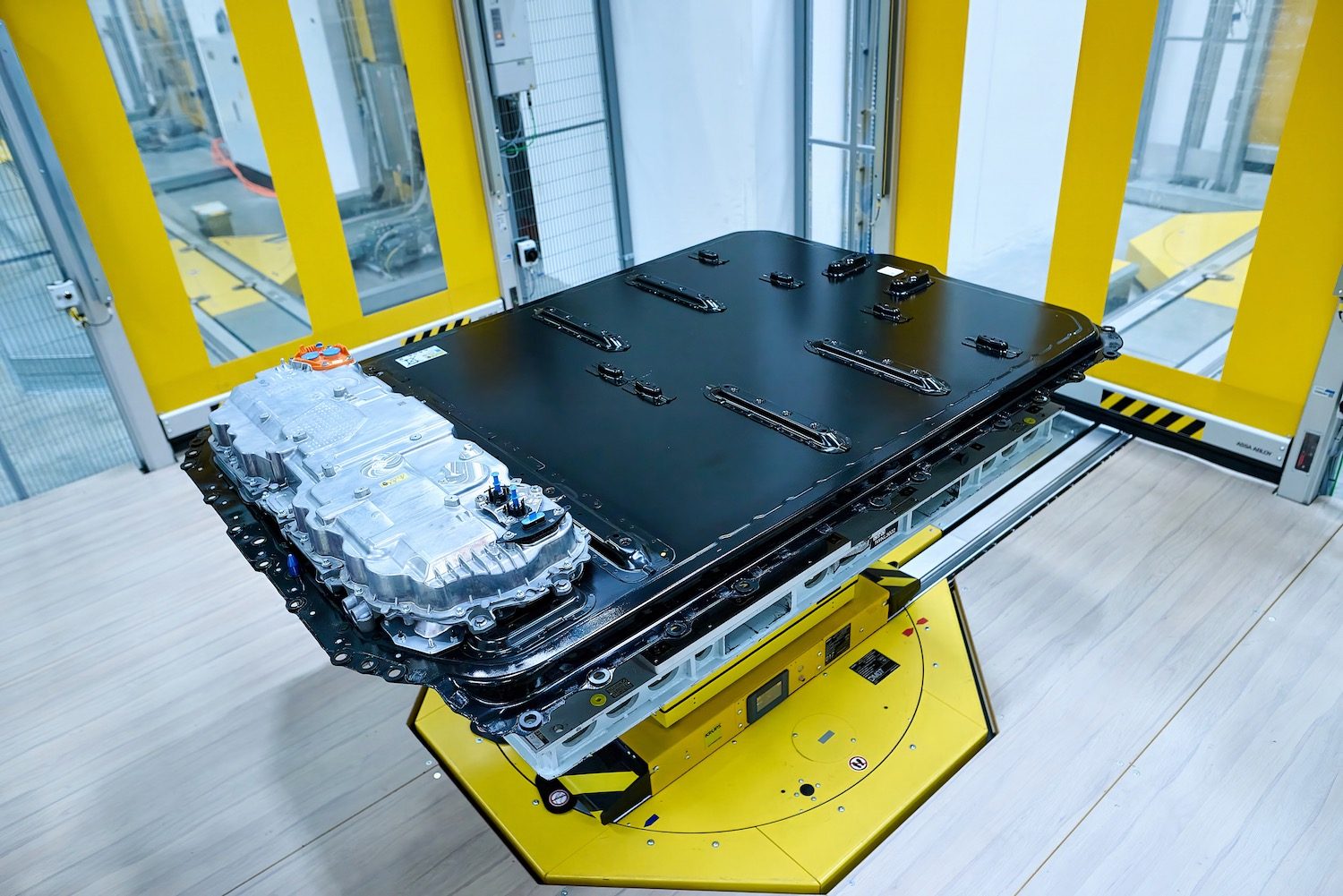
An EV can’t go anywhere without a functioning battery pack, though, so as it gears up for mass production of its next-generation Neue Klasse EVs, BMW is giving its battery-manufacturing process an overhaul.
“For production of our high-voltage batteries, we are pursuing a consistent zero-defect approach,” Markus Fallböhmer, BMW’s head of battery production, said in a statement. “Highly intelligent, AI-supported quality checks are integrated into the production process to help us achieve this.”
BMW assembles its battery packs from cells sourced from third-party suppliers. It starts by “clustering” those cells with insulation and coolant. The clusters of cells are then welded together, along with electrical contacts, encased in foam, and placed in a housing that’s sealed and riveted. A control unit BMW calls the “Energy Master” is then attached, final sealing adhesive applied, and the entire pack tested.
This process was developed at three German pilot plants, but BMW plans for series production at five sites globally, including one in Woodruff, South Carolina, near its vehicle assembly plant in Spartanburg. They’ll supply batteries for the Neue Klasse family of EVs, starting with the BMW iX3 SUV, volume production of which is scheduled to start in Hungary later this year.


